We explore in 3D the technical traits that distinguish Virat Kohli. His batting biomechanics, footwork, and anticipation are aspects that can be modeled to understand his consistency. This analysis breaks down his movements without resorting to grandiloquent adjectives, focusing on observable data and repetitive patterns that define his style.
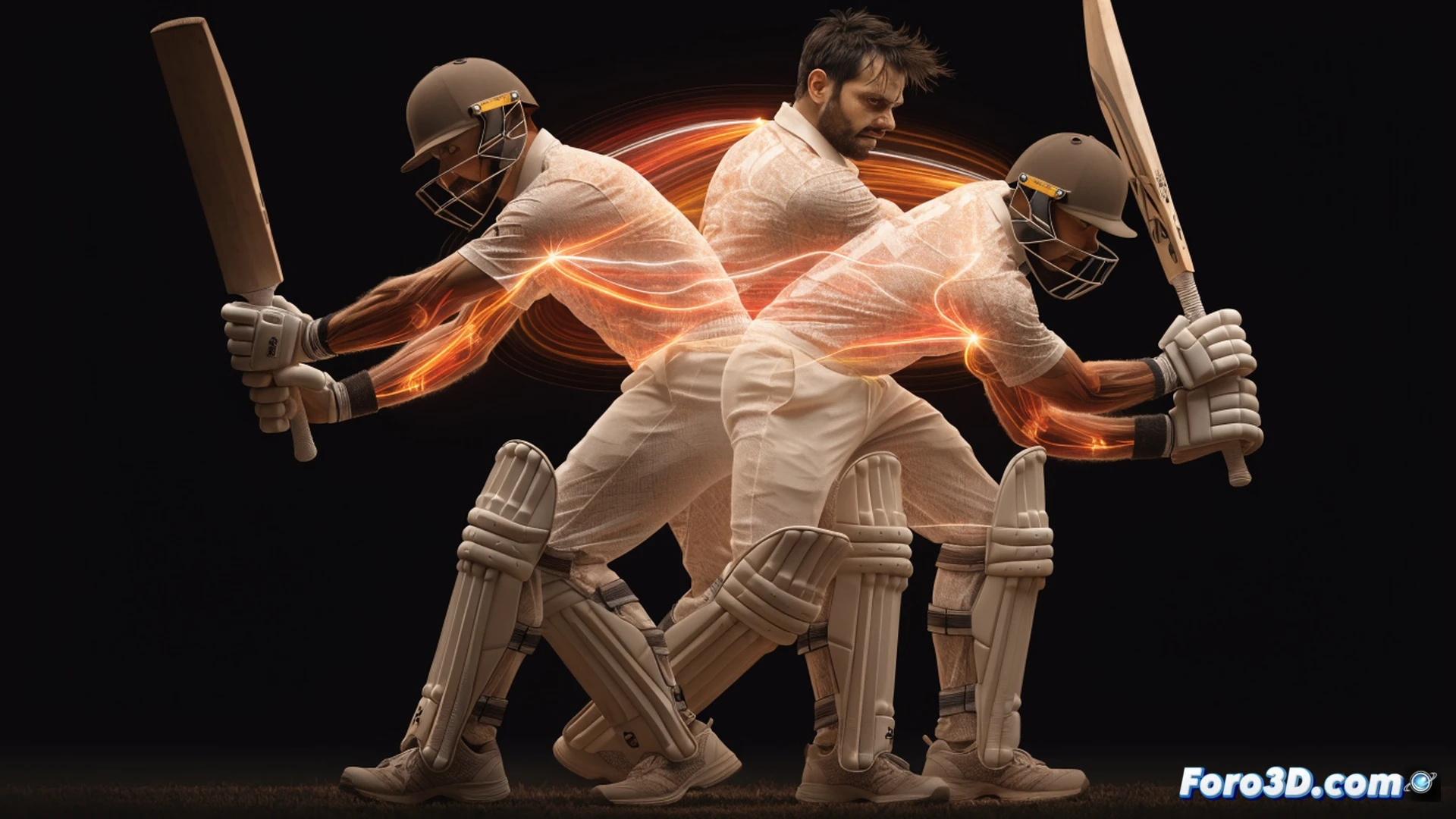
Biomechanics and Footwork Modeling 🏏
The 3D model reveals that Kohli maintains a low and stable center of gravity during the backlift. His weight transfer is quick and linear, allowing for late adjustment to variable deliveries. The torso rotation generates torque without losing balance. In the sagittal plane, the alignment of the shoulder and hip shows a constant angle that optimizes contact with the ball.
The Mystery of the Neck That Never Moves 🤔
The 3D analysis confirms what we all suspected: his neck has less movement than a wax statue. While his legs dance and his torso rotates, his head remains fixed as if bolted on. Engineers are baffled. Physiotherapists, too. Perhaps it is an evolutionary trait or simply a pact with the cricket god to not see the bouncers.