RJ Barrett, forward for the Toronto Raptors, presents a technical profile that combines physical strength and driving ability. His transition game and his knack for drawing fouls are key points. But how does this translate into a three-dimensional model? We analyze his on-court impact metrics and his evolution as a secondary scorer.
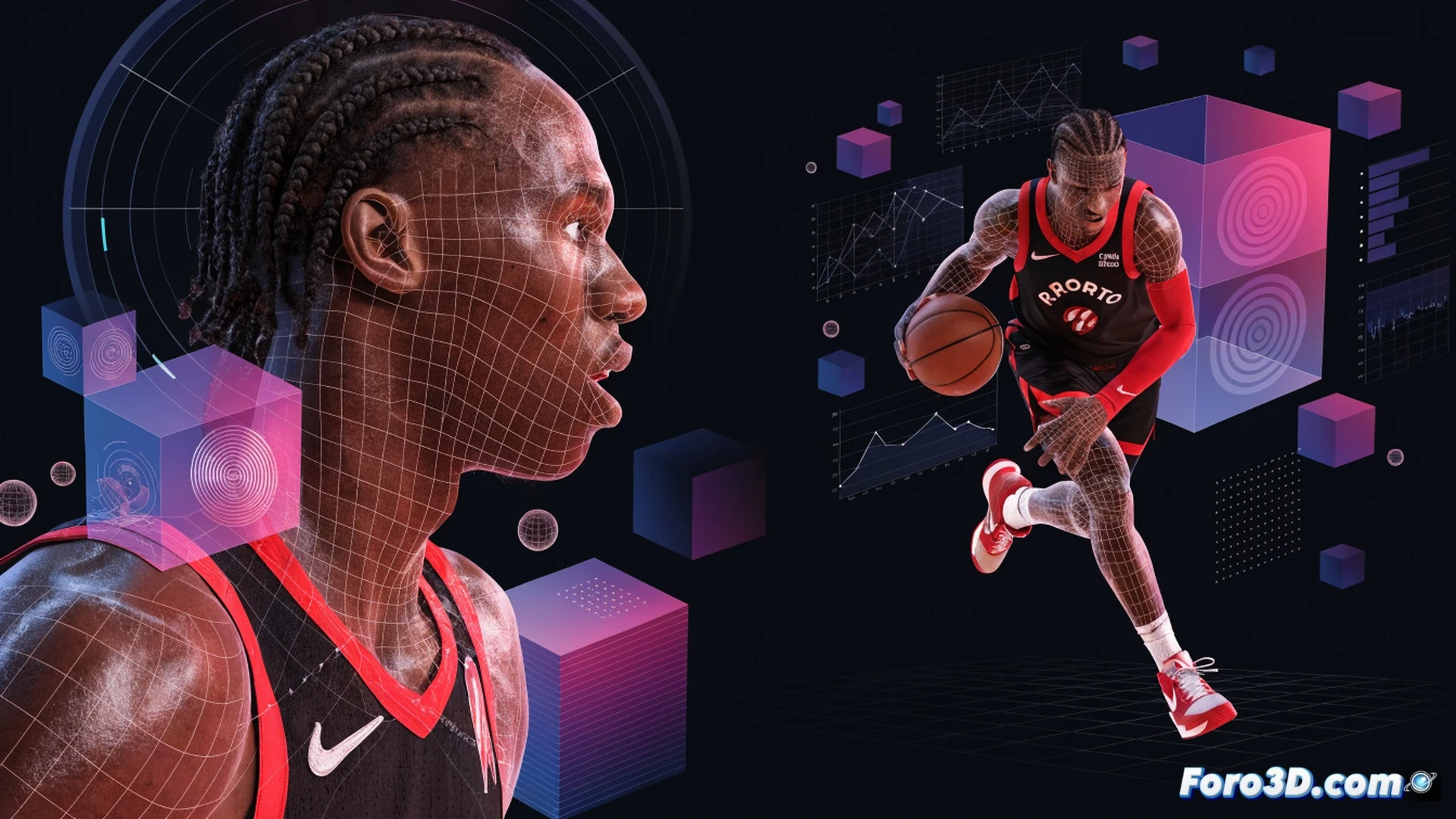
Kinematic mapping and drive efficiency 🏀
From a 3D analysis perspective, Barrett stands out for his use of his body to protect the ball on the first step. His low center of gravity allows him to change direction with control, generating advantages in 1-on-1 situations. However, his shot release is slow and predictable, which limits his effectiveness against tight defenses. The data shows his pull-up percentage drops by 12% when the defender is within one meter.
The art of being a tractor with a shooting license 🚜
Watching Barrett drive to the rim is like observing an off-road SUV in a bus lane: efficient, but with little subtlety. If his right arm is his best friend, his left is that acquaintance you never invite to dinner. In 3D, his shooting mechanics look like a slow-motion tutorial from someone who forgot to unlock the speed upgrade. At least when he misses, he does it with style.