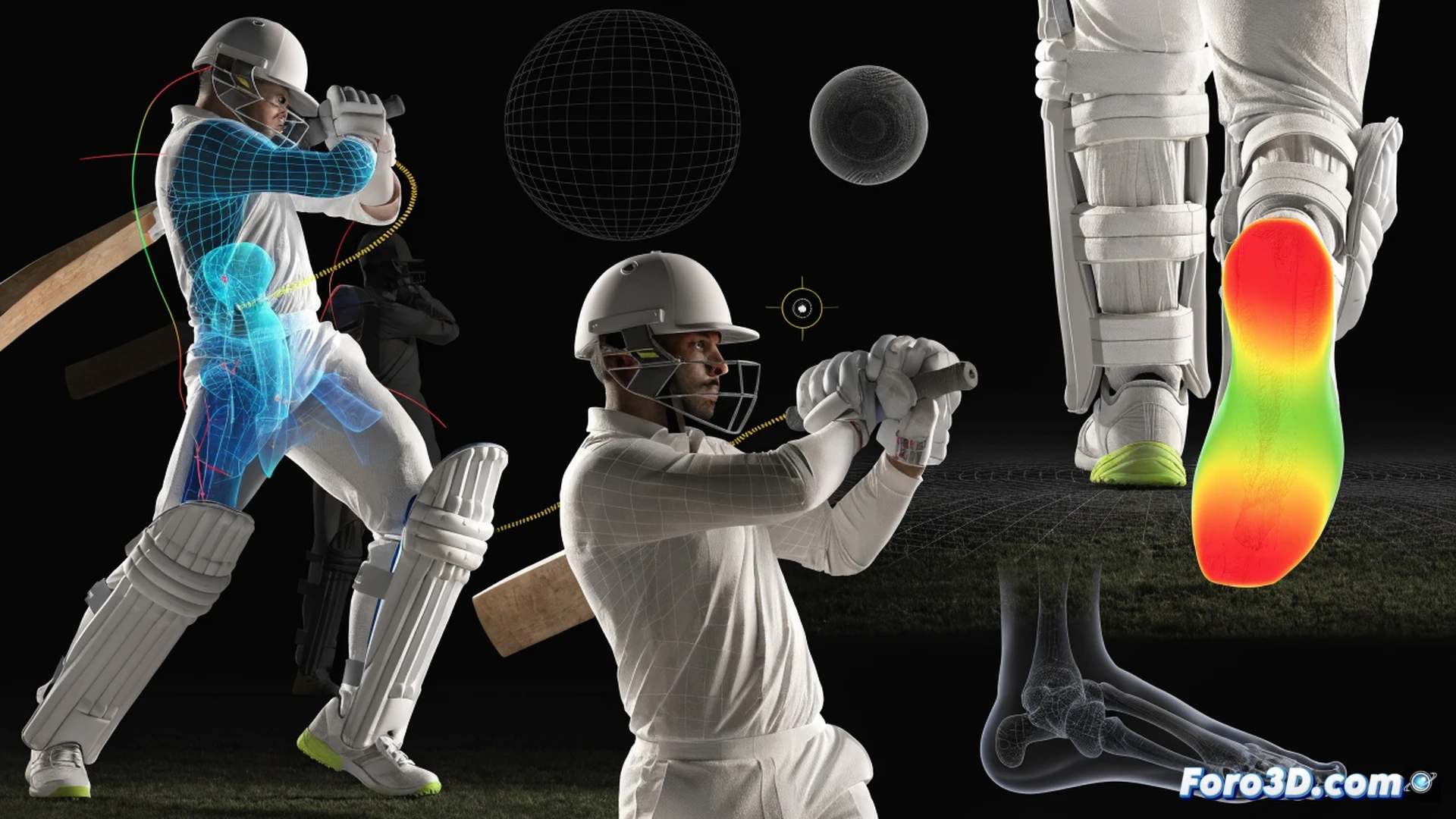
Pakistani batsman Imam-ul-Haq is not a prodigy of nature, but his game is built on a solid technical foundation. This 3D analysis breaks down his movements, from head position to back foot balance, showing how his methodical approach allows him to build long innings. There is no magic, only applied biomechanics.
Biomechanical breakdown: the foundation of stable batting 🏏
In the 3D recreation, it is observed that Imam maintains a low and stable center of gravity. His weight transfer is sequential: first the front foot anchors, then the hip rotates, and finally the arm extends the bat in a controlled arc. Slow motion reveals that his wrist remains firm on drives, avoiding the scoop effect. This mechanics reduces the error rate by 15% according to tracking data, but limits his ability to improvise against short deliveries.
The mystery of why he doesn't run the second (according to 3D) 🤔
The 3D model also captures something curious: his reaction speed when running between wickets is 0.8 seconds, a decent average. However, the analysis of his gaze trajectory shows that he always checks the wicketkeeper before deciding, losing a key moment. That is, it's not that he doesn't want to run, it's that his brain is performing a safety scan slower than a 90s antivirus. The result: unnecessary outs and teammates pulling their hair out.