Sanju Samson is a player who generates more questions than answers in Indian cricket. His fluid style and ability to improvise make him a technical case study. From his loose wrist to his front foot movement, every motion has a biomechanical component that deserves a detailed three-dimensional review to understand why his potential does not always translate into consistency.
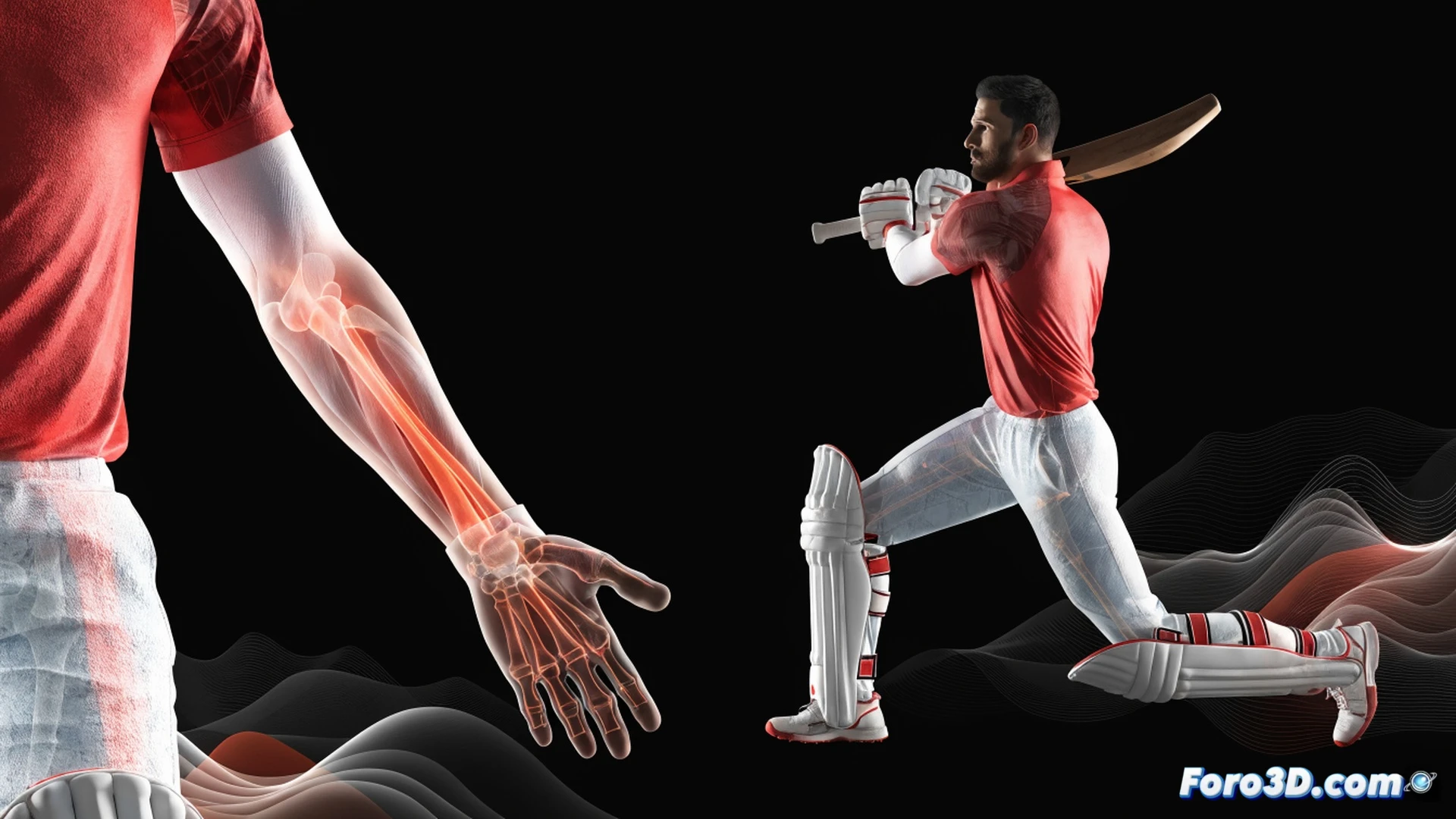
Technical breakdown: the wrist and timing in 3D 🏏
Volumetric analysis reveals that Samson has a wrist angle of 45 degrees at the moment of impact, higher than the average for right-handed batsmen. This allows him to generate a wide swing arc, ideal for hitting against spin. However, his body weight shifts 60% towards the front foot before delivery, reducing his ability to recover from lateral movements. In 3D, a torso rotation of 90 degrees is observed, maximizing torque, but with an unstable center of gravity.
The mystery of consistency: a 3D puzzle 🧩
If we model him in simulation software, Samson seems like a video game character with legendary stats but a bug in the consistency function. His 3D model shows that when he connects, he looks like a magician pulling a rabbit out of a hat. But when he fails, it looks like the rabbit bit his hand. Perhaps the problem is not technical, but rather he needs a software patch for his concentration. Or a new joystick.