Swedish footballer Zlatan Ibrahimović has been the subject of study in biomechanics and 3D modeling forums. His atypical physique and unorthodox technique generate unique data when digitizing his movements. We analyze the variables that make his body a case study for video game developers and sports simulations, without falling into myth, only with data.
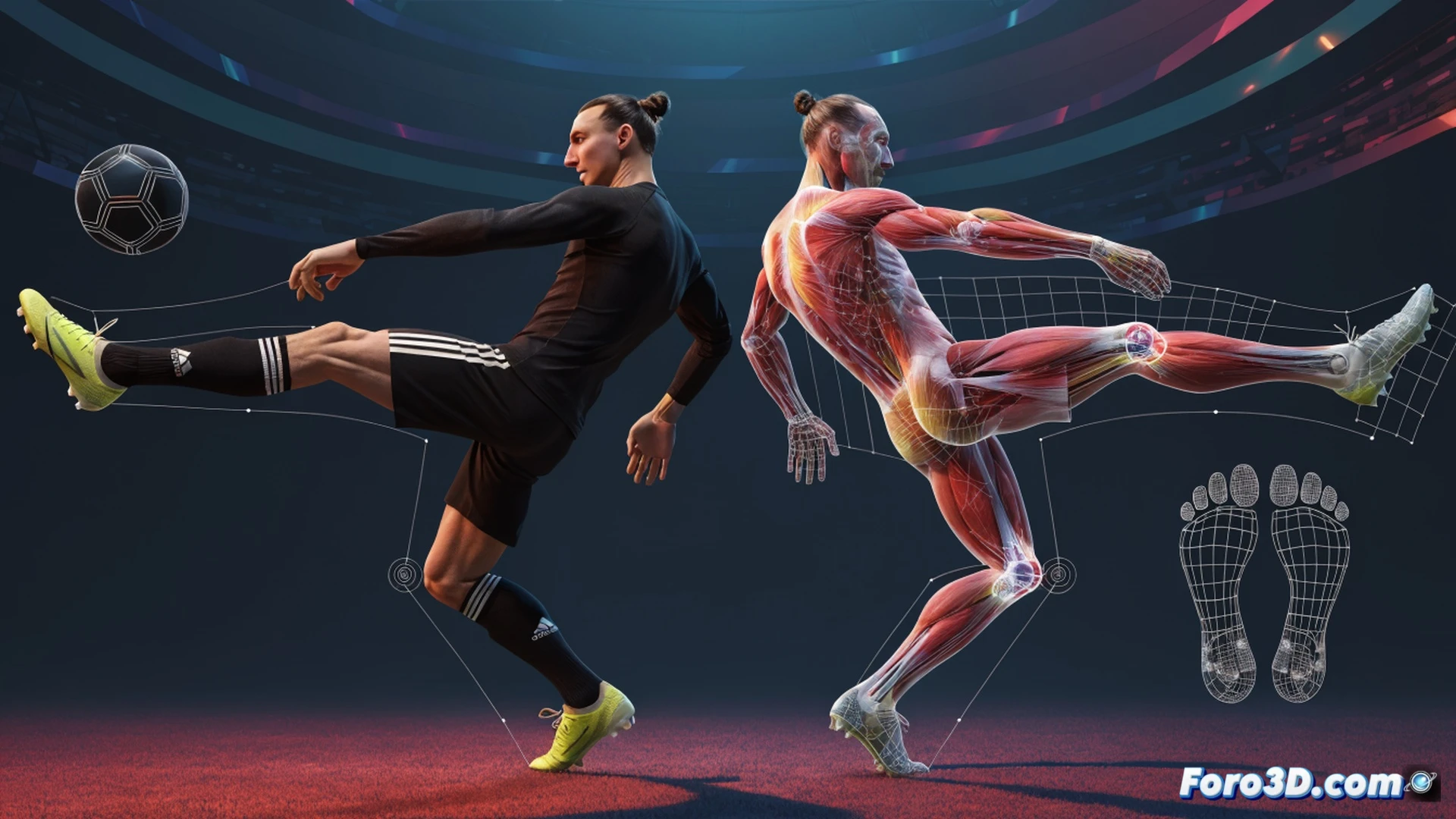
Technical Development: Lever Modeling and Center of Gravity 🦾
In the capture software, Ibrahimović's bone structure presents an unusual lever ratio. His stride length and the height of his center of gravity (1.95 m) force a recalibration of balance parameters in animations. Physics engines must process extreme torque in the torso to execute his bicycle kicks, as the rotation point does not follow the standard curve of a forward. This generates precise data to adjust joint stiffness in the model.
The DLC Nobody Asked For: Lion Physics in a Human 🦁
AI tests reveal that Ibrahimović has a strange hitbox: when he jumps, the 3D model seems to ignore gravity for 0.3 seconds. Programmers suspect his digital skeleton has a self-esteem bug. When trying to replicate his dribble in the area, the physics engine crashes. We don't know if it's a code error or if the player simply refused to follow Newton's laws.