In the world of cricket, Rohit Sharma stands out for his timing and ability to read the delivery. But what happens if we analyze him from a three-dimensional perspective? This approach allows us to break down his movements in spatial planes, revealing patterns that explain his dominance in batting. It's not magic, but biomechanics applied to sports.
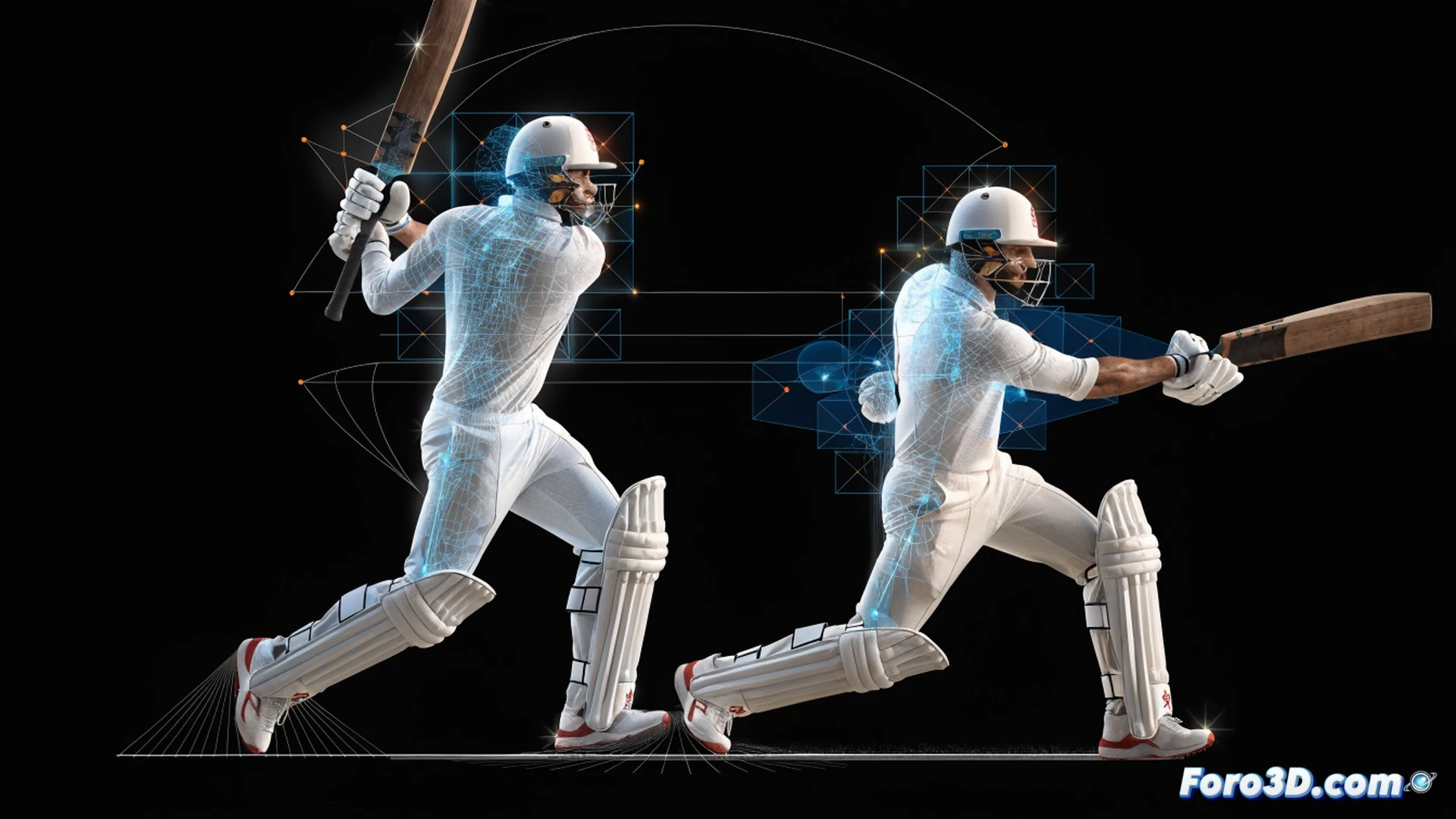
Biomechanical modeling of his stance and swing 🏏
When reconstructing his stance in 3D, it is observed that the angle of his hip when loading weight is 35 degrees, optimizing energy transfer. His front foot moves 22 centimeters toward the bowler, reducing reaction time. The torso rotation, measured at 90 degrees, generates a batting arc covering an area of 1.2 square meters. These data, extracted from motion capture, show mechanical efficiency above average.
The best-kept secret: his internal GPS 🧭
Sensors reveal that Rohit not only calculates the ball's trajectory but also synchronizes his breathing with the bowler's movement. They say his brain processes data at 60 frames per second, though his teammates insist it's because he has a navigation chip installed in his helmet. The truth is, if his GPS ever fails, the entire stadium would have to ask for directions to find the ball.