The young Pakistani fast bowler Naseem Shah has captured the attention of the cricket world not only for his speed, but for his ability to generate movement with the new ball. This 3D analysis breaks down the biomechanical and technical elements that make his action a case study. His flexible wrist and high release point are key factors we will analyze below, without resorting to myths or exaggerations.
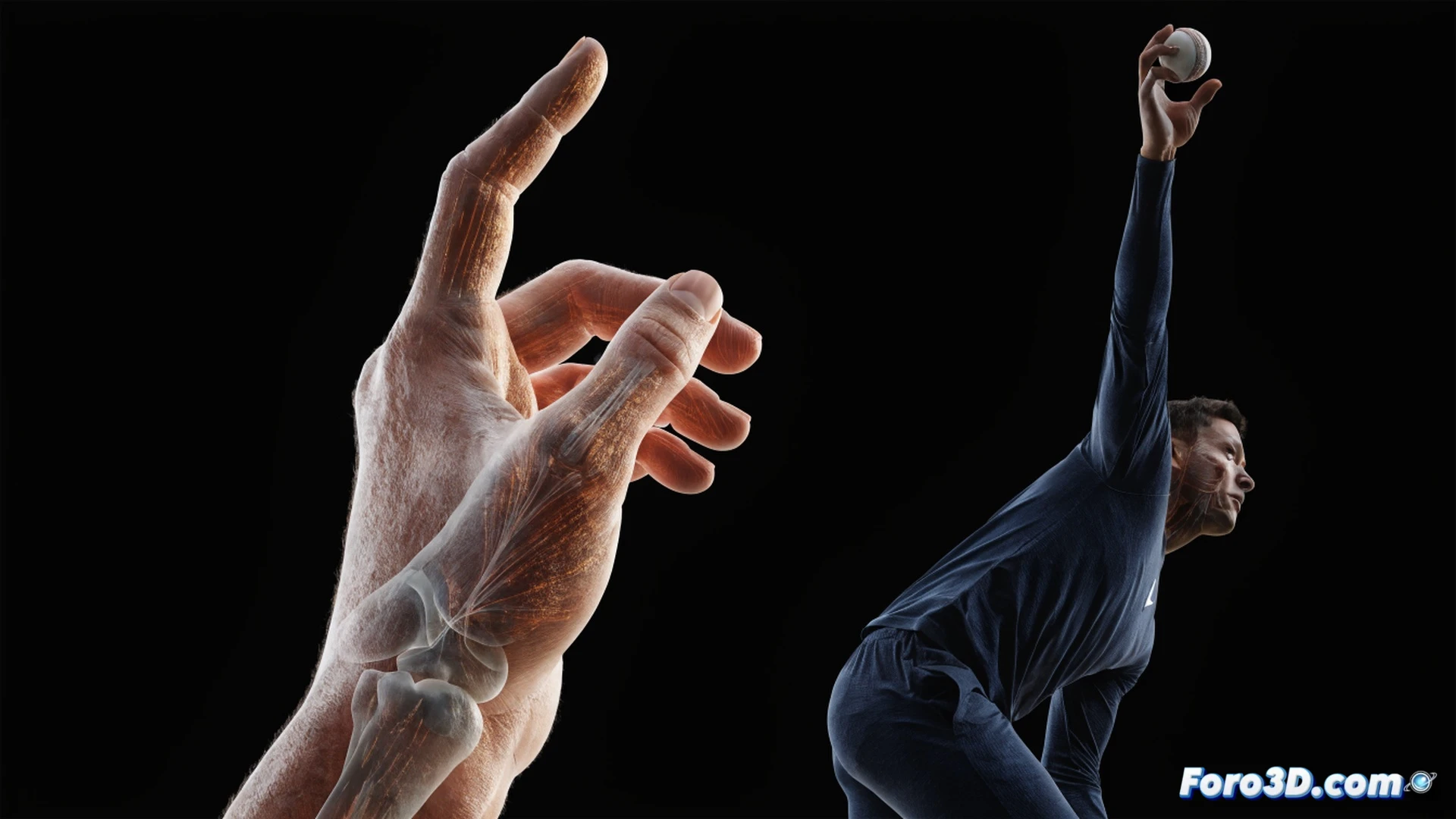
Biomechanics and 3D Modeling: The Secret of His Action 🏏
By breaking down his action into a three-dimensional model, an almost perfect alignment of the shoulder and hip during the jump is observed. His bowling arm generates a 45-degree angle at the release point, which maximizes bounce on hard surfaces. Vector analysis reveals that trunk rotation is 15% faster than the category average, allowing the ball to reach the batsman with an unpredictable late swing. This is not magic; it is physics applied to sports biomechanics.
The Mystery of Youth (and the Morning Coffee) ☕
Experts debate whether Naseem Shah is a cricket alien or simply someone who has a good breakfast. Our 3D model cannot measure his chai consumption, but it does confirm that his wrist has more mobility than a politician on the campaign trail. The most accepted theory is that his secret is a combination of genetics, hours of practice, and possibly a pact with some spirit of pace bowling. Meanwhile, batsmen keep asking for his chiropractor's number.