Kevin Durant is not just any basketball player. His combination of height, wingspan, and mobility creates advantages that few can match. In this 3D analysis, we break down the physical and technical characteristics that make him a constant problem for opposing defenses, from his high release shot to his ability to drive.
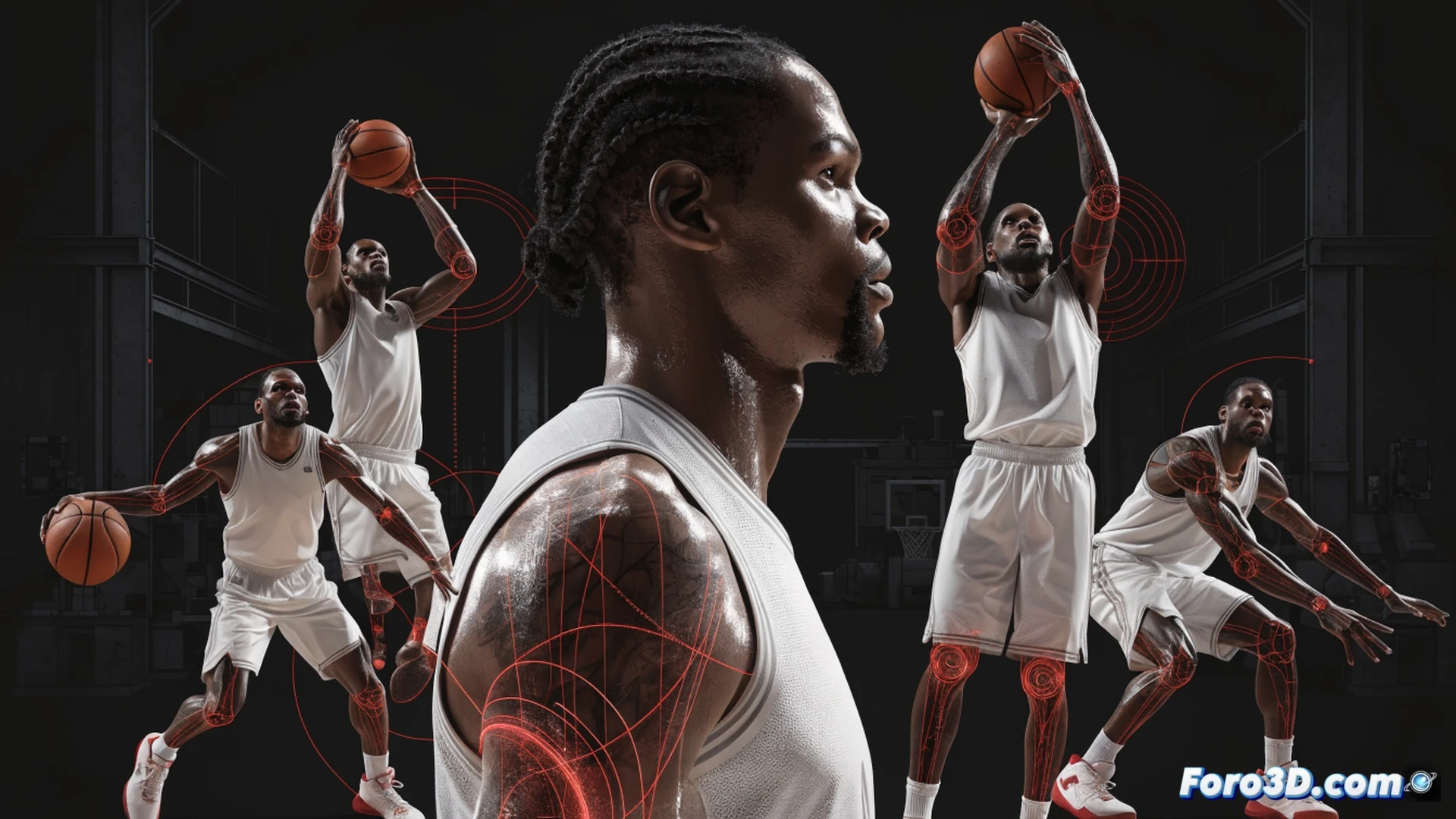
The biomechanical advantage in shooting and defense 🏀
From a technical perspective, Durant has a low center of gravity for his height, allowing him to change direction without losing balance. His lever arm when shooting is exceptional: the ball is released from a point almost unreachable for the defender. In the 3D plane, his 2.25-meter wingspan allows him to cover impossible passing angles and block shots without jumping. His shooting mechanics, with a high and quick release, minimize the opponent's reaction time.
When genetics gives you a hand (and an extra arm) 🧬
If we could design a small forward in a lab, it would probably come out something like this. But since science hasn't yet cloned humans for the NBA, we have KD, who seems to have an invisible arm for stealing balls. Watching him defend a point guard is like watching an adult playing against kids at the park: except the adult can also hit three-pointers from half court. The advantage is so obvious that even his shadow seems to be in the shooting zone.