Foro3D breaks down the biomechanical qualities of Cristiano Ronaldo through a three-dimensional analysis. We examine his stride, trunk rotation, and ball impact from all angles. The goal is to understand how these factors combine to generate power and precision in his shots and jumps.
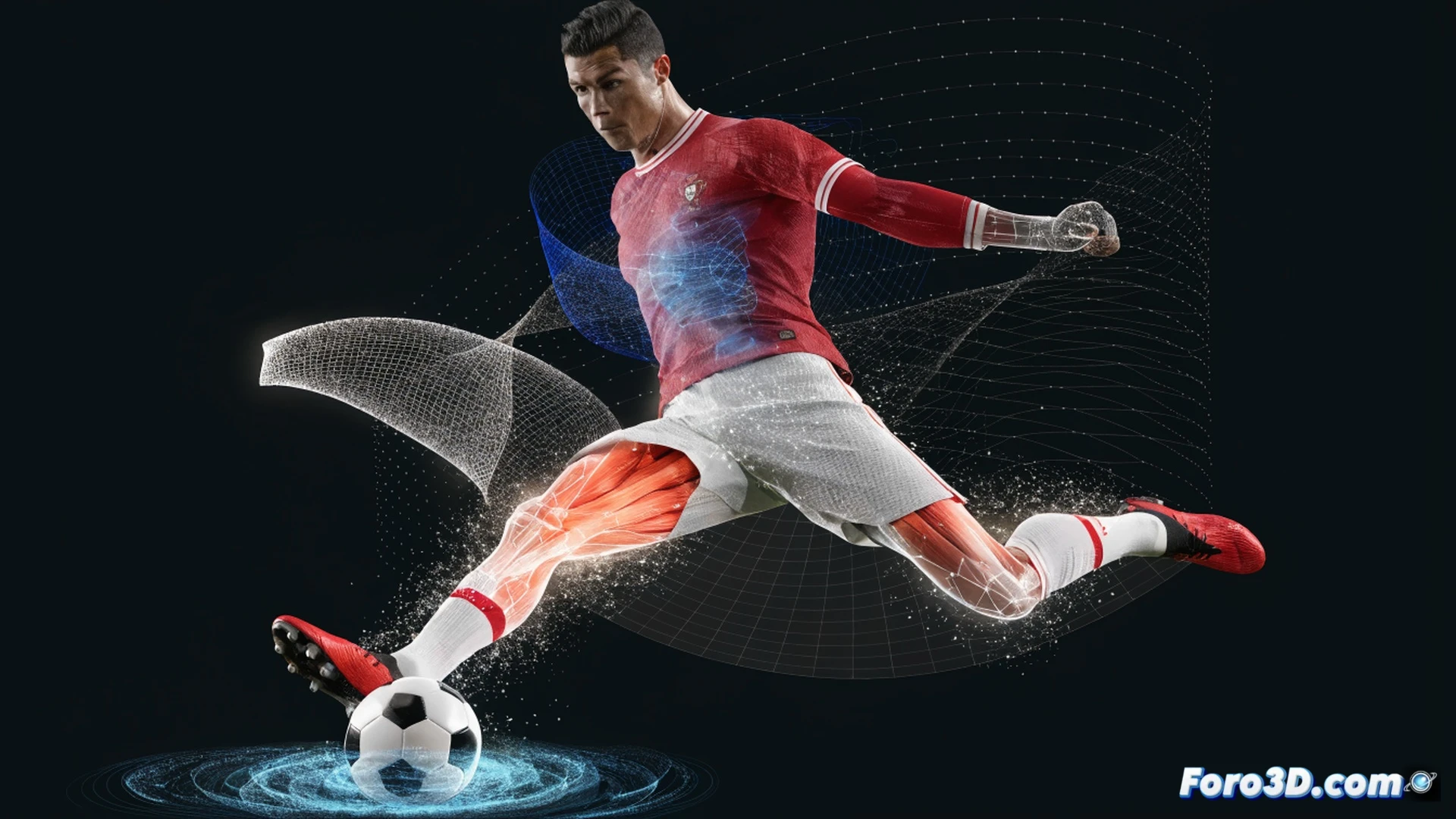
Kinematic modeling of the shot and jump execution 🏃♂️
The 3D reconstruction of his stride reveals a support phase of 0.12 seconds, with a pelvic tilt of 22 degrees. In the jump, knee extension reaches 175 degrees and the center of mass rises 75 cm. The modeling shows that the synchronization between trunk rotation and striking allows for 94% energy transfer. These data provide a basis for comparing his technique with other forwards.
The digital twin that thinks it's the best-looking in the lab 😎
We have rendered his 3D model with a porcelain texture and a specular shine that illuminates the entire room. The avatar insists on being modeled with 7% more muscle in the trapezius and that the hair shading be perfect. If this simulation had Instagram, it would have already blocked half of the development team for not giving enough likes to its frames.