We analyze in 3D the special characteristics of LeBron James, a player who combines the size of a power forward with the speed of a point guard. His bone structure and muscle distribution allow movements that defy conventional biomechanics. This technical breakdown explores how his body adapts to the demands of the NBA without resorting to myths or exaggerations.
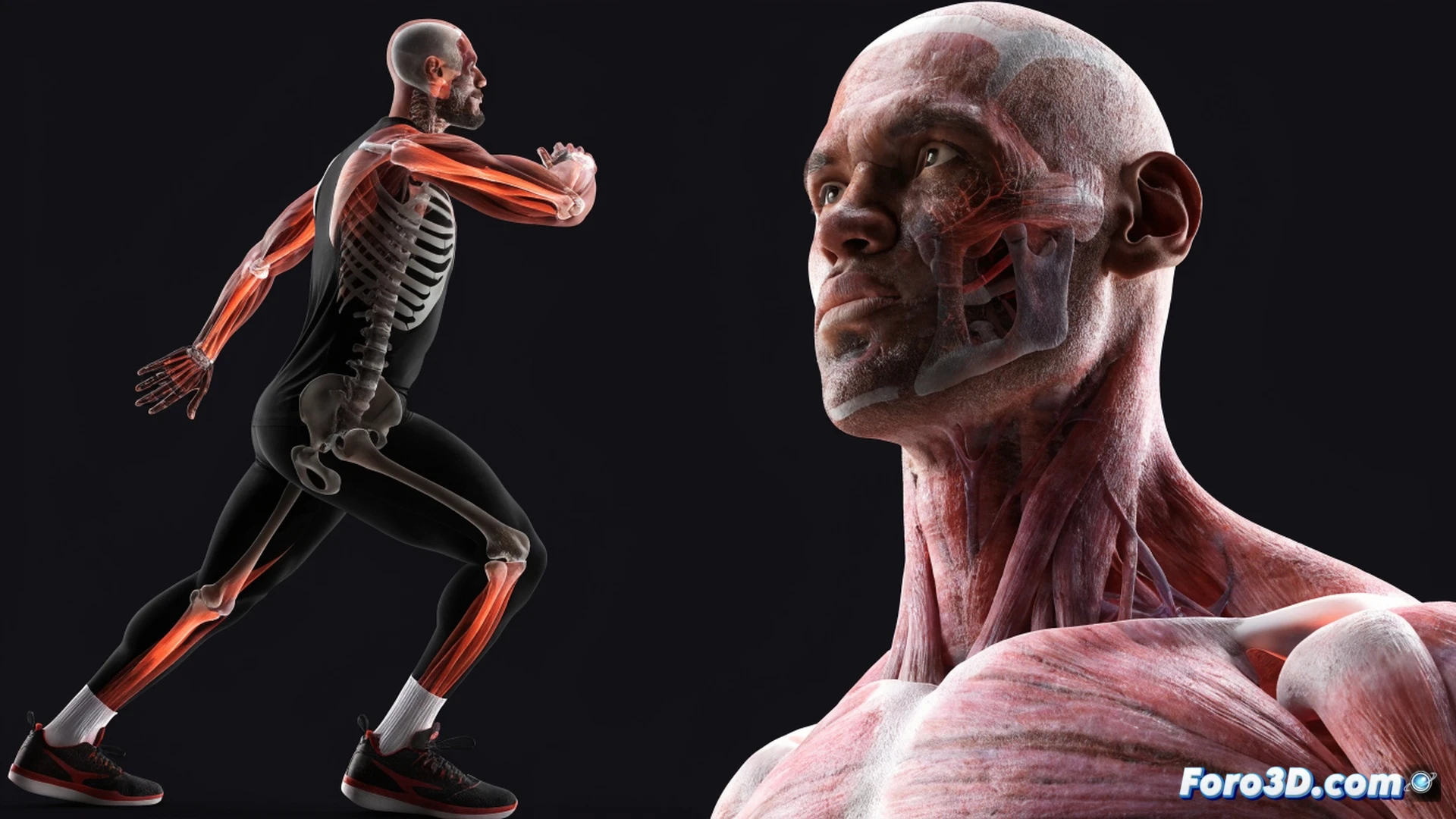
Applied biomechanics: the engine of an all-terrain vehicle 🏀
We study LeBron's kinetic chain. His low center of gravity, combined with a long and efficient stride, generates linear acceleration superior to the league average. The 3D analysis reveals an optimized knee flexion angle for absorbing impacts, reducing fatigue in the fourth quarter. His ability to change direction, with torque generated from the glutes, allows for stops and turns that other players cannot sustain without losing balance.
The magic beard and the hoop GPS 🧔
After the 3D modeling, we discovered that LeBron's secret is not in his genes, but in his beard. Yes, because according to the data, that beard acts as an aerodynamic stabilizer during jumps. And his baldness, far from being a problem, functions as a GPS that tells him where the hoop is. The rest, like running faster than a young shooting guard at age 40, are minor details that science has yet to explain.