Erling Haaland is not a conventional striker. His performance on the field can be broken down into biomechanical variables that explain his effectiveness. From explosive acceleration to the composition of his stride, each movement responds to a physical pattern that challenges the standard parameters of modern football. We analyze the data from a three-dimensional perspective.
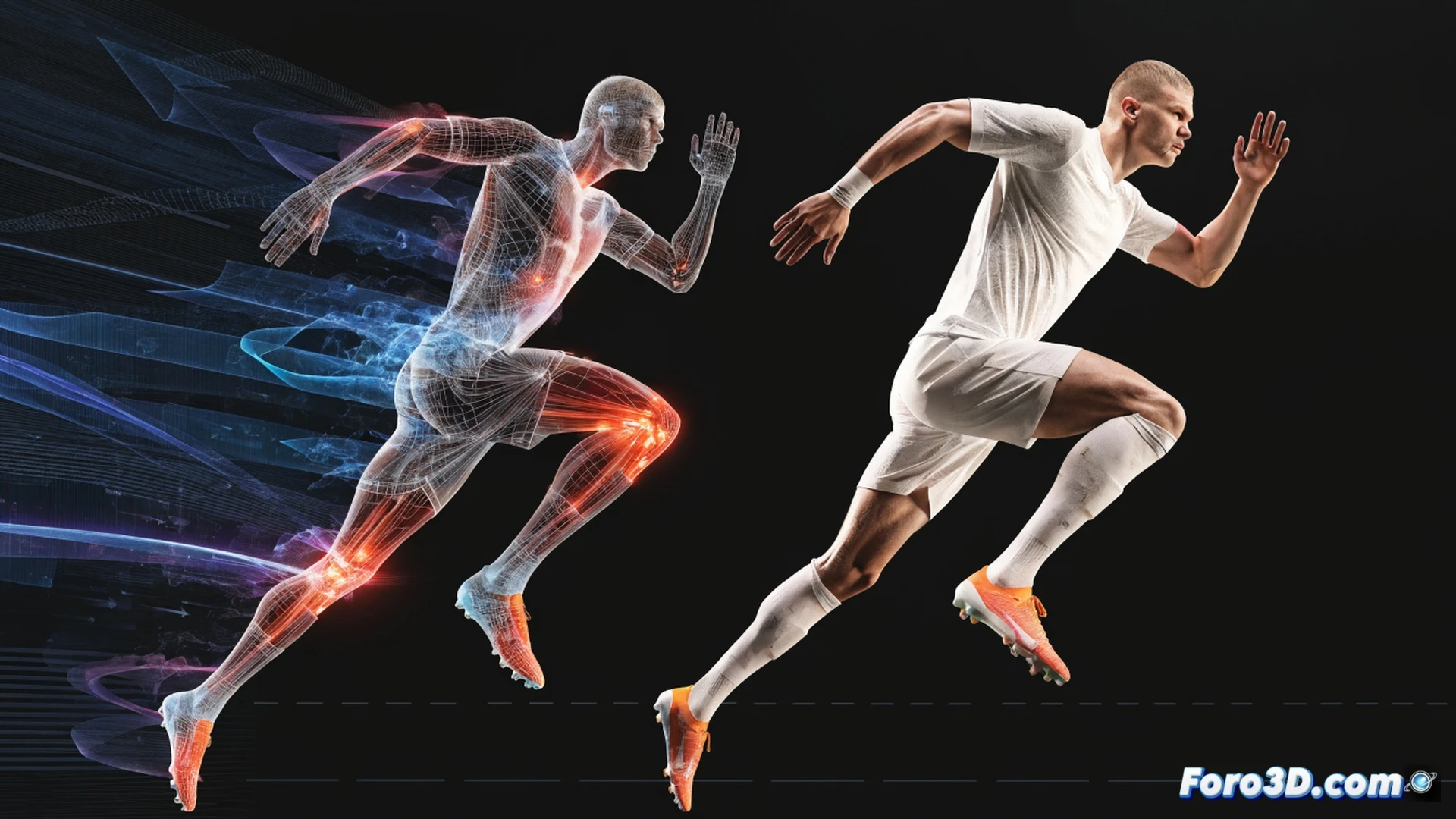
Biomechanics applied to sprinting and finishing 🏃♂️⚡
3D models reveal that Haaland generates a ground reaction force 30% higher than the Premier League average in his first three steps. His low center of gravity, combined with a stride cadence reaching 4.7 steps per second, allows him to change direction without losing speed. When finishing, his supporting foot is positioned at 15 degrees from the perpendicular, optimizing energy transfer to the ball.
The science of not having to think to score 🧠⚽
According to heat maps, Haaland spends 90% of the match in energy-saving mode, waiting for his teammates to put the ball into the box. Motion sensors indicate that his brain processes plays 0.3 seconds faster than average. In other words, while defenders are still deciding whether to close down or not, he is already celebrating. Technology confirms what his rivals already know: he is a robot with GPS 🤖📍