Shaedon Sharpe arrived in the NBA with a high-risk project label, but his physical profile has sparked intense technical debate. This 3D analysis breaks down his most striking qualities: an explosive first step and a jumping ability that defies biomechanical logic. We are not talking about a polished player, but a raw athlete whose potential depends on how he translates his physical spark into consistent production on the court.
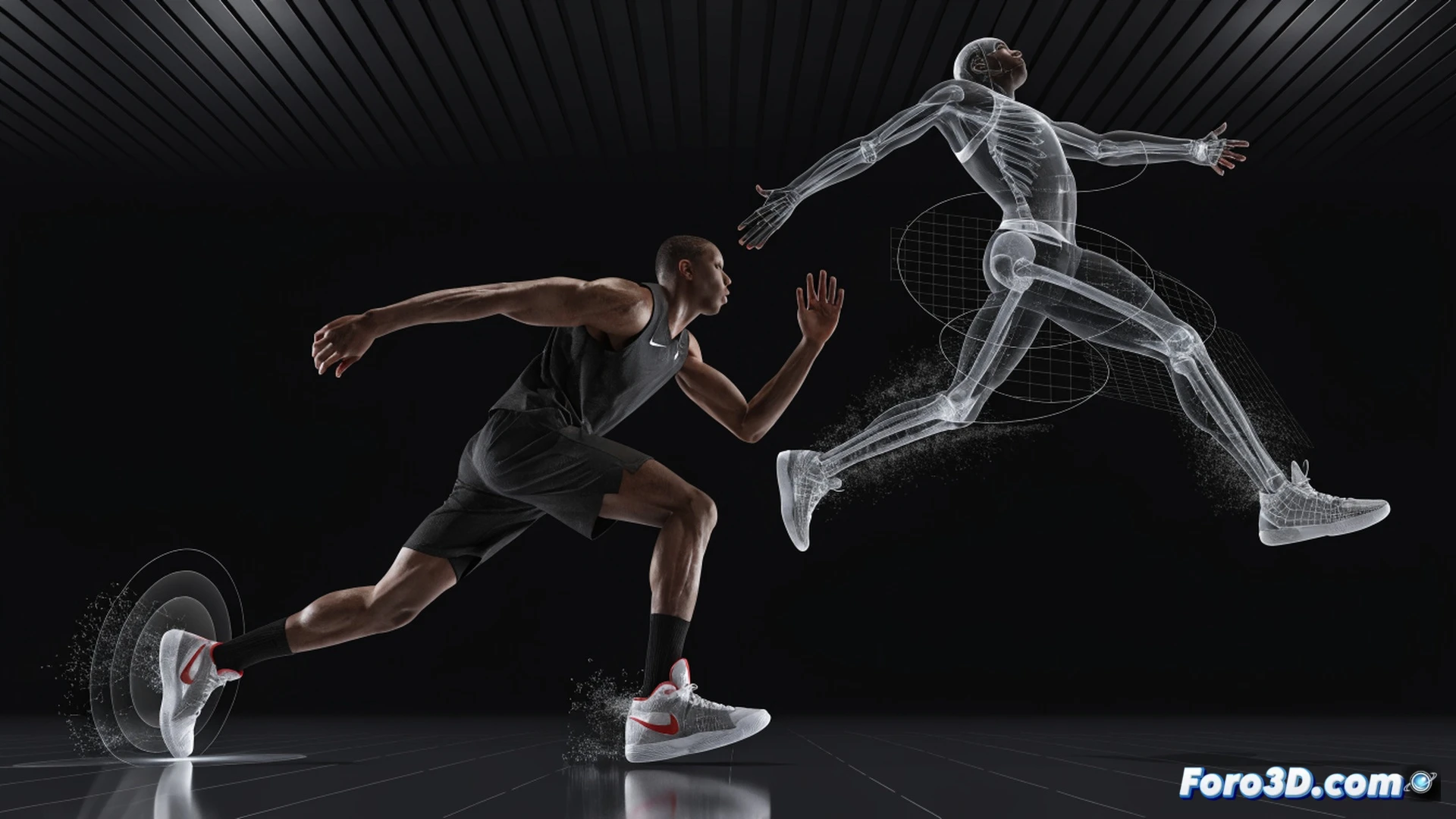
Biomechanics of the Jump: The Hidden Engine 🏀
From a 3D modeling perspective, Sharpe's jump stands out due to a late activation of the posterior chain. His center of gravity shifts with a takeoff angle close to 78 degrees, allowing for a verticality that reduces the defender's reaction time. Kinematic analysis reveals suboptimal knee flexion in the loading phase, suggesting that his power does not rely on pure technique but on fast-twitch muscle fibers. This explains why his dunks seem to float in the air.
The Instruction Manual Got Lost in the Mail 😅
Watching Sharpe on the court is like having a Ferrari with a slipping transmission: you know the power is there, but the player seems to have forgotten how to shift gears. His ball handling sometimes reminds you of a teenager with a new video game controller: plenty of buttons, but no idea which combo to execute. If his decision-making improved at the same rate as his jump, rival centers would already be filing for post-traumatic stress leave.