Mehdi Taremi is not a conventional striker. His game goes beyond scoring: he masters the art of the pause, dribbling in tight spaces, and a reading of the game that disorients defenses. In this 3D analysis, we break down the technical tools that make the Iranian such an unpredictable yet effective player inside the box.
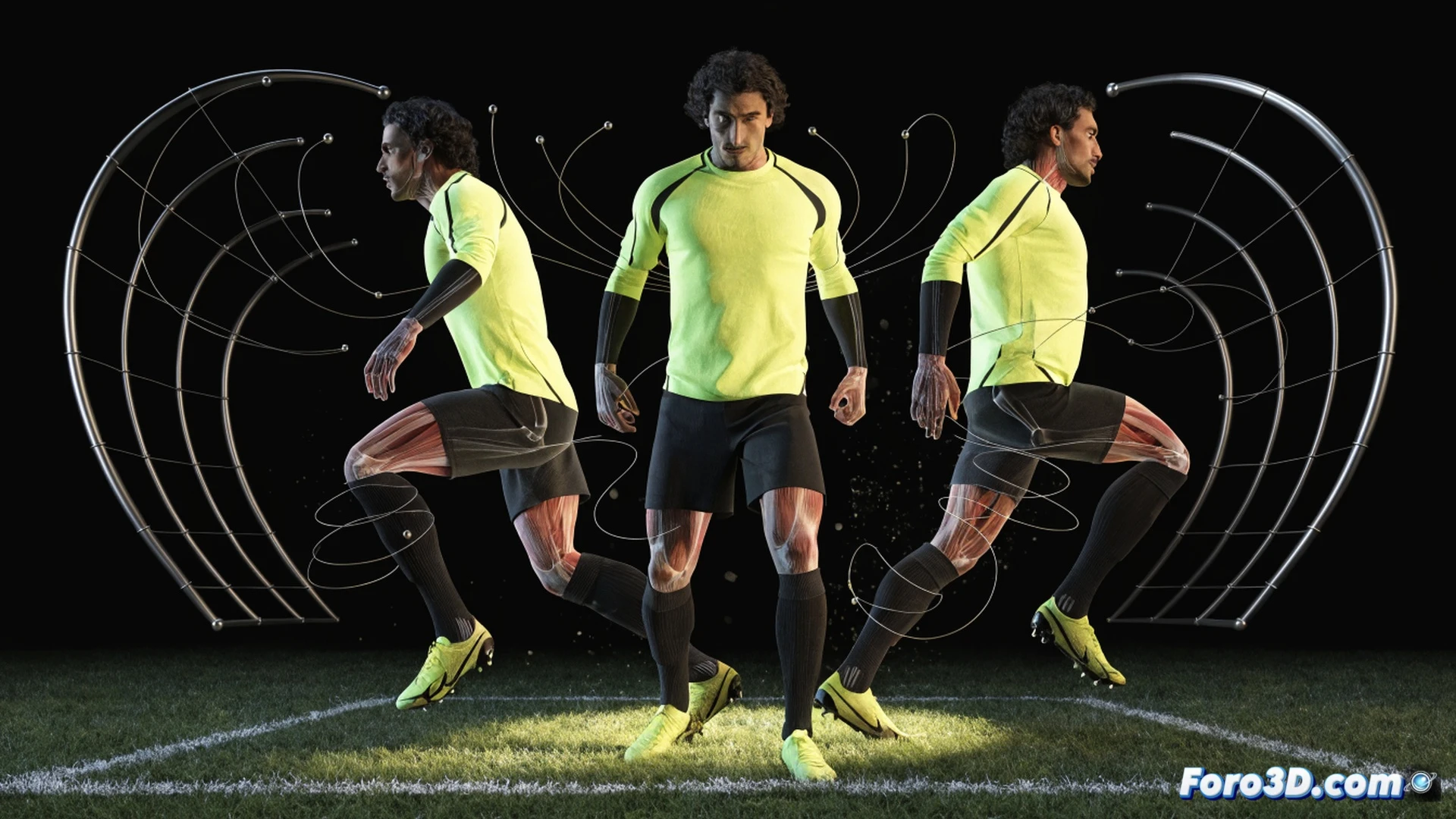
Technical breakdown: controlled touch and peripheral vision 🧠
The 3D model reveals two key aspects in Taremi. First, his controlled touch: he receives the ball with his back to goal and, in a single movement, turns into free space, gaining a vital half-second. Second, his peripheral vision. Simulations show how he constantly scans his surroundings, identifying the goalkeeper's and defenders' positions before receiving the ball. This allows him to execute through passes or shots with surgical precision, without needing to lift his head.
The art of falling with style (and winning a penalty) 🎭
If Taremi dominates one thing in 3D, it's the physics of contact. His falls seem choreographed: the arm goes up, the body turns in slow motion, and minimal contact transforms into a theatrical performance. Opposing defenders no longer know whether to mark him or carry a sign reading caution, slippery zone. Of course, when there's no penalty, he gets up so quickly that even VAR doubts it. Dramatic art in football boots.