We analyze in 3D the biomechanical and technical characteristics that make Liam Livingstone such a versatile cricket player. His ability to generate power in batting and deliver effective spin is no coincidence; it is the result of a combination of joint angles, rotational force, and a low center of gravity that allows him to adapt to any situation on the field.
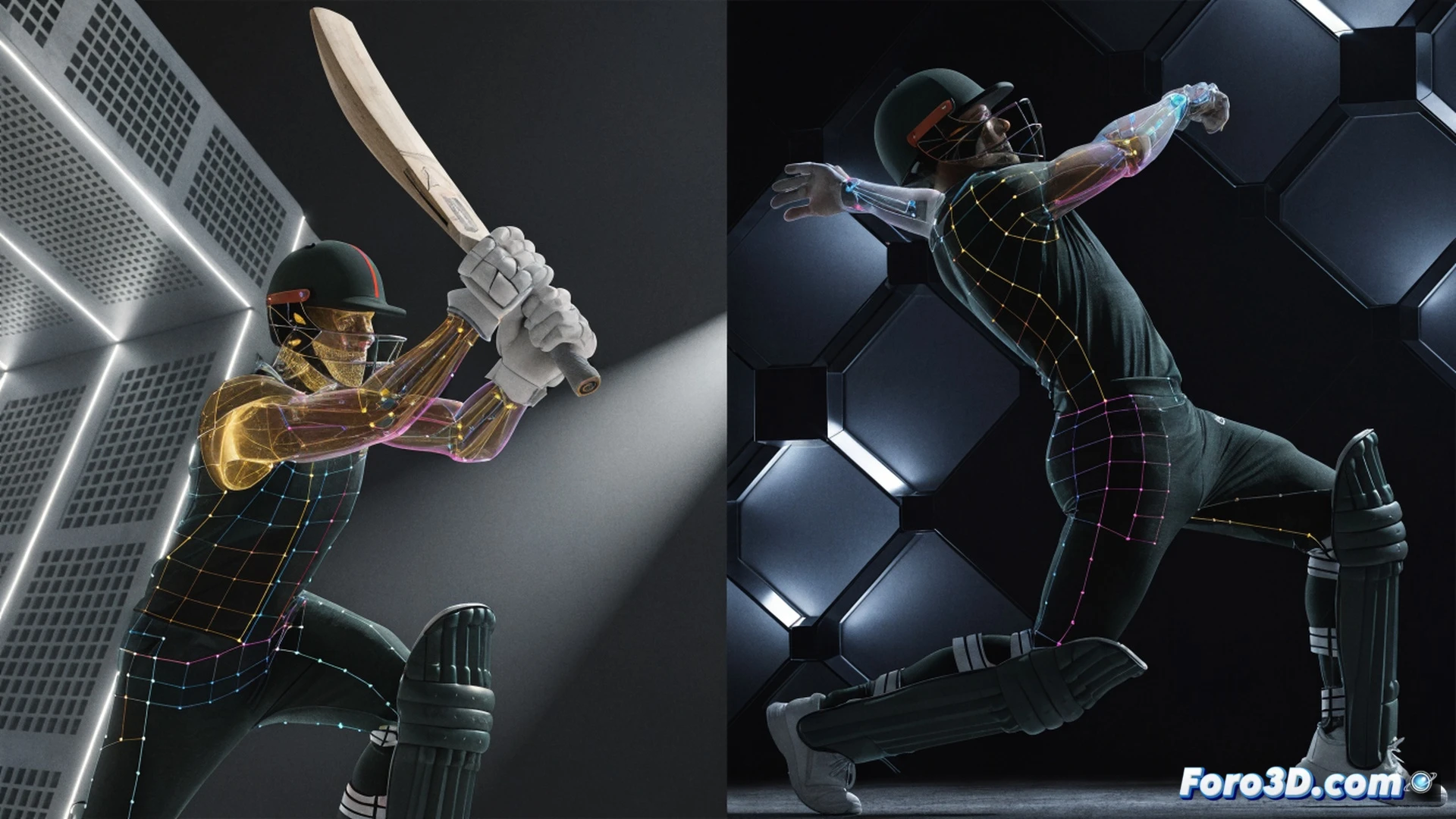
Biomechanics and optimization of the power swing 🏏
The three-dimensional reconstruction of his stance reveals a hip angle of 45 degrees at the moment of impact, which maximizes energy transfer from the legs to the bat. His dominant forearm rotates 90 degrees in just 0.2 seconds, generating a bat head speed exceeding 160 km/h. Additionally, his wide base of support (1.5 times shoulder width) gives him stability to execute cross-bat shots without losing balance, even against fast deliveries.
The mystery of the mustache: Hidden source of power? 🧔
3D models fail to explain how his mustache remains perfectly aligned while the rest of his body twists 360 degrees. Simulations suggest that the facial hair acts as an aerodynamic stabilizer, but engineers suspect it is actually a wind sensor that warns him when it is about to rain. For now, science prefers not to stick its nose where it is not called.