Modern cricket demands more than reflexes; it requires precision biomechanics. Kusal Perera, the left-handed Sri Lankan, doesn't just hit the ball: he reconfigures it. His technique, based on dynamic body weight and a variable batting angle, allows him to counteract deliveries of 150 km/h with an ease that seems from another dimensional plane. We analyze his characteristics from a 3D approach, breaking down each phase of the swing and its impact on real-world performance.
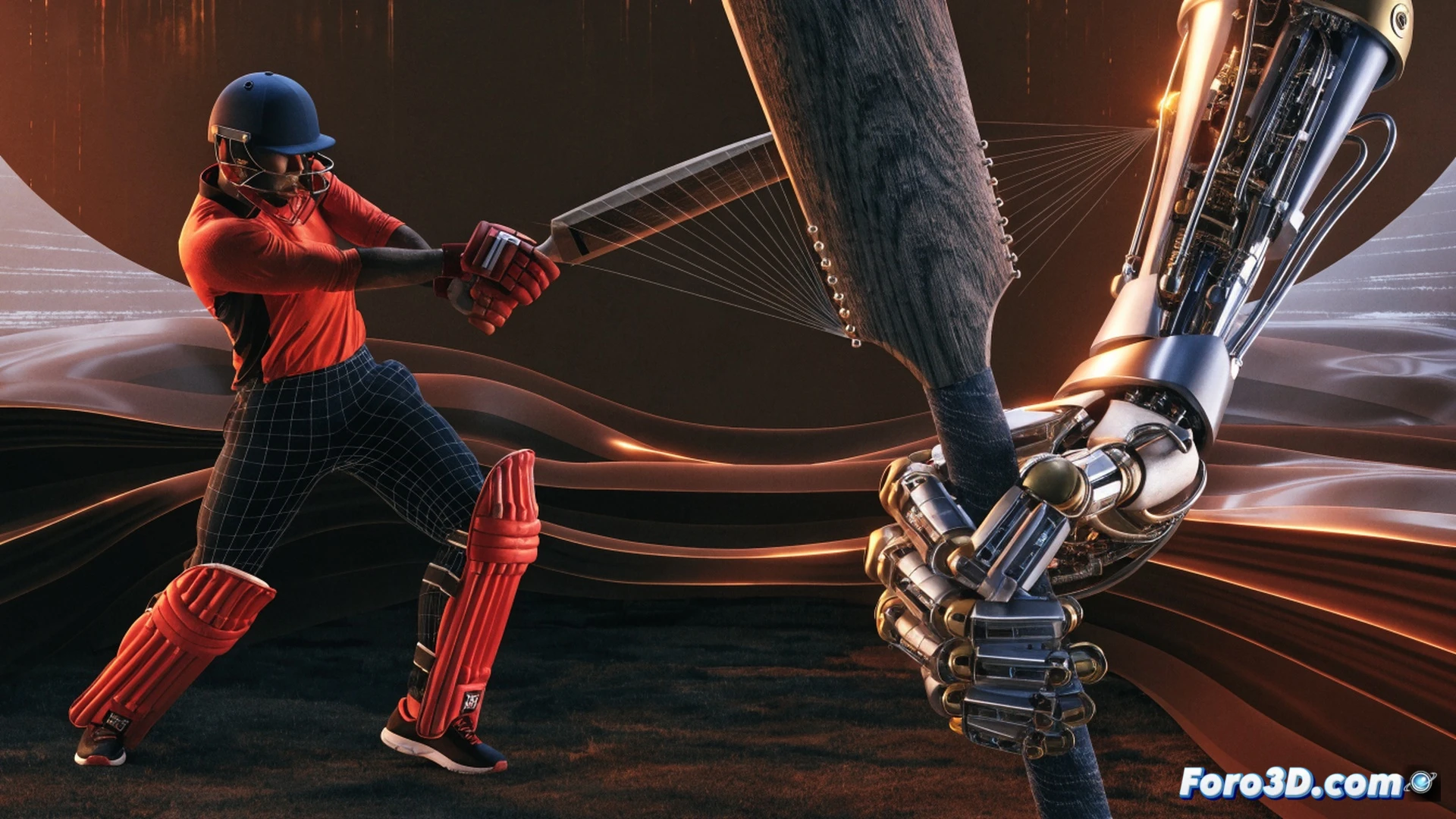
Biomechanics and rendering of Perera's swing 🏏
The three-dimensional model reveals that Perera has an exceptionally low center of gravity, which gives him stability against short-pitched deliveries. His loose grip, combined with a 45-degree hip rotation, generates torque that multiplies bat speed. In the frontal plane, his left shoulder remains aligned with the axis of the front leg, reducing lateral inertia. This biomechanical design, almost textbook, allows him to execute lofted shots with minimal margin for error against spinners and pacers.
The hidden DLC: stealth mode and tank stamina ⚡
If Perera were a video game character, his stamina stat would be broken. Watching him run between wickets after a shot is like observing a cat chasing a laser: he doesn't get tired, he doesn't stop, and suddenly, he appears at the other end of the field. 3D analysts have detected that his running pattern is more efficient than that of a marathon runner, but with the same energy as a child with hypoglycemia and three packets of sugar. Someone check his configuration file.