Kagiso Rabada doesn't just bowl fast balls; his body executes a precise biomechanical choreography. This 3D analysis breaks down the factors that make this South African bowler a constant problem for batsmen. From the angle of his back to the release point, every detail adds pressure on the batsman.
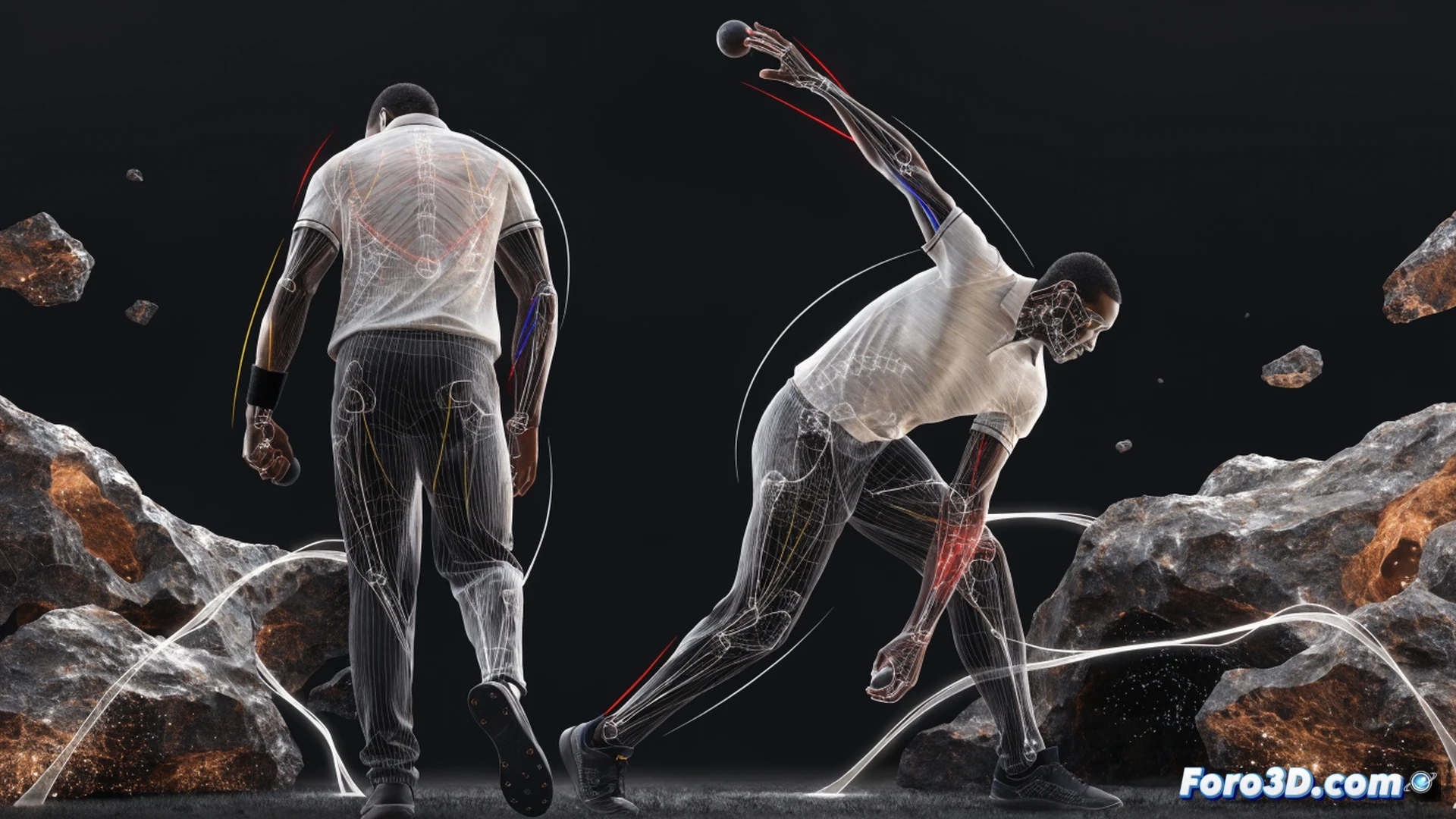
Bowling Biomechanics: The Lethal Angle 🎯
The 3D model reveals that his bowling arm reaches a 45-degree angle at the release point, generating extra bounce off the pitch. His delivery stride measures 1.2 meters, allowing him to transfer all the energy from the hip to the shoulder. The trunk rotation, measured at 90 degrees, adds speed without straining the elbow. This balance between power and control explains his accuracy in the channel outside off stump.
The Science of Not Wanting to Be a Batsman ⚡
Analyzing the 3D model, it is confirmed that Rabada doesn't need black magic to be intimidating. His secret is simple: a well-lubricated skeleton and genetic stubbornness. While batsmen study bowling charts, he only thinks about bowling the ball at 145 km/h right where it hurts. Science says it's biomechanics; batsmen say it's bad luck.