In the world of cricket, Jos Buttler has earned a special place not only for his technique, but for a repertoire of movements that defy traditional physics. We analyze his most characteristic shots in 3D, from the ramp shot to the switch hit, breaking down the biomechanics that make them so effective against any bowler.
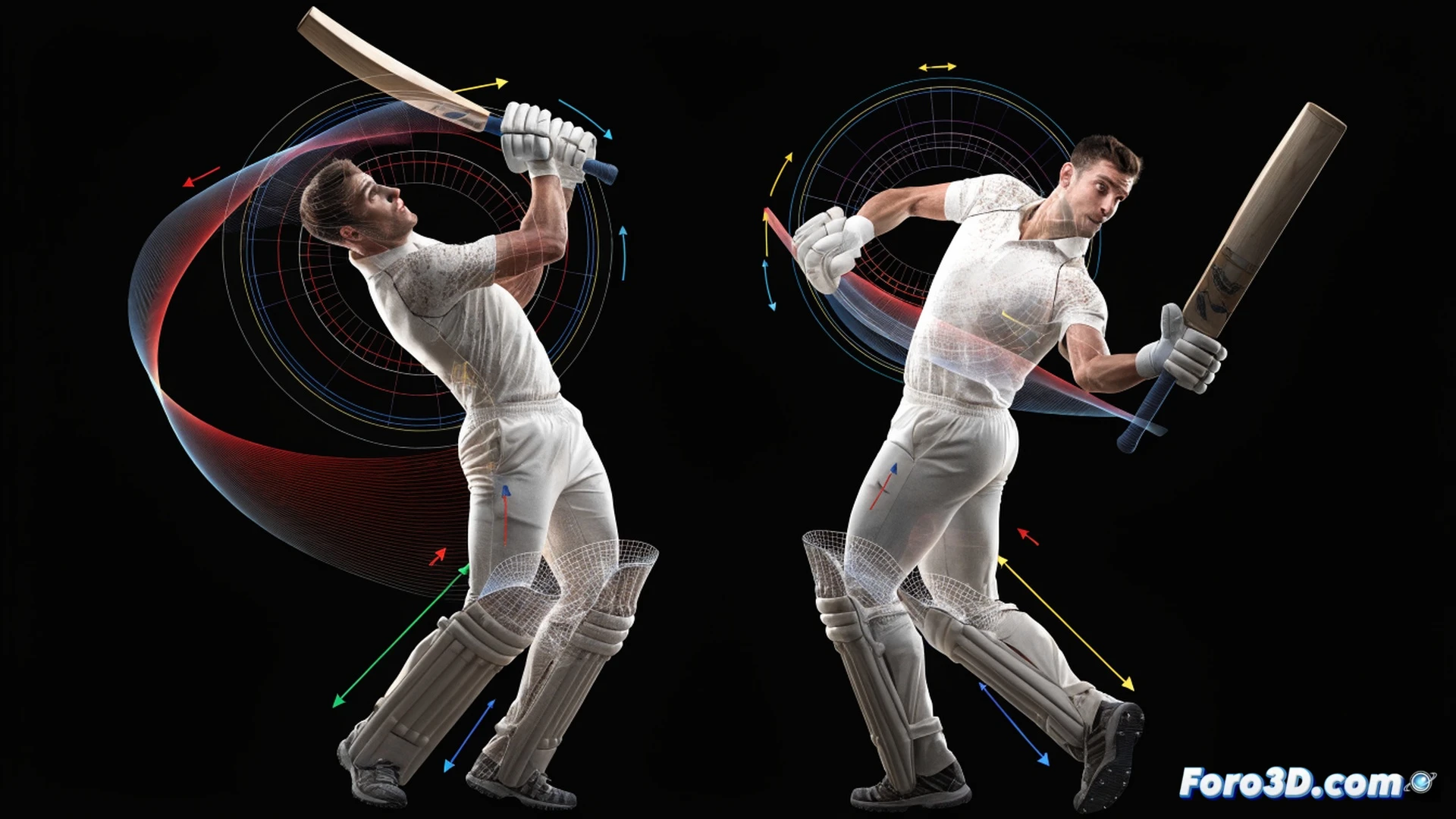
Biomechanics and impossible angles in modern batting 🏏
The 3D model reveals that Buttler uses a 45-degree hip rotation to generate power without losing balance. His wrist, with a 120-degree flexion, allows him to deflect the ball towards areas not covered by the field. The analysis shows that his reaction time is 0.3 seconds, enough to read the type of delivery and adjust the bat angle in milliseconds.
The mystery of the bat that never fails (or almost never) 🤔
According to the 3D scan, Buttler's bat has a sweet spot the size of a coin. But engineers discovered something curious: a hidden microchip in the handle that, in theory, whispers the trajectory into his ear. Of course, the ICC denies everything, but cricket conspiracy theorists are already calling for his gloves to be checked. Or maybe he just has good eyesight.