Jayson Tatum is not just a forward with a soft touch; his game is built on a technical foundation that many analyze in 2D but few break down in three dimensions. From his ball handling to the angle of his hang time, every movement responds to a spatial logic worth studying under a magnifying glass. Here we dismantle the pieces of his mechanics.
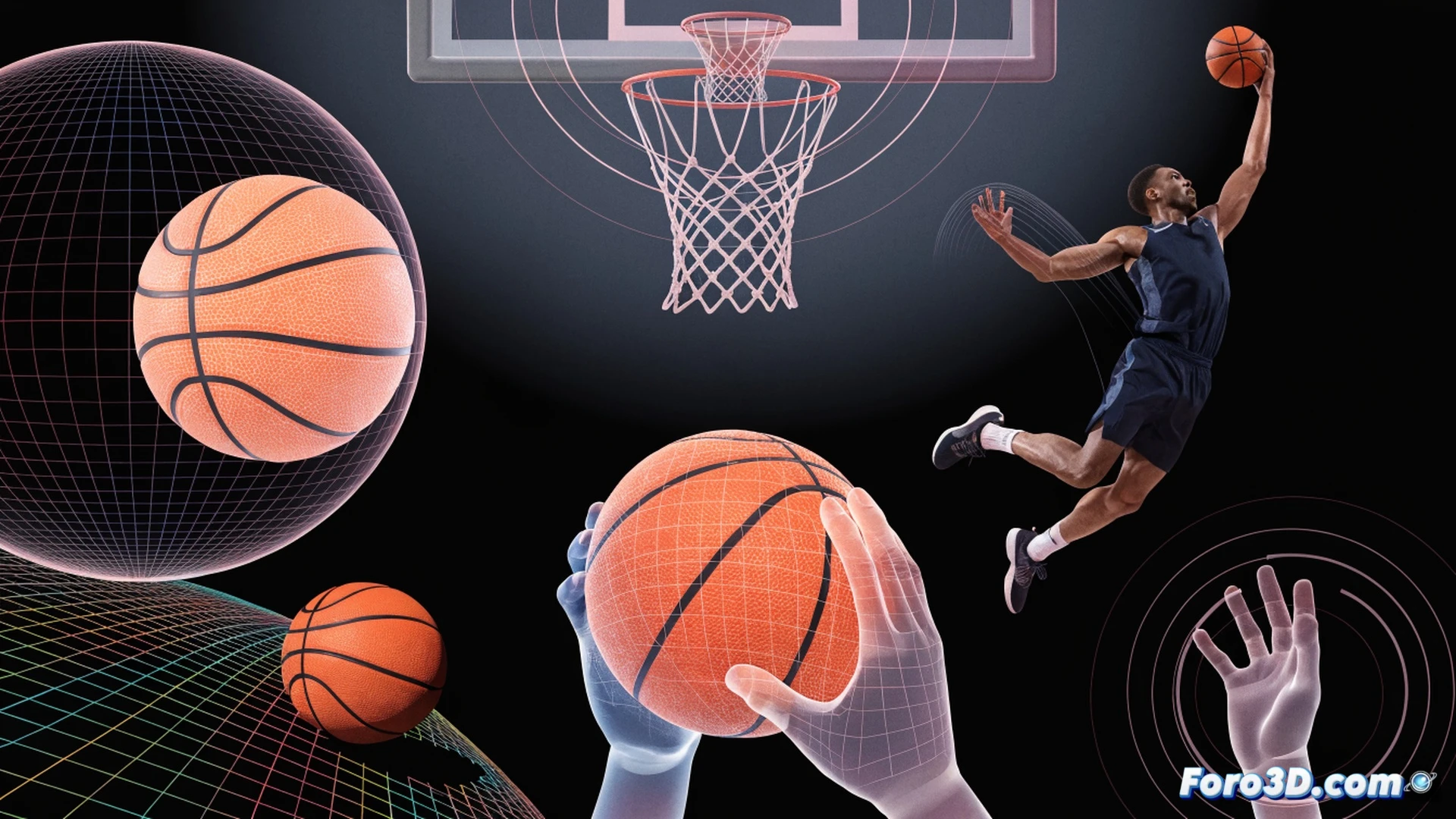
The Variable Geometry of His Triple Threat 🏀
Tatum's secret lies in controlling his hips and center of gravity. When receiving the ball, his pivot foot creates a 45-degree angle that allows him to threaten a shot, drive, or pass without losing balance. On the jump shot, his elbow achieves precise alignment with the rim, while the vertical jump combines with a slight lateral shift to avoid blocks. The ball's rotation exceeds 3 revolutions per second, stabilizing the trajectory even under contact.
When 3D Meets the Opposing Defense 💥
Of course, all this three-dimensional analysis goes out the window when a defender accidentally elbows him in the side. No matter how perfectly aligned his hip is or how much the ball spins like a top, there are variables no biomechanics software can predict: the referee deciding whether to call the foul. In the end, Tatum is a prodigy of physics, but the NBA remains a contact sport where sometimes the third dimension is an opponent's elbow.