Didier Drogba was not just a striker; he was a biomechanical phenomenon on the pitch. His body, a combination of brute strength and refined technique, allowed him to shield the ball as if he had an invisible shield. In this 3D analysis, we break down the physical characteristics that made him a nightmare for defenders, from his center of gravity to the power of his stride.
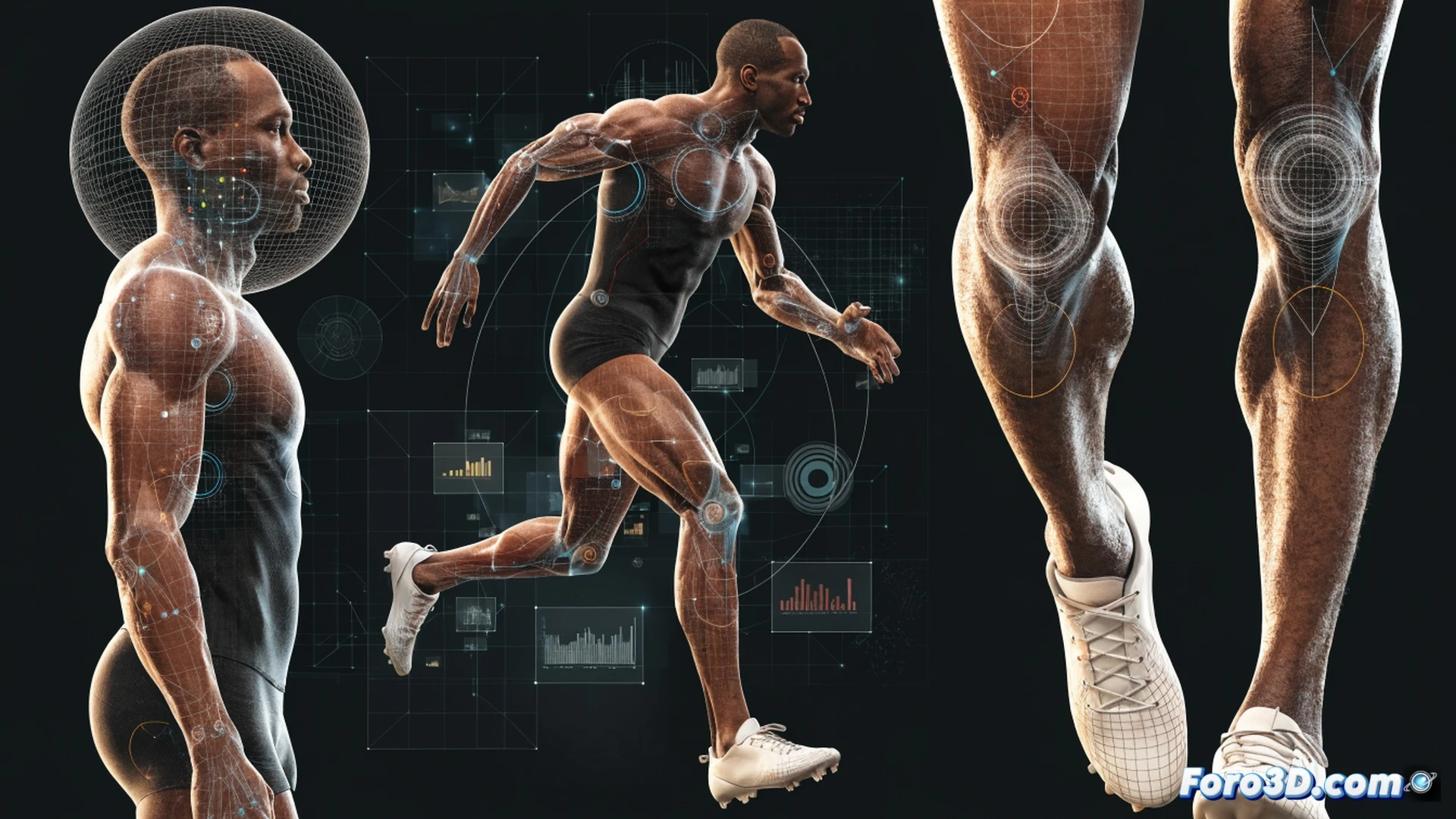
The Biomechanics of a Hammer: Torque and Center of Gravity 🔨
The secret of his finishing lay in a perfect kinetic chain. His wide, low torso gave him an exceptional center of gravity, difficult to displace. When shooting, he generated brutal torque from his hips, transferring energy through a thigh of high muscle density. The 3D simulation shows how his standing foot planted firmly, while the kicking leg described an arc with constant acceleration, with hardly any energy loss at the knee. That explained the speed and spin of his shots.
How to Survive a Drogba Charge (Unsuccessfully) 💥
Opposing defenders usually had two options: make themselves small or leave on a stretcher. The 3D simulation reveals that, when receiving a pass with his back to goal, Drogba activated human wall mode. His extended arm and tilted torso created a 45-degree angle that turned any attempt to steal the ball into a painful physics lesson. Watching the defender bounce off him was like seeing a mosquito hit a windshield. In the end, all you could do was pray he wouldn't turn.