The height control valve is a critical component in the air suspension of trucks and heavy machinery. Its main function is to regulate the air pressure in the bellows according to the vehicle's load, maintaining a constant height. When this valve fails, whether due to an internal leak or a mechanical blockage, the braking system loses efficiency, compromising the vehicle's stability and safety on the road.
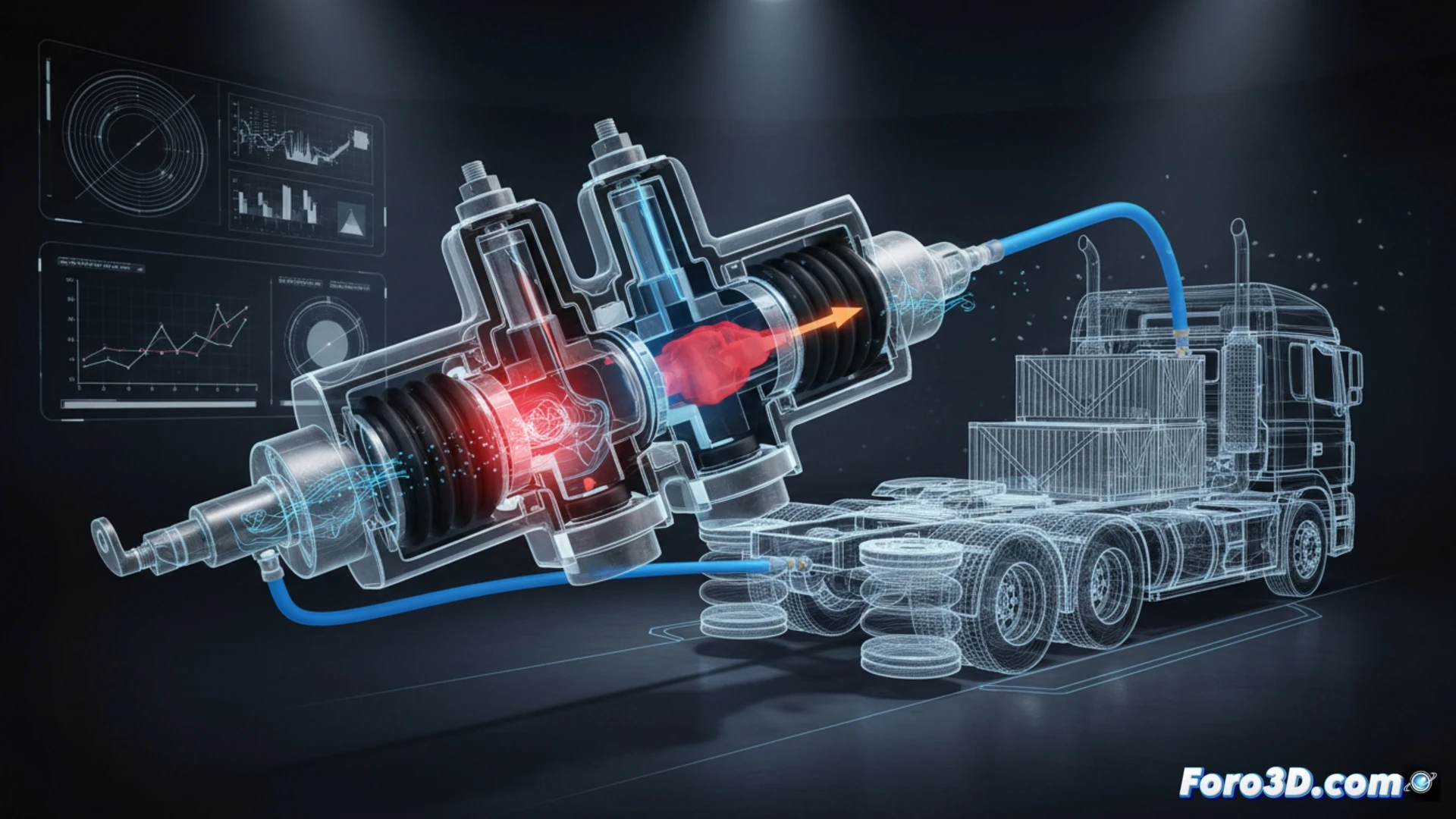
3D modeling of the internal mechanism and failure simulation 🛠️
To understand the failure, we modeled the internal components of the valve in 3D: the control piston, the return spring, the air inlet and outlet ducts, and the sealing diaphragm. Through dynamic simulation, we reproduced two critical scenarios: a leak in the diaphragm seat causing gradual pressure loss, and a piston blockage due to corrosion preventing height regulation. In both cases, the 3D animation reveals how the differential pressure destabilizes the chassis, generating an asymmetric descent of the cab. The 3D scan of an actual damaged part allows comparing the deformed geometry with the original design, identifying fracture points and premature wear.
Preventive diagnosis using 3D technology 🔍
Three-dimensional visualization not only helps understand the failure but also optimizes diagnosis. By scanning the defective valve and overlaying it with the CAD model, technicians can accurately measure spring deformation or sealing seat erosion. This allows anticipating failures before they occur, reducing vehicle downtime. In forums like Foro3D, sharing these animated models facilitates mechanic training and technical discussion on design improvements for these safety systems.
What advantages does finite element analysis offer over traditional inspection methods for identifying the origin of fatigue cracks in the height control valve body?
(PS: ADAS systems are like in-laws: always watching what you do)