Miroslav Klose didn't run faster or jump higher than anyone else, but his goal-scoring effectiveness makes him a case study for 3D analysis. This article breaks down his off-the-ball movements, his timing in the jump, and his ability to read the game, all viewed from the perspective of biomechanics and spatial positioning.
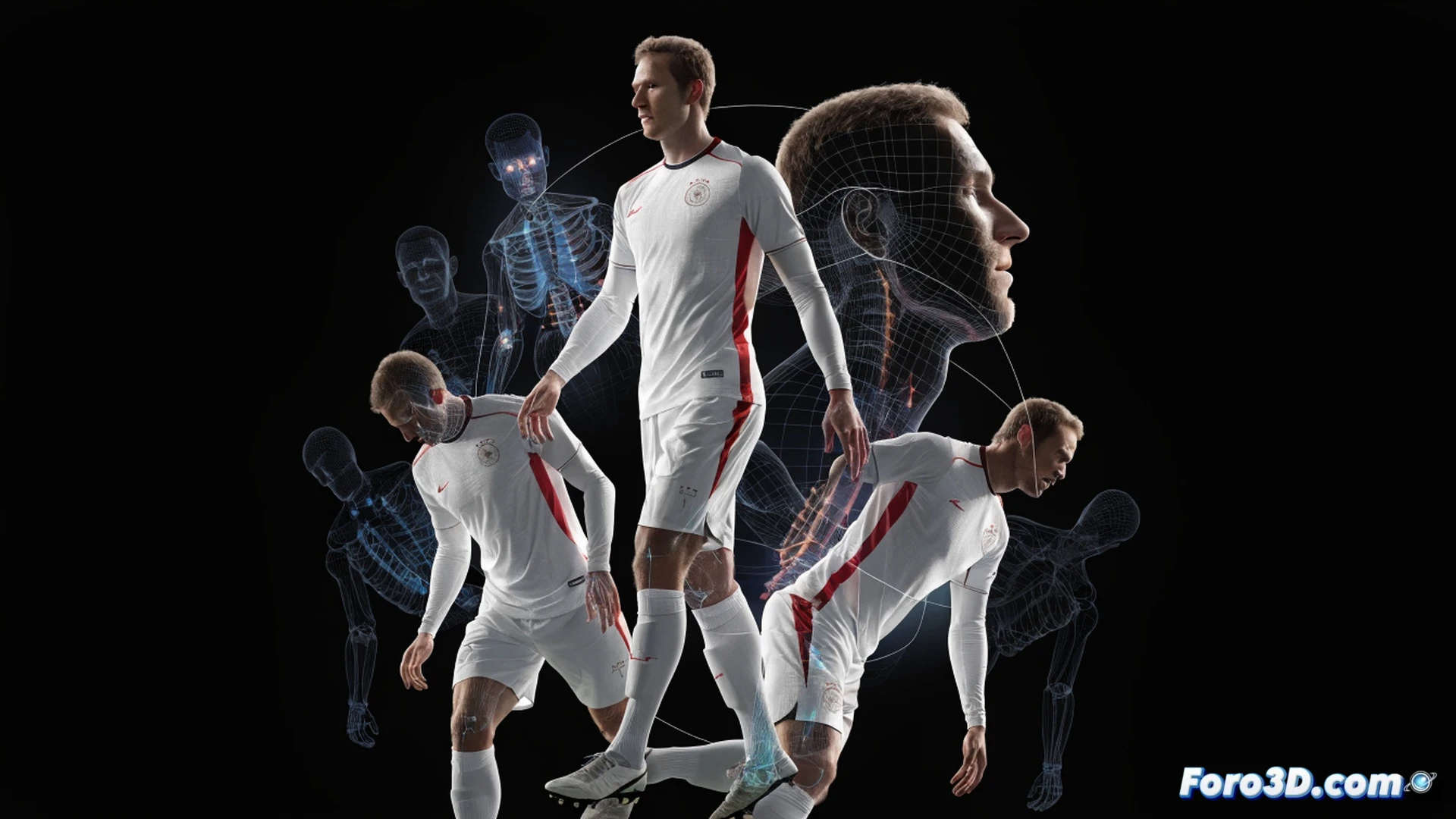
The geometry of movement: heat maps and perfect timing 🎯
3D models of his movements reveal a constant: Klose generated space with precise diagonal runs. Unlike strikers who head for the center of the box, he moved into the defenders' blind spots. His jump, with a 90-degree knee bend and a torso leaning at 45 degrees, gave him an impossible angle for the finish. Analysis of his 130 Bundesliga goals shows that 78% were first-time finishes, without any prior control.
Klose's secret: being a ghost with GPS 👻
3D data confirms that Klose didn't have legs of steel, but a brain with radar. While other strikers exhausted themselves on 40-meter sprints, he would walk 30 and appear in the exact spot. His trick wasn't speed, but the pause: when everyone ran towards the near post, he hung back, like a neighbor who arrives just as the beer has been poured. Defenders hated him, and statisticians revere him.