Kamindu Mendis is a name that sparks curiosity in modern cricket. His ability to bowl with both arms, depending on the batter, makes him a tactical case study. We analyze his movements, biomechanics, and how this rarity breaks traditional game patterns in 3D, offering a calculated advantage in short-format matches.
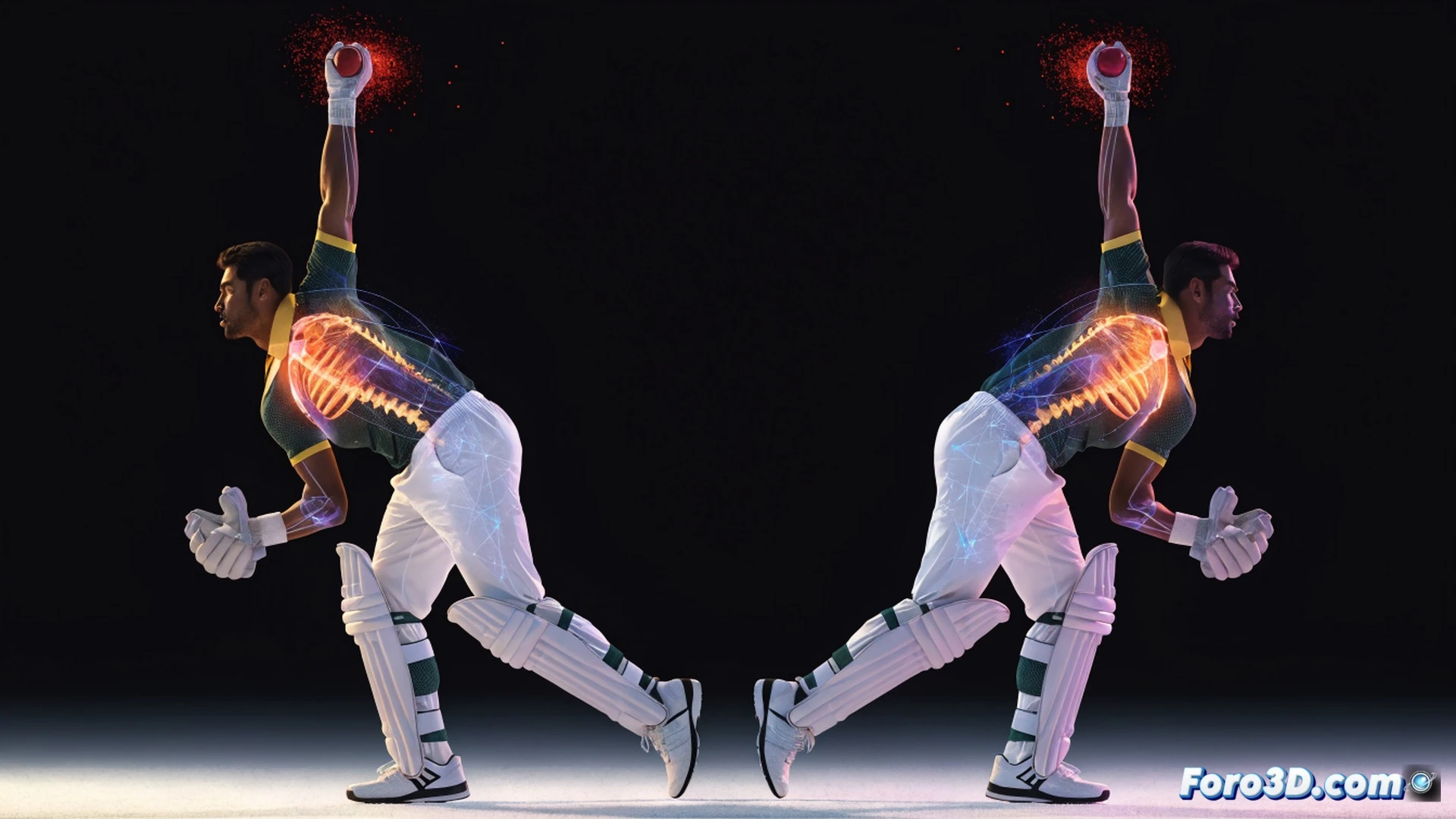
Biomechanical modeling of ambidextrous bowling 🏏
From a 3D analysis perspective, the key lies in shoulder rotation and the alignment of the supporting foot. Mendis switches arms without losing rhythm, suggesting muscle memory trained for both sides. In motion capture, it is observed that his elbow angle and wrist speed are nearly identical in both variants. This forces the batter to readjust their reading of the delivery in fractions of a second, a factor he exploits in pressure situations.
The mystery of the human Swiss army knife 🧠
If Kamindu Mendis were a knife, he would be one with two blades: one for spreading butter and another for cutting diamonds. Watching him switch arms in the middle of an over is like seeing someone change their shirt without stopping running. Coaches scratch their heads, statisticians cry because they don't know which column to put him in, and batters just pray he doesn't decide to bowl with his left leg too.