We analyze in 3D the qualities that define Jarrett Allen as a defensive center in the NBA. His ability to read pick-and-rolls and his timing in shot blocking are key data points. This study breaks down his biomechanics in recovery actions and the impact of his wingspan in the opponent's paint.
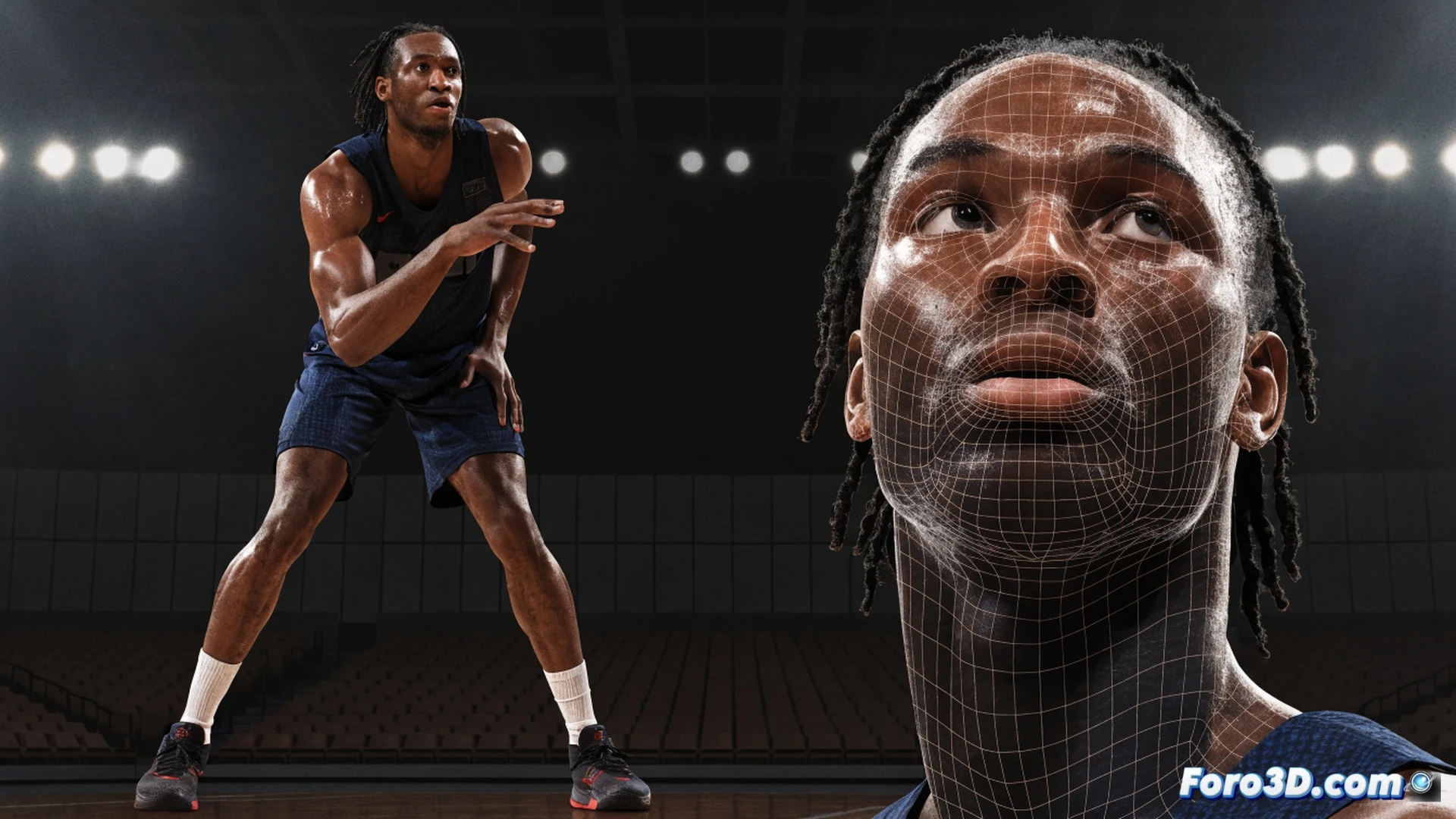
Biomechanics of vertical jump and angular positioning 🏀
The 3D reconstruction shows that Allen optimizes his vertical jump through a 90-degree exact knee bend at takeoff, which reduces energy loss. His tilt angle when jumping toward the block is 75 degrees, allowing him to cover more horizontal space. Eye-tracking data indicates he anticipates the opponent's release 0.2 seconds before takeoff, a key margin to avoid fouls.
His hair doesn't reduce gravity, but it adds style 😄
His afro is an unsolved aerodynamic mystery. According to 3D models, the hairstyle generates a wind resistance of 0.03 newtons, an irrelevant data point for his jump. The truly funny thing is that, despite the hair cloud, his center of gravity remains stable. Perhaps the secret is not in the afro, but in not thinking too much while flying toward the rim.