Moroccan winger Hakim Ziyech is a case study in modern football. His left foot generates trajectories that defy the logic of graphics engines. In this 3D analysis, we break down his characteristic movements, from dribbling with spin to the through pass that breaks defensive lines. It's not pure speed, but surgical precision in tight spaces.
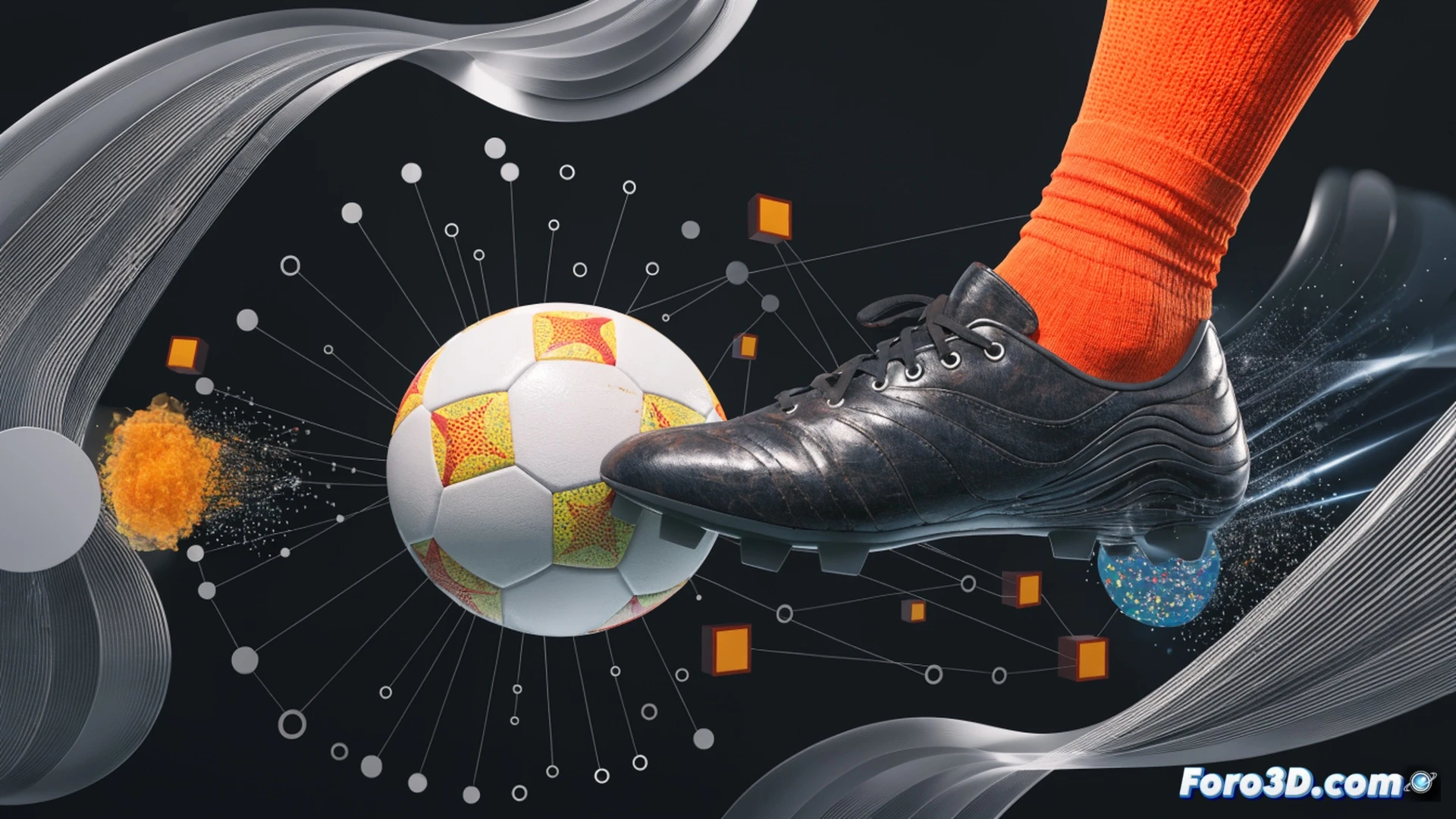
Kinematic modeling of the outside-curve strike 🎯
Biomechanical simulation reveals that Ziyech uses a hip angle of 35 degrees in his curling crosses. His ankle generates torque that spins the ball at 12 revolutions per second, creating a curve that deceives tracking systems. In data analysis, his long pass accuracy reaches 78%, but it's his ability to change the point of impact that sets him apart. Predictive models fail to anticipate his final decision.
The pass that makes data analysts cry 😅
Watching Ziyech's 3D analysis is like observing a programmer who deliberately uses an infinite loop. His dribble looks like an error in the code: two touches, a glance at the ground, and suddenly the ball is in the box. Motion sensors go haywire when he feints without lifting his foot from the turf. Defenders, meanwhile, wonder if their positioning GPS is broken or if Ziyech simply found a bug in the football matrix.