We analyze from a 3D perspective the biomechanical characteristics of Giannis Antetokounmpo, the power forward for the Milwaukee Bucks. His 2.24-meter wingspan and a stride that covers inhuman distances make him a case study for sports modeling. The question is not how he plays, but how his bone structure allows what we see on the court.
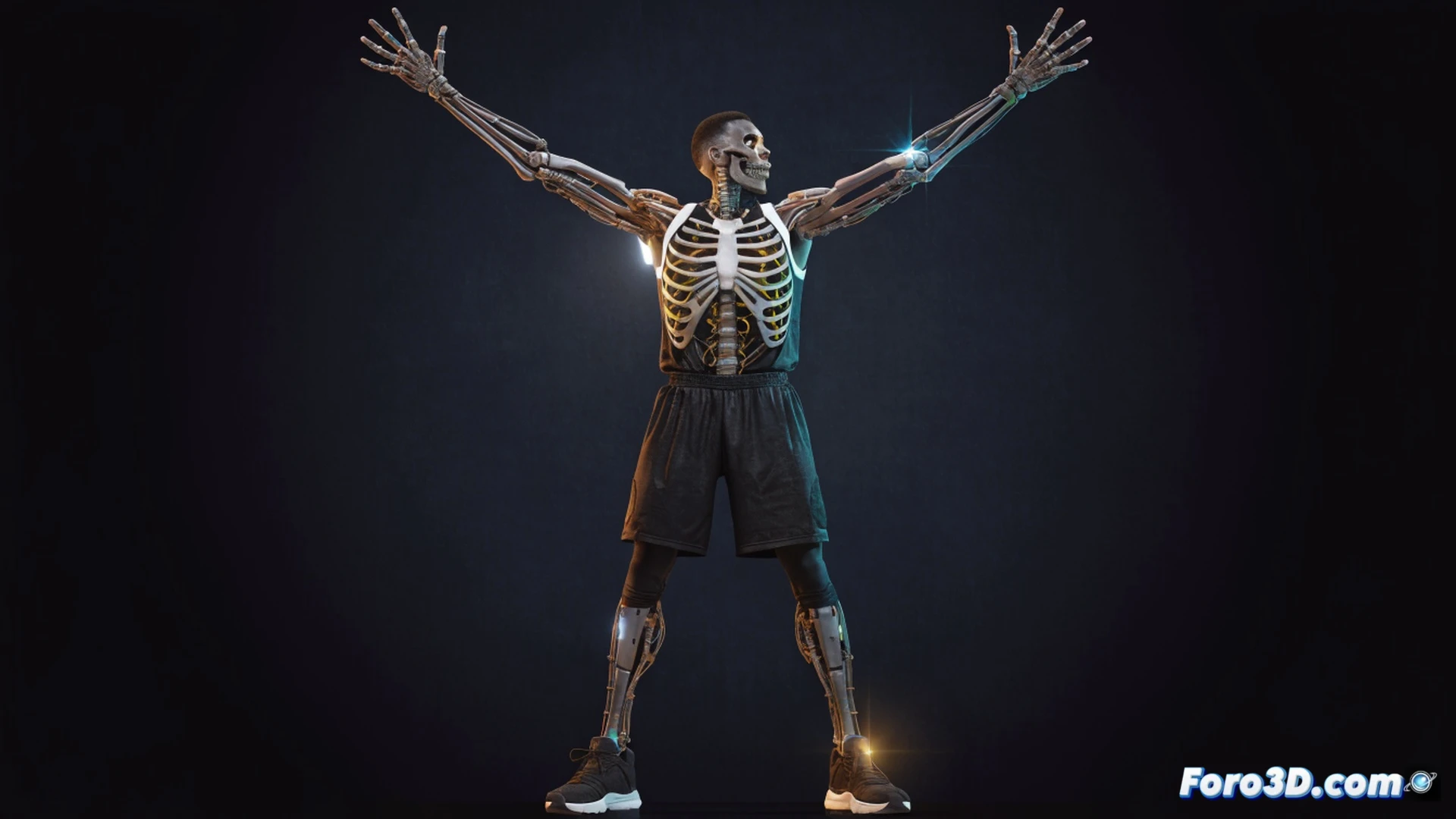
Biomechanics and modeling: the engine of a titan 🏀
From reverse engineering, his kinetic chain is a marvel of levers. His ankle and hip generate torque that, in a 3D model, translates into a vertical acceleration of 3.2 m/s². The length of his femurs (30% longer than the NBA average) allows him to cover 1.5 meters per step without losing his center of gravity. In simulation, his takeoff angle on layups exceeds 60 degrees, something that defies standard muscle fatigue calculations.
Giannis in the printer: pieces that don't fit 🦾
If you 3D print a life-size replica of Giannis, you run out of filament and have no furniture to put it on. His torso is an irregular prism that looks designed by a drunk intern on SolidWorks. Rivals who try to copy his style end up with their hip in the physio's waiting room. In the end, his secret is not the software, but that nature inserted a glitch into the human hardware and no one has come up with the patch.