Welshman Gareth Bale defined an era with his speed and left-footed strike. In this 3D analysis, we break down the physical and technical attributes that made him a game-changing player. From his explosive sprint to his finishing ability, we review the tools that took him to the top of European football.
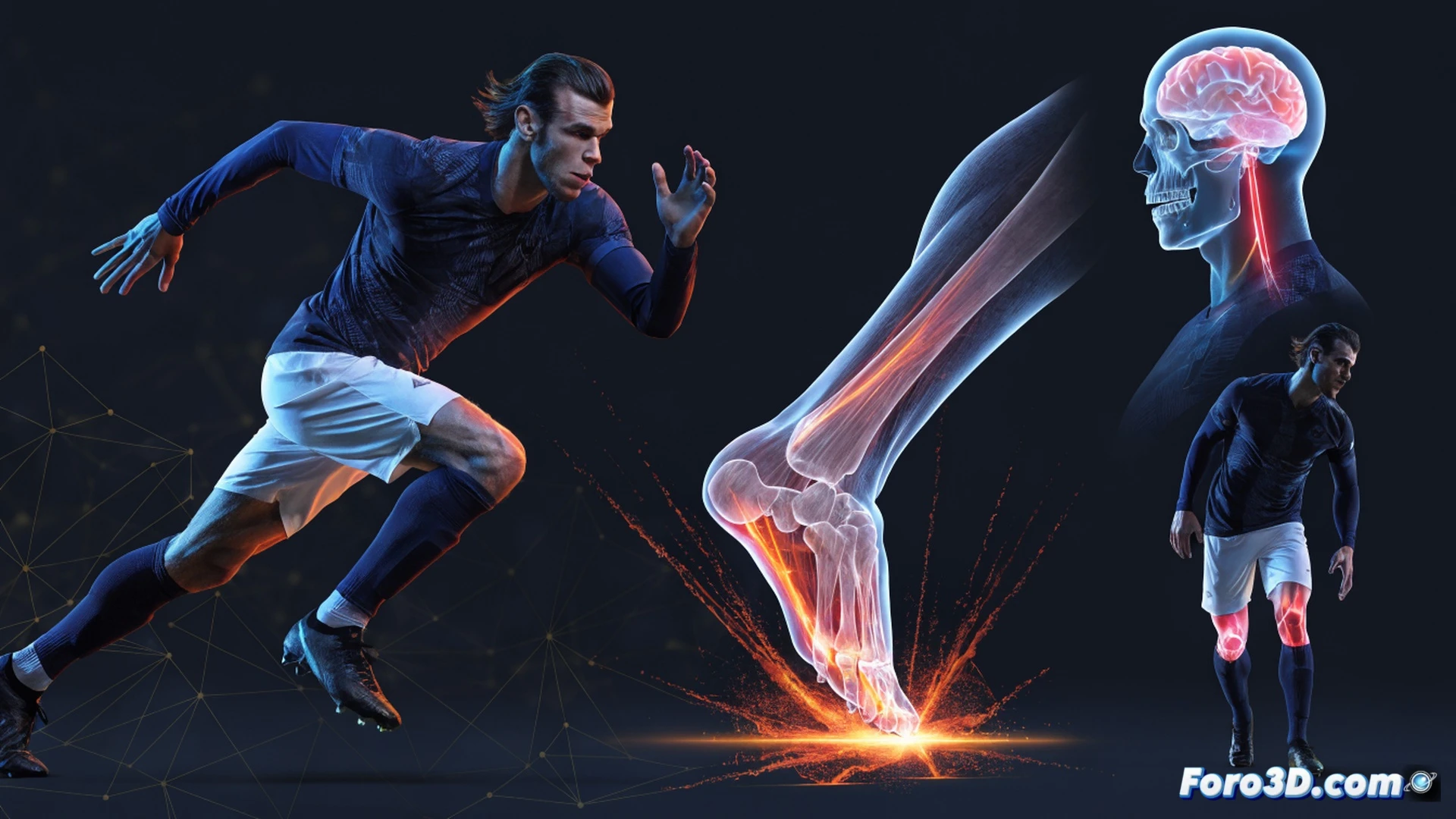
Biomechanics and data of an elite talent ⚡
The 3D model reveals a long stride that, combined with a low center of gravity, allowed him to reach 36 km/h while running. His left foot generated exceptional torque when striking the ball, with a hip rotation exceeding 60 degrees. Furthermore, his acceleration ability in the first 10 meters made him lethal in offensive transitions, although his physique presented muscular imbalances prone to injury.
Golf mode: injuries and absences on the bench 🏌️
If the 3D analysis detected his downtime, we would see a clear pattern: Bale spent more hours on the green than on the pitch. His left foot was magical, but his hamstrings had an expiration date. While his teammates ran, he warmed the bench with a distant gaze, dreaming of a hole in one. An intermittent genius with a golf goalkeeper's contract.