Gabriel Magalhães has established himself as a defensive pillar at Arsenal. His aerial game and ability to read plays make him a top-tier center-back. In this 3D analysis, we break down his movements, his positioning, and that strange ability to always be in the right place, even if sometimes it seems he does so by inertia.
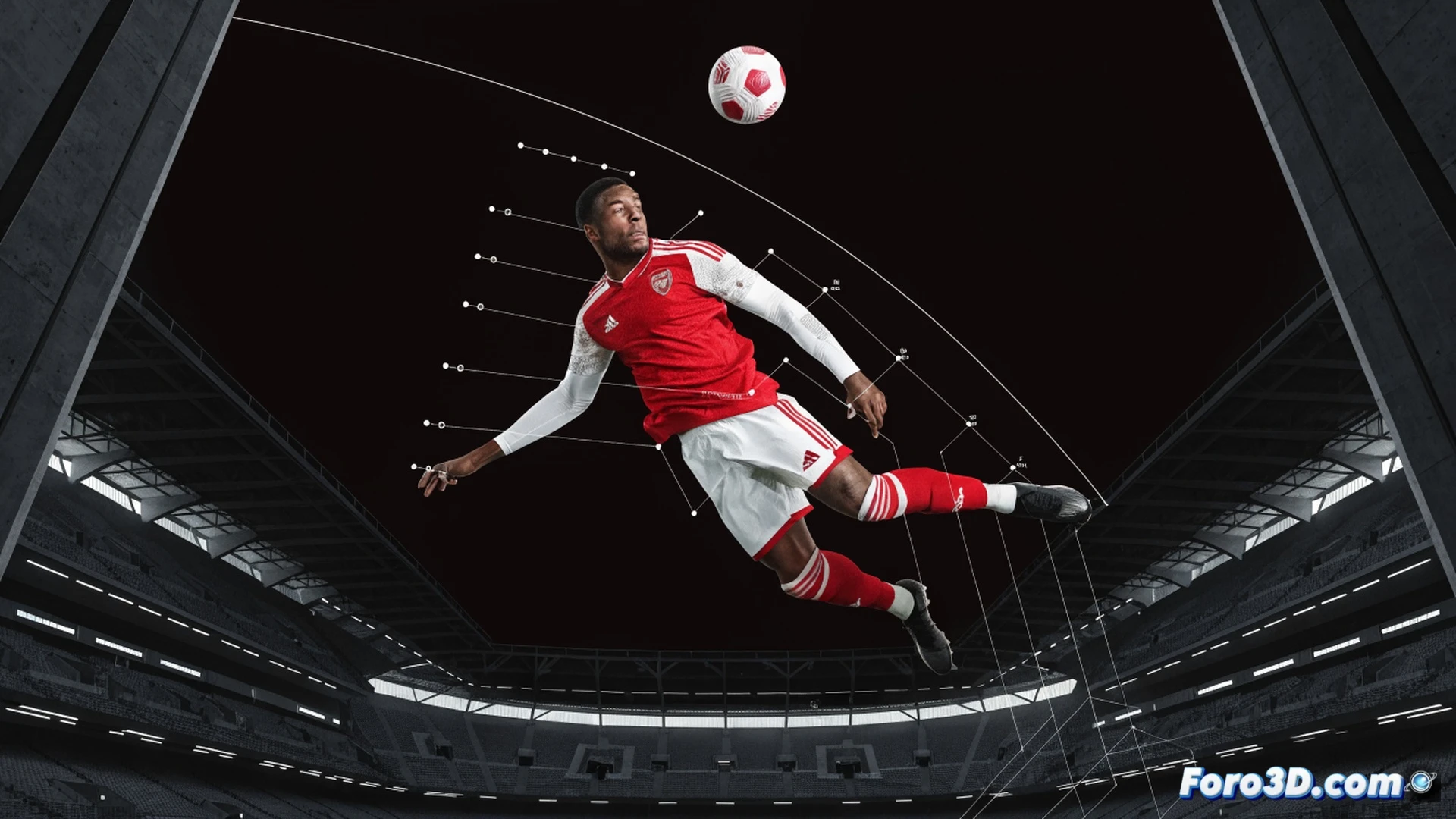
3D Mapping of His Positioning and Aerial Game 🧠
The 3D reconstructions reveal a clear pattern: Magalhães does not run aimlessly. His stride is long but controlled, and his low center of gravity allows him to change direction quickly. In aerial duels, his jump is not the highest, but it is the most synchronized. The model shows he detects the ball's trajectory 0.3 seconds before the striker. This, combined with his wingspan, creates an almost perfect block on crosses from the flanks.
The Center-Back Who Looks Like a Tank on Autopilot 🛡️
Now, the 3D analysis also captures his moments of cosmic distraction. Sometimes it seems like his internal GPS resets and leaves a gap the size of a bus. It is as if his supercomputer brain takes a pause to update. But watch out, when he comes back into the game, he recovers the ball with a calmness that drives the striker crazy. He is a wall with an energy-saving mode.