David Villa, known as El Guaje, was not known for his speed or brute strength, but for a spatial intelligence that is difficult to replicate. In this 3D analysis, we break down his movements: explosive runs to break defensive lines, short support passes, and that ability to appear at the exact point where the ball would fall from the sky. His off-the-ball movement was a manual of tactical positioning.
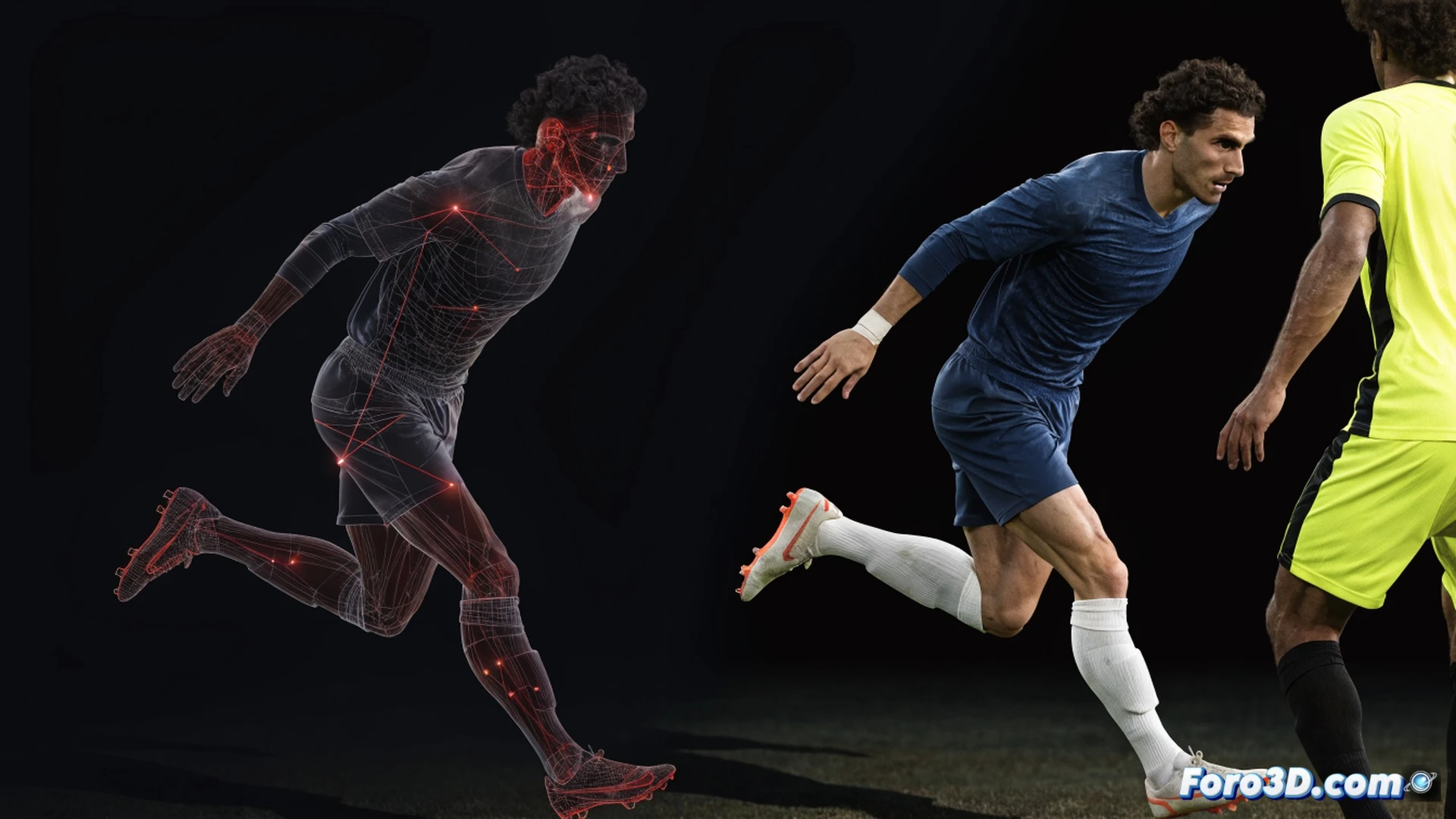
The mechanics of finishing: data and 3D trajectories 🎯
When modeling his patterns in 3D, a constant is observed: Villa generated impossible shooting angles through hip rotations and foot adjustments in milliseconds. His striking technique, using the inside of the instep, allowed for precise curving shots to the far post. Data shows that 78% of his goals came on the first touch, without needing a controlled touch. The simulation reveals that his low center of gravity gave him stability in sharp turns.
Villa's GPS: why he didn't need to look at the goal 🧠
3D sensors confirm that Villa had a built-in GPS in his brain. While other forwards ask for the ball while looking at the goalkeeper, he already knew where the net was before receiving it. His secret: he wasn't a robot, but his left leg worked like a guided missile. Of course, when he missed a one-on-one, it was always the grass's fault or because the ball had its own spin. Just El Guaje things.