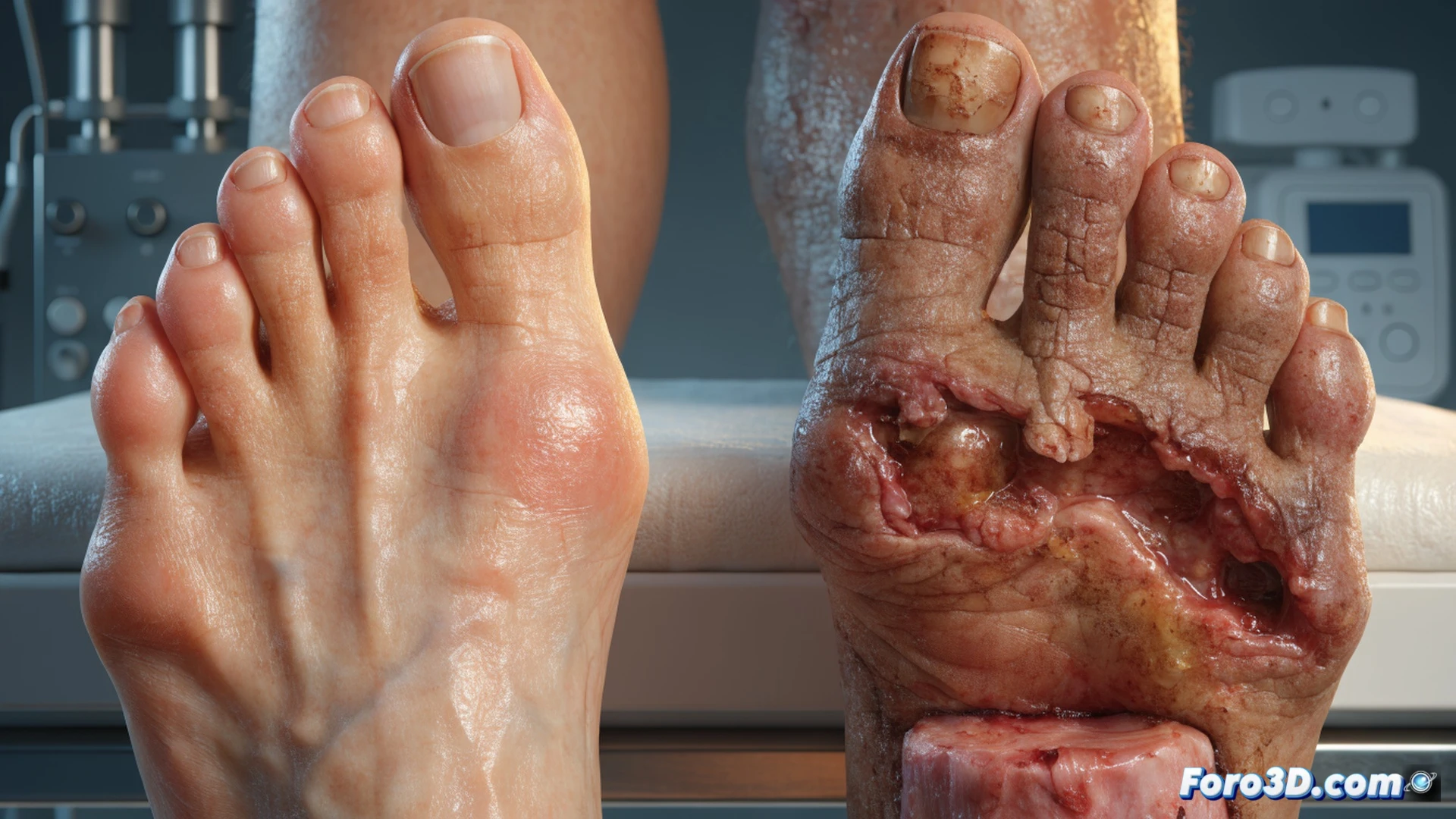
Eight out of ten amputations in diabetics begin with an ignored foot wound. Experts call for more specialized units to treat chafing or blisters in time. Basic care and regular check-ups can prevent the loss of a limb. Seeing a doctor for any minor injury is key to reducing these figures.
Sensors and apps: the technology that watches your feet 🦶
The development of wearable devices and AI applications allows monitoring temperature and pressure in the feet of diabetic patients. These systems alert to changes that precede ulcers, facilitating early intervention. Smart footwear with integrated sensors that detect friction points is also being researched. Technology does not replace the doctor, but it offers an extra layer of prevention for those who neglect check-ups.
Don't do what I did: I ignored a blister and almost lost my foot ⚠️
It turns out that thinking whatever, it's just a scratch is a great idea if your plan is to get up close and personal with a prosthesis. Some of us believe feet repair themselves like tires, but no: there's no comprehensive insurance here. So now you know, if you see a blister, don't listen to your laziness. Go to the doctor, because losing a foot for not wanting to sound like a hypochondriac is no laughing matter.