Robert A. Heinlein published in 1951 a work that defined the alien invasion subgenre. In The Puppet Masters, parasites from space attach themselves to the human spine to dominate their will. The novel explores the fear of loss of identity and mind control, themes that continue to resonate in modern science fiction.
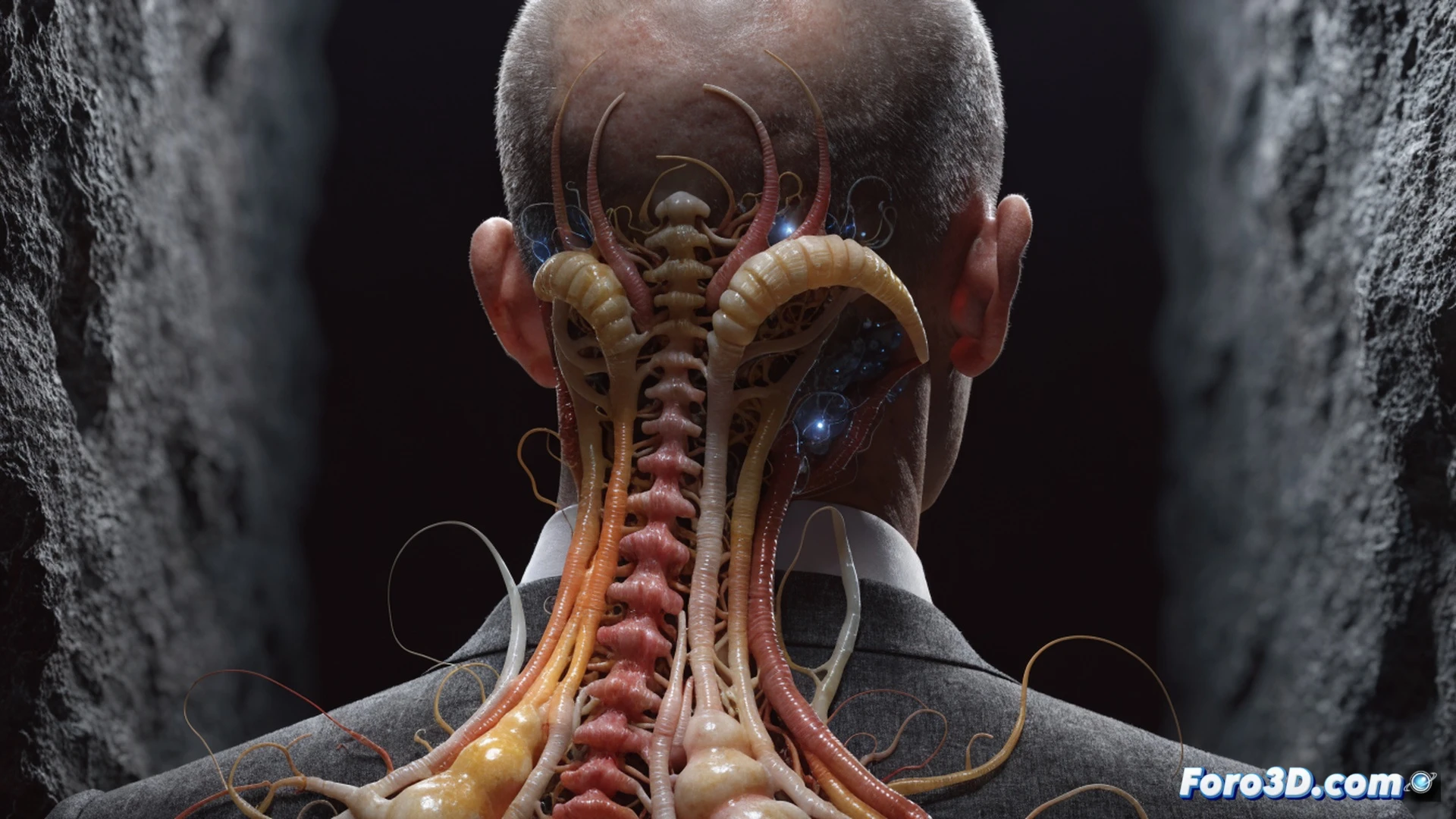
The Parasite Design: Biology and Neural Control 🧠
Heinlein describes the puppeteers as flat, manta ray-like beings that attach to the host's nervous system. Once attached, they secrete a substance that nullifies individual will, allowing a hive mind to coordinate the movements of the infected. The novel proposes a control mechanism based on the chemical modification of synapses, a concept that decades later neuroscience has begun to explore with brain-machine interfaces.
And you, are you sure you're not carrying a parasite right now? 📱
The most unsettling part of the novel is not the alien, but how easy it is to imagine someone being controlled without knowing it. Sometimes, watching certain discussions on social media, one suspects the parasite has already arrived. The difference is that today it doesn't attach to your back, but installs itself in your pocket in the form of a smartphone. And the worst part: we pay for it in installments.