AMD has made a move with two launches that directly target the PC user's wallet: the Radeon RX 9070 GRE, a GPU focused on 1440p with 12 GB of VRAM and a price of $549, and the Ryzen 7 5800X3D 10th Anniversary Edition for AM4 at $349. The promise is clear: offer performance without needing to mortgage your wallet or change platforms. But for the 3D professional, the question is more complex: can these components sustain a serious workflow in modeling and rendering?
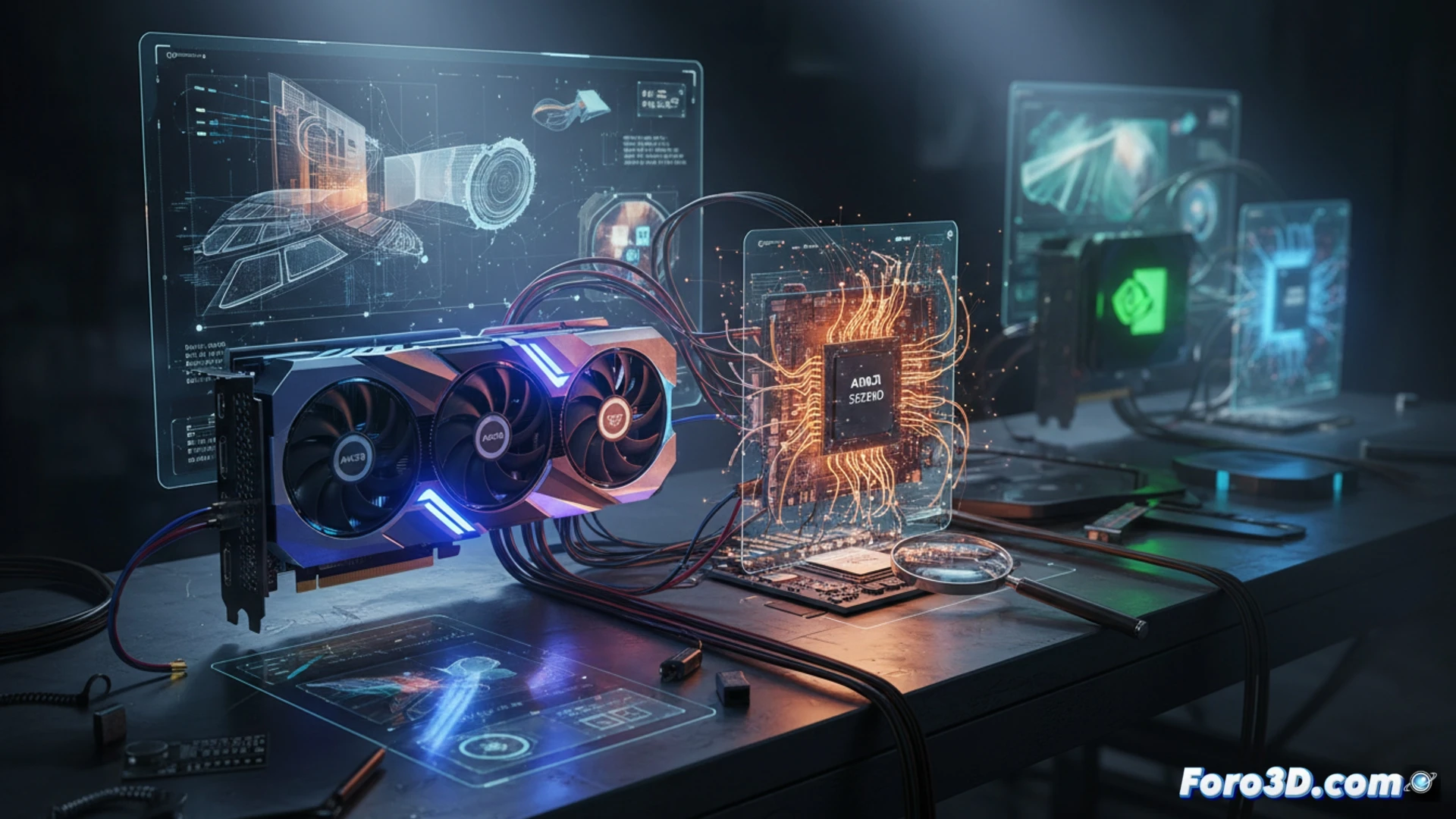
Technical analysis: VRAM, 3D cache, and bottlenecks 🧠
The Radeon RX 9070 GRE presents itself as an attractive option for real-time viewport with engines like Eevee or Unreal, but its 12 GB of VRAM is a critical point. In scenes with high polygon density or 4K textures, this memory can saturate quickly, forcing the use of compressed textures or reducing scene complexity. In renderers like Blender Cycles or Octane, VRAM capacity is directly proportional to the complexity you can handle; 12 GB is tight for professional projects. On the other hand, the Ryzen 7 5800X3D Anniversary Edition, with its stacked 96 MB L3 cache, is a monster in physics simulation and shader compilation times, surpassing mid-range AM5 CPUs in tasks that benefit from low latency. However, the AM4 platform runs out of future expansion options (no native PCIe 5.0 or DDR5), which limits long-term scalability.
The final decision: upgrade or wait? 🤔
The RX 9070 GRE and 5800X3D combination is a strange but functional marriage for the 3D user on a tight budget. If your work focuses on low to medium complexity modeling and fast renders with engines optimized for AMD, this duo is a solid option that will allow you to extend the lifespan of an AM4 motherboard. But if you handle massive textures, complex simulations, or intensive GPU renders, 12 GB of VRAM will be a drag and the lack of DDR5 a hindrance. In short: it's a smart transitional solution, not a generational leap. Evaluate if your workflow fits within those 12 GB before opening your wallet.
Considering the memory and bus limitations of the RX 9070 GRE versus the 3D cache of the 5800X3D, in which modeling and rendering scenarios does this combination avoid bottlenecks without needing a high-end motherboard?
(PS: RAM is never enough, like coffees on a Monday morning)