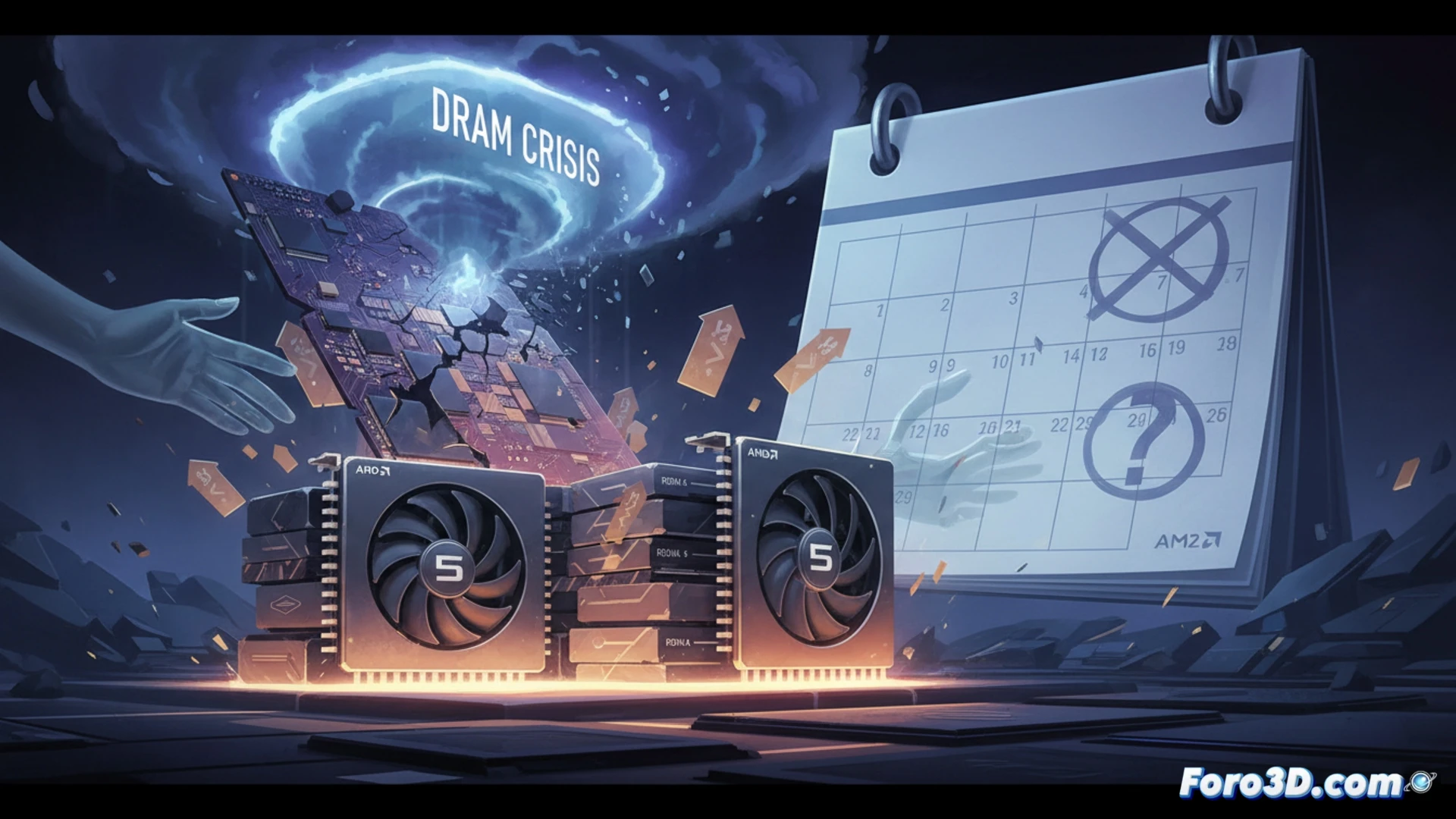
AMD has reportedly postponed its RDNA 5 graphics cards until late 2027 or early 2028, according to recent leaks. The company cites a DRAM crisis and complexities in architecture development. However, the underlying reason reveals a less technical interest: selling the current stock of RDNA 3 and 4 at inflated prices, taking advantage of the fact that the memory shortage affects industrial production more than graphics chip design.
The technical truth behind the DRAM crisis excuse 🧠
The DRAM crisis is real, but partial: it mainly impacts the manufacturing of HBM and DDR5 memories, not the development of new graphics architectures. AMD could design RDNA 5 without directly depending on that shortage, just as Nvidia does with its Blackwell. The main reason is that AMD cannot compete in the high-end segment with Nvidia and prefers to wait for the manufacturing costs of advanced nodes to drop. Meanwhile, the user who needs a graphics card faces two options: pay a premium for RDNA 3/4 or wait years without guarantees of price or performance.
Two years of waiting: the perfect excuse to sell what's left over 💸
The industry has normalized two-year delays as if they were inevitable, when in reality they are strategies to keep prices high. AMD says it needs more time to polish RDNA 5, but what it really needs is time to empty its warehouses of RX 7000 and 8000 without having to discount them. It's like the neighbor who says he's going to remodel the kitchen but doesn't start until he sells the old fridge at the same price as a new one. Meanwhile, the user looks at their wallet and wonders whether to buy now or wait until 2028.