Amazon arrived in India with the promise of revolutionizing retail, but the reality has been more complex. The country, with its vast democratic and rapidly growing market, imposes foreign investment regulations and competition with local players like Flipkart. For consumers, this translates into limited catalogs, variable delivery times, and prices that don't always beat those at the corner store.
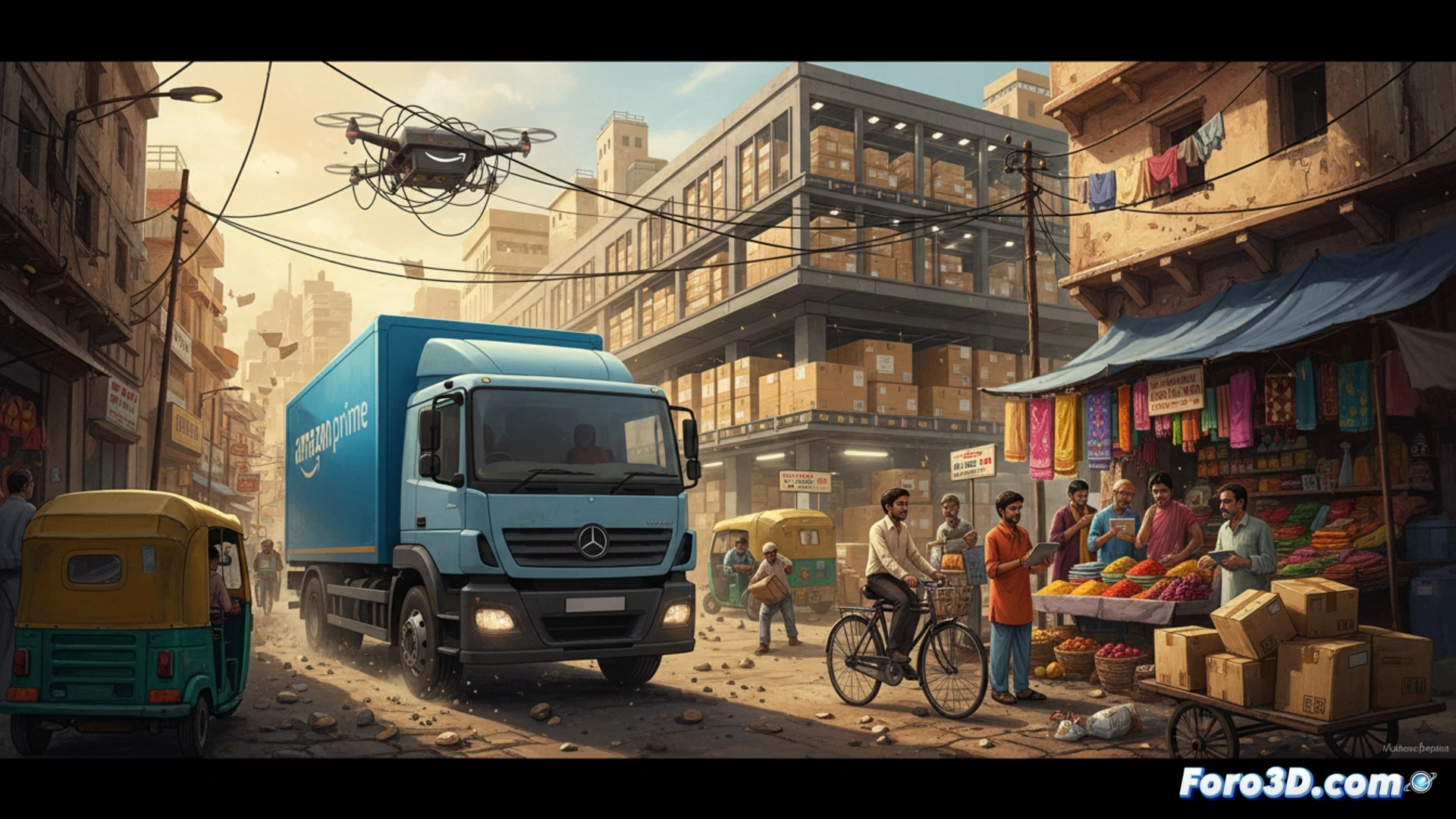
Logistics infrastructure and the regulatory challenge 🚚
Amazon's model clashes with Indian regulations that prohibit marketplaces from owning their own inventory. To get around this, the company operates through wholesale entities and affiliated sellers, a structure that increases operating costs. Additionally, the road network and fragmentation of postal addresses in rural areas force investment in regional sorting centers and partnerships with local stores. The result is a supply chain that is efficient on paper, but slow in practice.
The delivery driver and the patchouli: a three-day odyssey 📦
You ordered a charger and got a patchouli. No, it's not Amazon's new aromatherapy service, but the result of mixing crowded warehouses with labels written in Hindi, Tamil, and Bengali. While Jeff Bezos dreamed of drones, the local delivery driver negotiates with the neighbor who has the exact address and a guard dog. In the end, the package arrives, but the low price is paid for with patience.