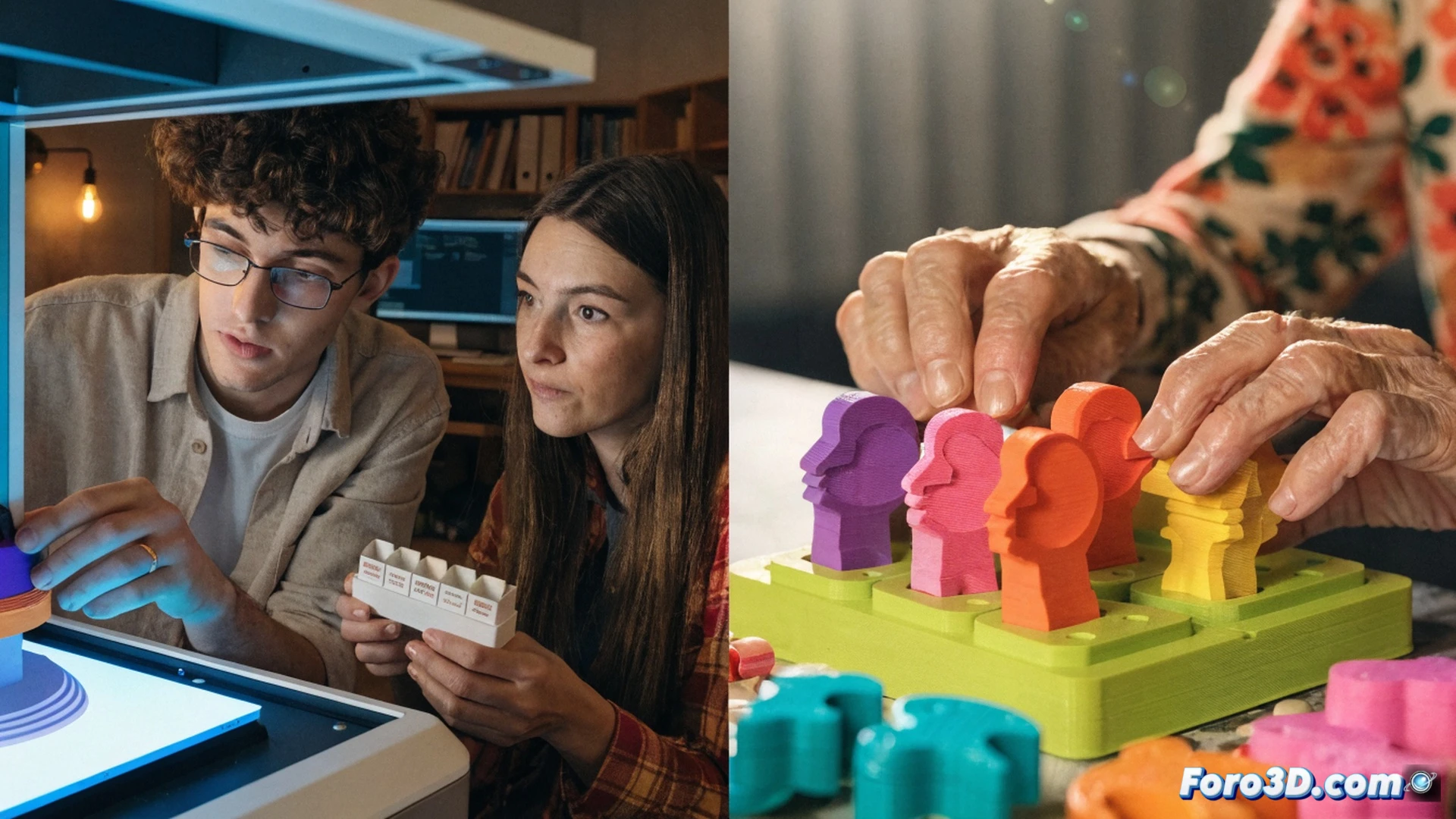
Students from Almazán have developed 3D printed objects to help people with Alzheimer's. Pill organizers with colored compartments and personalized memory games aim to improve their daily routine. The initiative demonstrates that educational technology can translate into practical tools that directly impact the well-being of the elderly, offering accessible solutions from the local environment.
Functional design with educational 3D printing 🧩
The students applied 3D modeling with free software to create pieces adapted to specific cognitive needs. The pill organizers include tactile guides and chromatic contrasts to facilitate medication identification. The memory games use simple geometric shapes and differentiated textures. The process involved rapid prototyping iterations, adjusting thicknesses and fits to ensure a secure grip. The result is functional, not decorative, objects that prioritize usability over aesthetics.
The 3D printer, the new ally against forgetfulness 🤖
Now, if a grandfather forgets whether he took his pill, at least he'll have a colorful pill organizer to remind him. And if not, he can always blame the printer for not having enough contrast. The memory games, for their part, promise to be more effective than the classic trick of leaving notes stuck to the fridge. Of course, we'll have to see if the grandson doesn't end up using the pieces to build a spaceship.