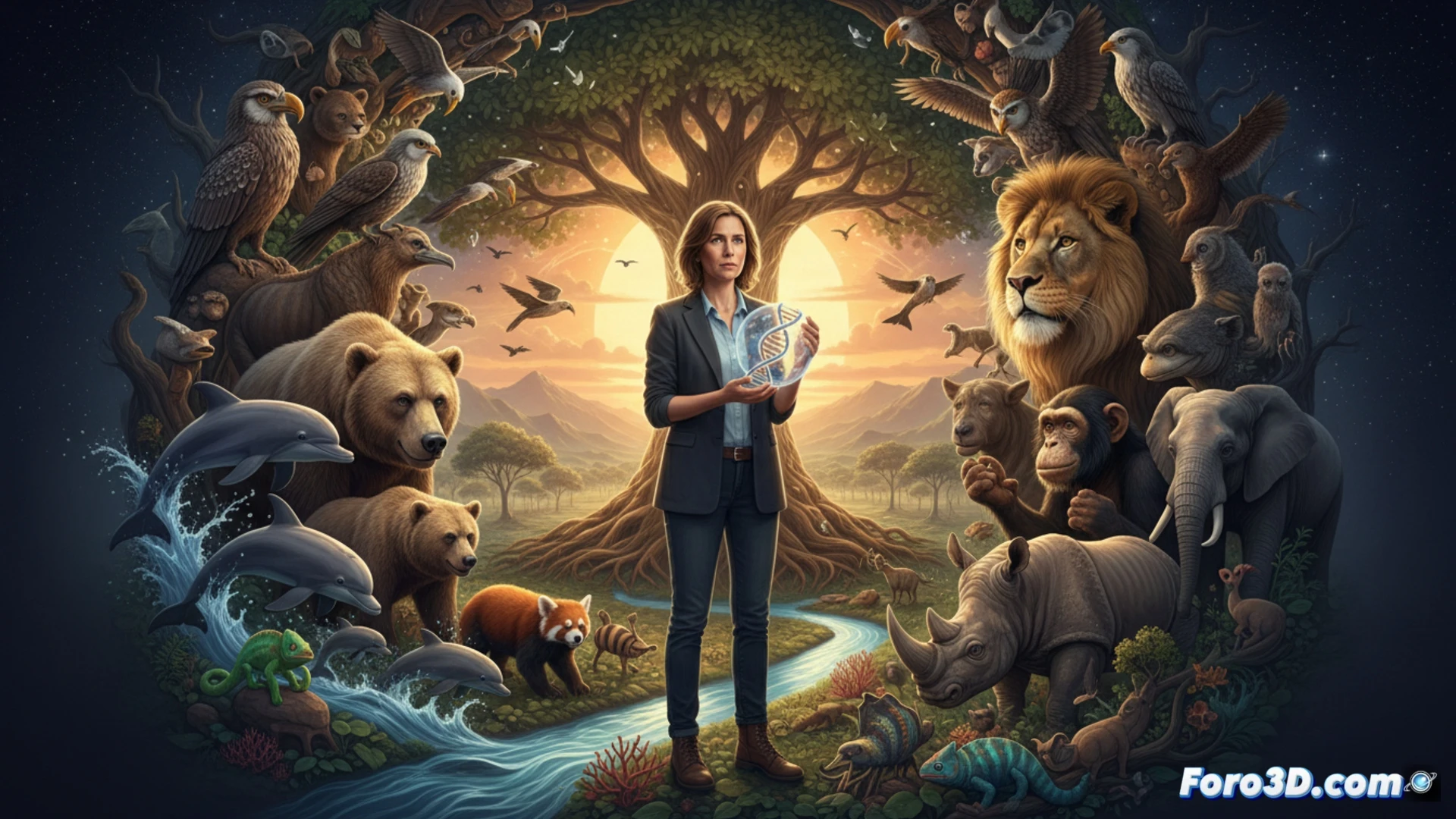
Biologist Alice Roberts argues that humans are just another animal species, with bodies and brains shaped by evolution. In her new book, she challenges the belief in our superiority and exceptionalism. For the general public, understanding this shared biology helps to value health, the environment, and equality among species. Recognizing our animal nature makes us more aware of our place in the world.
How evolutionary biology redefines technological development 🧬
Roberts applies evolutionary principles to analyze how our cognition and physiology limit and guide innovation. From device ergonomics to artificial intelligence, understanding that our brain is not a perfect computer but a product of natural selection allows us to design tools better suited to our actual capabilities. This approach avoids falling into the myth of the human as a superior machine, proposing technology that respects our biological rhythms and basic evolutionary needs.
The human ego: obsolete software that nobody updates 🤖
Because, of course, while the biologist reminds us that we share 98% of our DNA with chimpanzees, we keep installing self-help apps to feel unique. It's as if the universe created a basic operating system for all primates, and we, in a display of arrogance, bought a diamond case for our phone. In the end, the biggest design flaw is not our spine, but the inability to accept that we are the noisy neighbor in the animal block.