New research has uncovered a hidden danger in lakes and ponds: the combination of iron and hydrogen peroxide causes massive algae die-offs. This process ruptures their cells and releases dangerous toxins, contaminating drinking water and causing fish kills. In the United States, damages amount to millions of dollars annually, and the finding suggests that controlling these outbreaks will be more complex than previously anticipated.
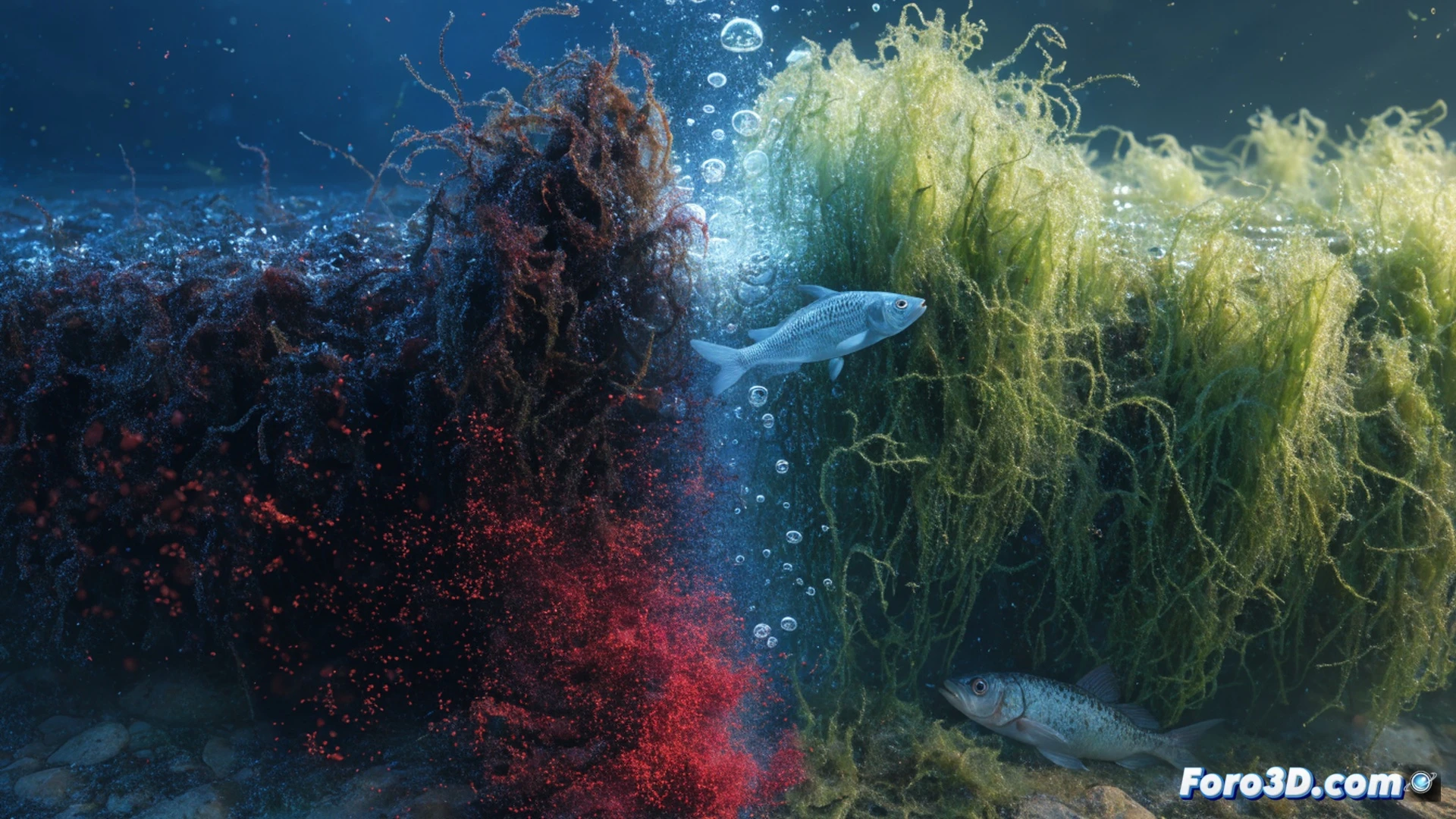
The Chemical Mechanism Behind the Disaster 🧪
The study details that iron dissolved in water reacts with hydrogen peroxide, a compound that the algae themselves produce. This reaction generates hydroxyl radicals, highly reactive molecules that puncture the cell walls of algae. As they collapse, they release toxins such as microcystins, which resist conventional purification treatments. For water resource managers, this implies that current control methods, such as aeration or algaecides, may be insufficient without constant monitoring of these compounds.
Algae Also Get Their Chemical Revenge 😈
It seems that algae, tired of being called nuisance blooms, decided to arm themselves with a master plan: self-destruct and take everything down with them. The hydrogen peroxide they themselves produce, combined with environmental iron, turns into an explosive cocktail. So, while we thought the problem was excess nutrients, it turns out the algae already had their own time bomb ready. Good thing they don't have a union.