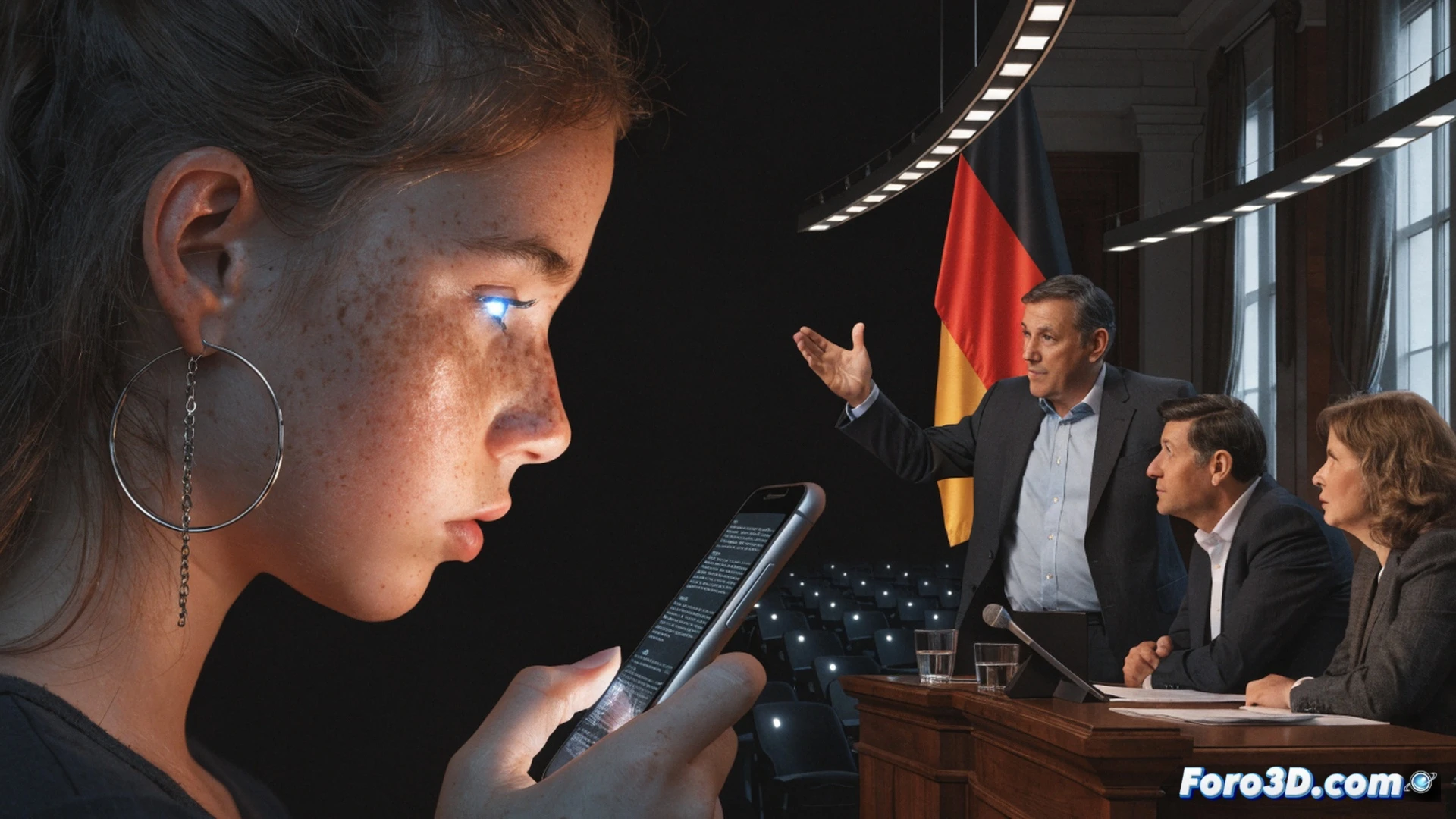
The German government is analyzing a drastic measure: banning access to social media for children under 13. The decision is based on alarming figures: young people spend up to 7 hours a day in front of screens, and 350,000 cases of digital addiction have already been diagnosed. A commission proposes age controls, safe-by-default settings, and banning mobile phones in schools up to age 12. For parents, this means stronger legal support to protect their children from excessive screen consumption.
Age controls and safe settings: the technical plan 🛡️
The German proposal includes mandatory age verification systems for platforms like Instagram or TikTok. Companies will have to implement maximum privacy settings by default for minors' accounts, limiting notifications and algorithmic recommendations. Additionally, a ban on smartphones in schools up to age 12 is proposed, reducing early exposure. Technically, this will force tech companies to develop more robust parental control APIs and biometric authentication systems to prevent age fraud.
Goodbye to the like: the drama of little influencers 😅
While politicians debate, German minors are already rehearsing their protest speech: They're going to take away my daily dose of viral dances!. Parents, for their part, are rubbing their hands together at the thought of regaining control of the router. Of course, the cleverest kids are already asking their grandparents to lend them their ID cards to bypass the control. In the end, the measure could have the opposite effect: that kids become experts in social engineering before they do in math.