Digital Minister Karsten Wildberger announces an agreement with telecom companies to invest 8.5 billion in fiber and 2.4 billion in mobile networks this year. Only 15% of citizens use fiber optics, a figure that reveals more a price problem than a coverage problem. The promises extend until 2028, but the business model remains intact.
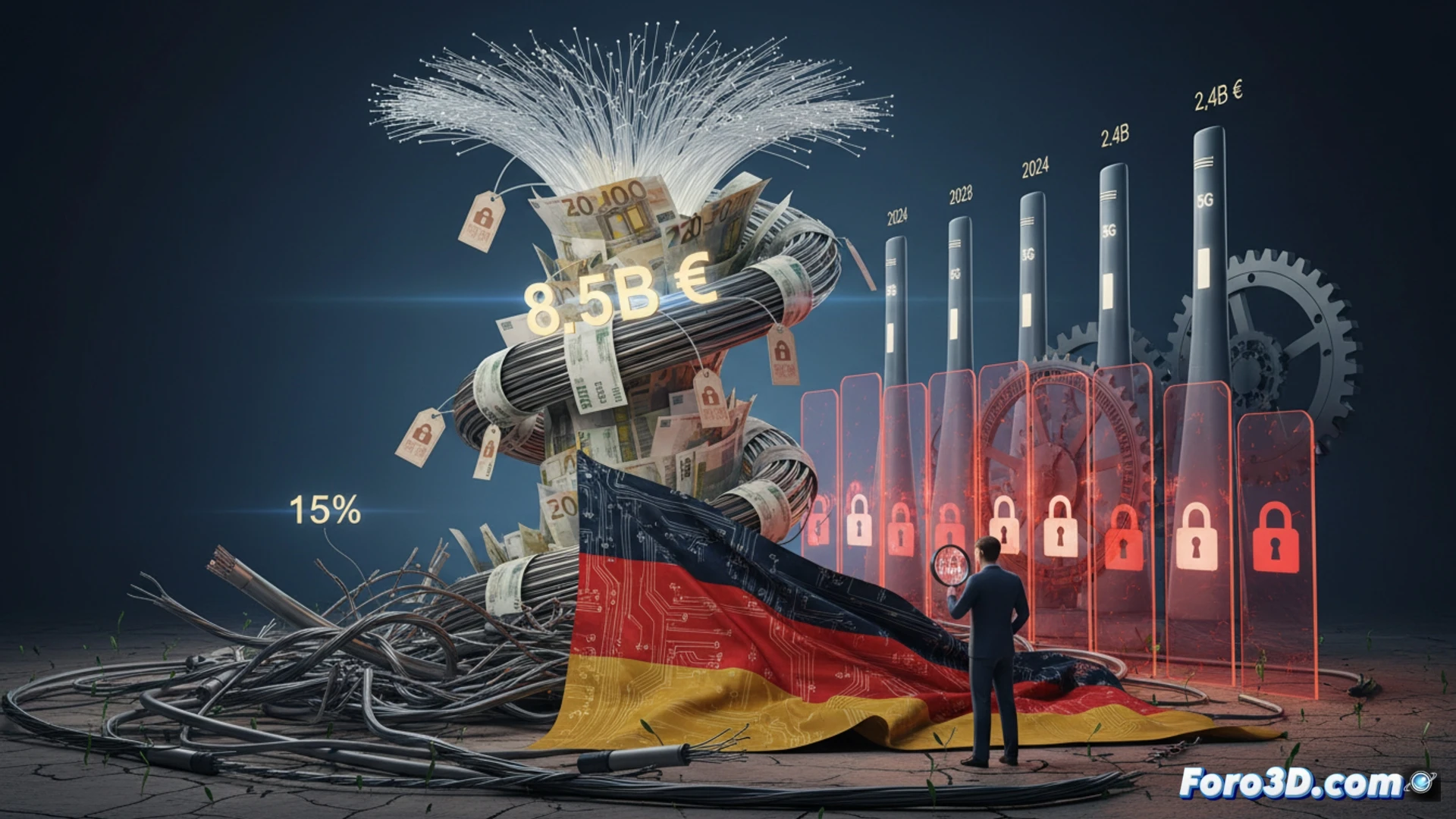
The real deployment: fiber for the rich, 4G for the rest 📡
The agreement is voluntary and companies had already planned this spending. The money will not go to unprofitable rural areas, but to densify networks in urban areas where Telekom, Vodafone, and others already compete. Fiber remains expensive, with long-term contracts that deter the remaining 85%. The German government provides indirect subsidies that fatten operators' profits, not universal coverage. Citizens pay taxes and high rates so that companies invest their own capital.
The miracle of planned scarcity 💰
It's curious: they promise 8.5 billion but fiber doesn't reach your town because there's no business there. The model is simple: maintain scarcity to justify gold-plated prices. Meanwhile, the minister poses as a digital savior and telecoms thank us for paying them twice: once with taxes and once with bills. If total coverage arrived, how would they sell the premium?