Germany invests millions in receptions and lobbies to secure a temporary seat on the UN Security Council. The media presents it as a diplomatic feat. Meanwhile, bridges are collapsing, trains are accumulating delays, public healthcare is collapsing under waiting times, and the price of heating devours retirees' pensions. A matter of priorities.
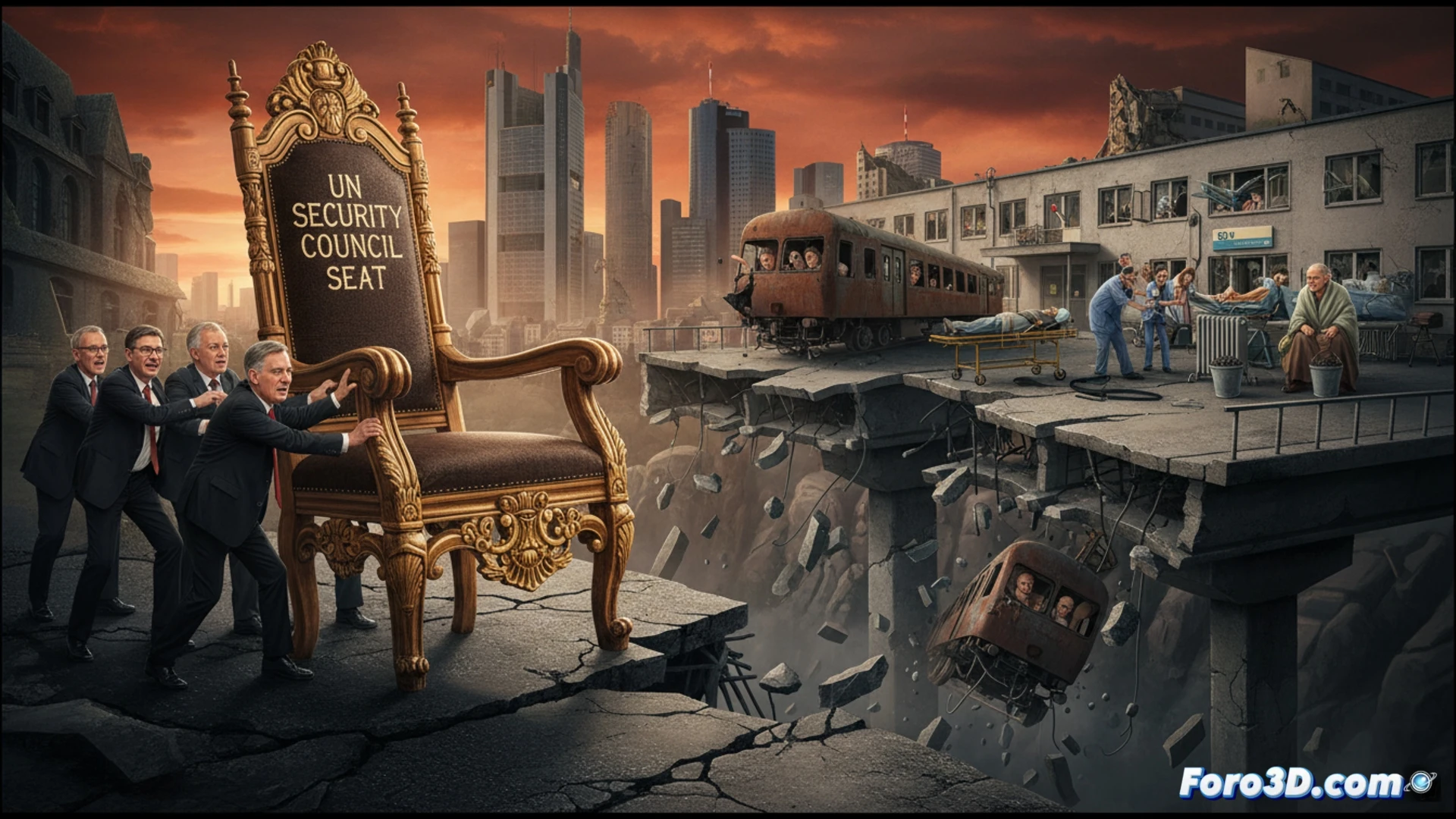
Outdated infrastructure versus salon diplomacy 🏚️
The Leverkusen bridge, closed due to cracks, is an example of an infrastructure network requiring an investment of 150 billion euros. Deutsche Bahn trains have a punctuality rate of 65%, and public healthcare faces waiting lists of months. Meanwhile, German diplomats travel to New York with paid expenses to negotiate resolutions that will barely have any real impact. The gap between the global narrative and the local reality is enormous.
Two years of a VIP seat with a view of national neglect 🥂
For 25 million euros, Germany rents a seat on the Security Council for two years. The goal: to vote on resolutions that no one will remember a week later. But not everything is negative: diplomats will enjoy New York cuisine and receptions with caviar. Meanwhile, back home, retirees decide between paying for heating or buying bread. An epic battle for global influence, undoubtedly.