Residents of Alcázar de San Juan have taken to the streets to denounce a paradox: while mega railway projects connecting large cities are announced, their local stations lose frequencies and service quality. The promise of development clashes with the real isolation of entire communities, who see their mobility sacrificed in favor of high-speed corridors. The protest is not against progress, but against a model that decides without consulting those affected.
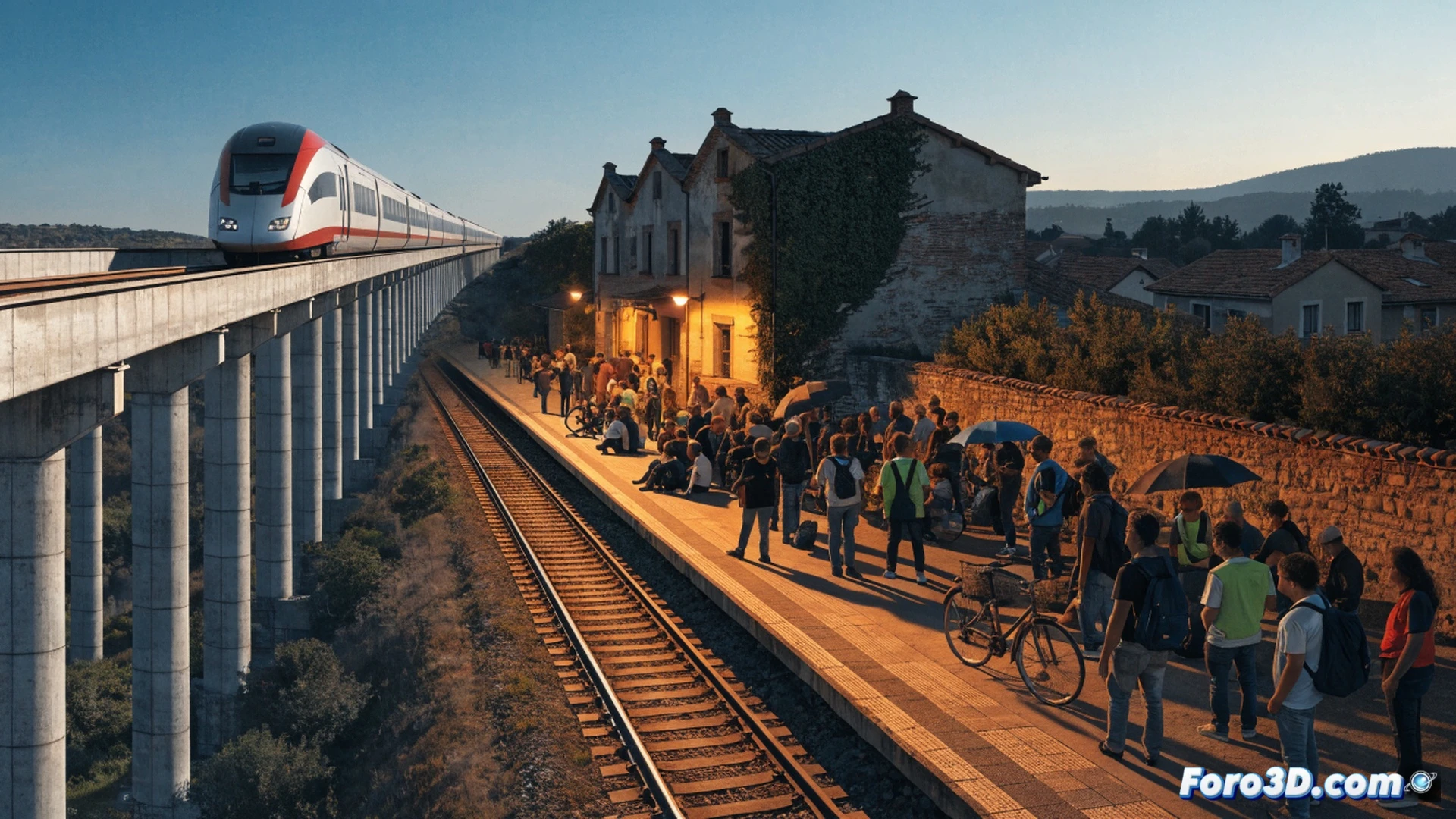
Selective infrastructure: who does the rail work for? 🚄
The current design prioritizes high-speed lines that reduce travel times between major hubs, but neglects secondary branches. This creates a tunnel effect: trains pass through without stopping or with reduced schedules. From an engineering perspective, a capillary network model could be integrated, combining express services with local stops. The key lies in planning interchange stations and staggered schedules, something that requires political will and not just investment in high-speed tracks.
The AVE that passes by and the town left behind 🚉
It turns out that to go from Alcázar to the neighboring capital, you now need more patience than a Buddhist monk and more transfers than an Amazon package. Meanwhile, politicians pose at the inauguration of gleaming stations that are barely used. Next time they promise development on rails, perhaps they should ask if the train stops or just whistles as it passes. Ironies of progress: having the track in front of you and not being able to get on.