Norsk Titanium has certified its 3D-printed titanium parts for the Airbus A350, a technical milestone promising lighter aircraft and less material waste. However, the real beneficiary is Airbus's profit margin, not the passenger's wallet. The company will recoup the millions invested in certification fees while you continue paying for your carry-on luggage.
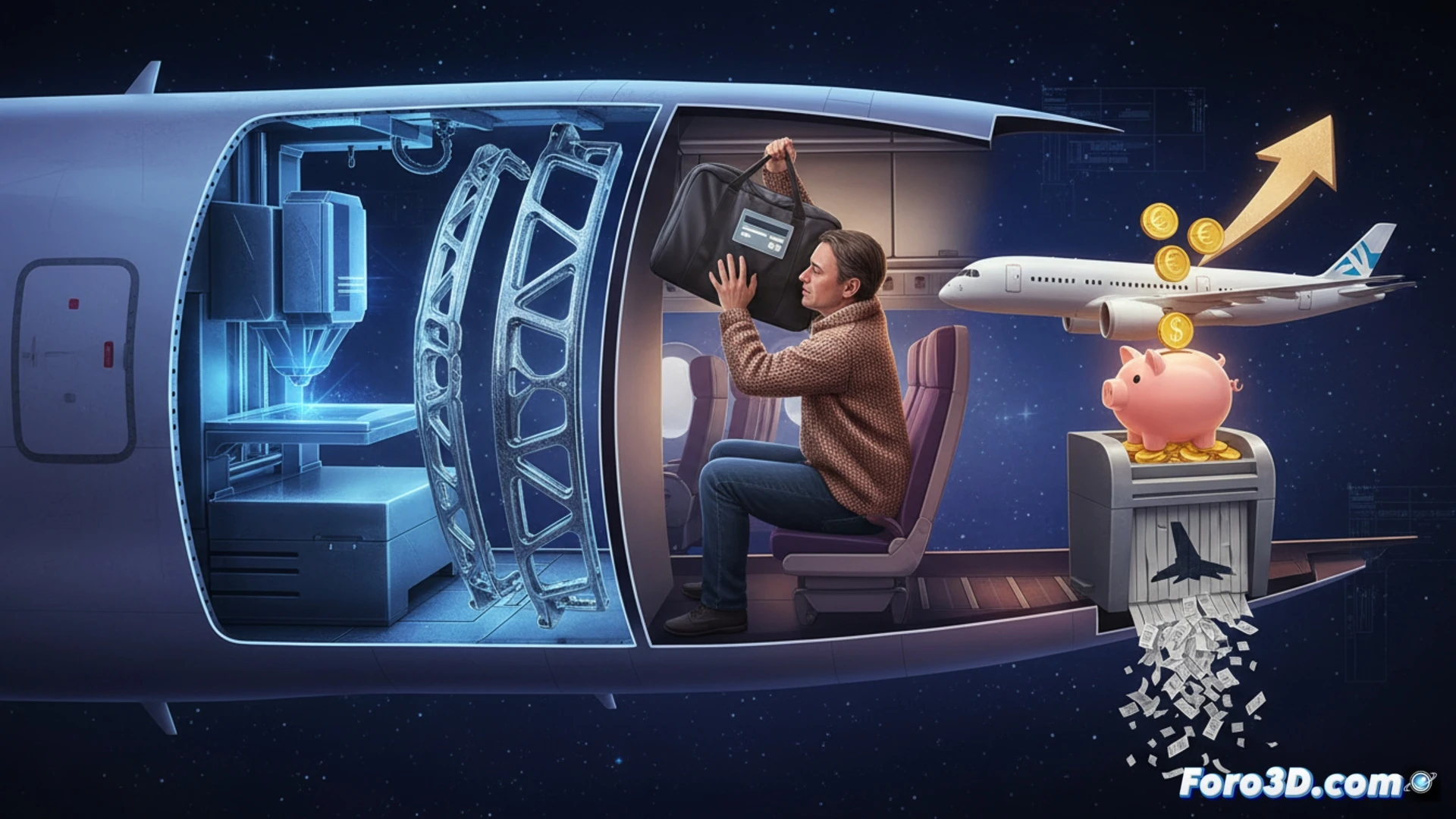
Printed titanium: less weight, same fossil fuel ✈️
Plasma deposition technology allows parts to be manufactured with 80% less material than traditional machining. But this saving does not translate into sustainable flights: Airbus has not bet on electric engines, so the A350s will continue burning kerosene. Furthermore, the agreement with Norsk Titanium, a bankrupt company rescued by Norwegian capital, includes confidentiality clauses regarding the actual price of the parts. The passenger flies unaware that their safety depends on components with no long-term fatigue history.
Fly easy: your seat was paid for with certification fees 💰
Airbus sells innovation, but you assume the risk. The printed parts are certified, of course, but no one knows how many pressure cycles they will withstand ten years from now. Meanwhile, the airline celebrates saving on titanium scrap, and you celebrate paying 50 euros to check a backpack. Sure, next time the plane's speaker sounds, remember: that metallic noise could be the echo of a part that came out of a Norwegian printer.