Electric air taxis are no longer science fiction. Vertical Aerospace's Valo model has completed the first piloted transition between vertical and horizontal flight, supervised by British authorities. Commercial certification is expected by 2028, opening the door to urban flights on premium routes and events such as the Los Angeles Olympics. In Spain, vertiports are already being planned in Teruel and other cities by 2027, although widespread use will not arrive until the next decade.
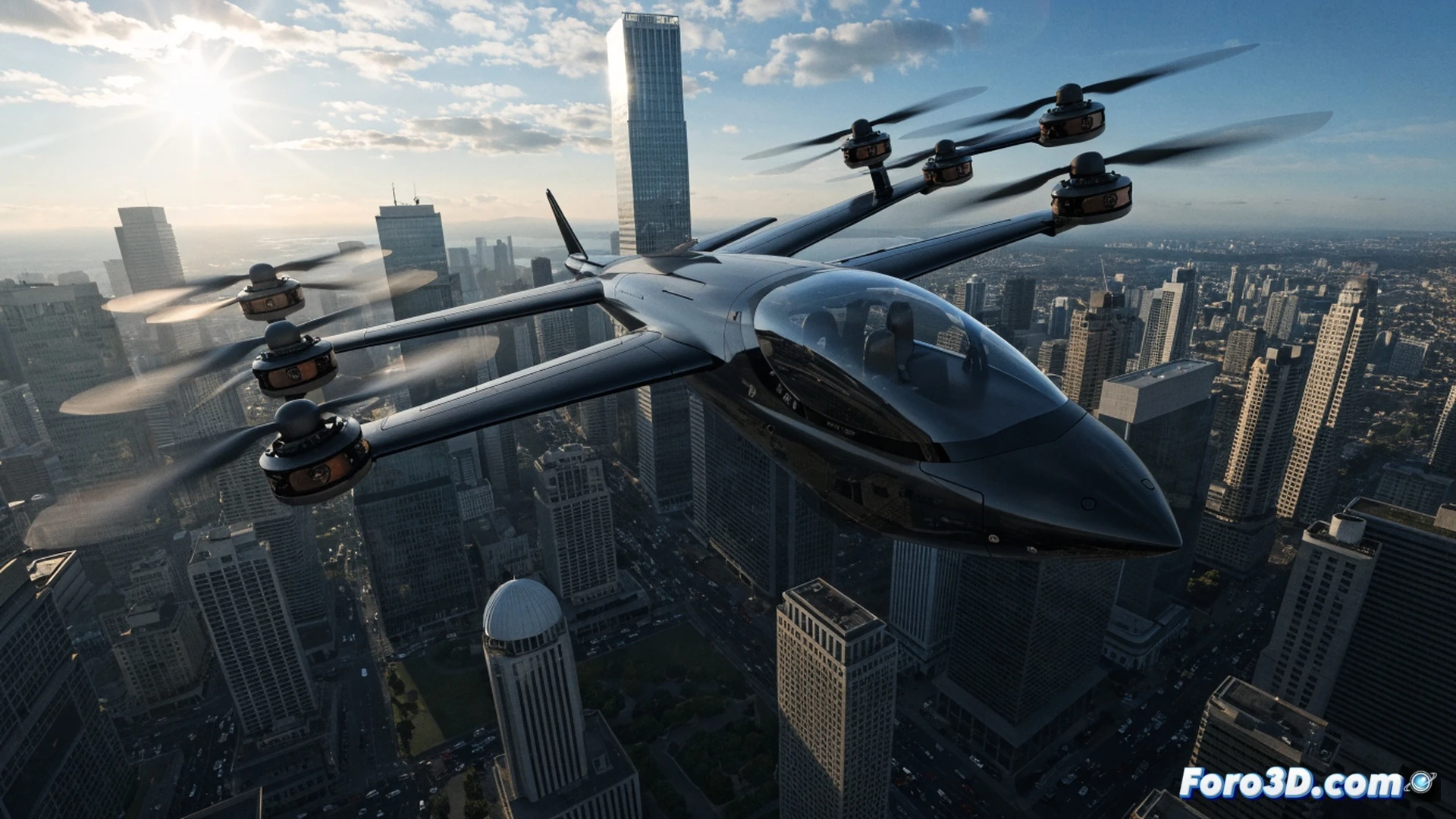
The technical leap: from vertical takeoff to horizontal flight 🚁
The key to the advancement lies in the transition between flight modes, a critical point in the design of electric vertical takeoff and landing (eVTOL) aircraft. The Valo uses multiple rotors to lift off and then tilts its structure to fly like an airplane, optimizing energy efficiency. The tests have been supervised by the British Civil Aviation Authority, which requires safety standards equivalent to those of commercial aviation. Although current batteries limit the range to about 160 kilometers, manufacturers are working on fast-charging systems and predefined routes to avoid air traffic congestion.
Paid flights: the flying taxi that will leave you in the red 💸
All very nice, but don't get your card out just yet. The first air taxis will be so exclusive that they will likely cost more than a transatlantic flight. If you think paying 50 euros for an Uber is expensive, wait until you see the price of a 15-minute trip over the city. The first users will be executives in a hurry and tourists with hefty bank accounts. For the rest of us, we'll have to keep watching the rich skip the traffic jams while we count the tiles from the bus.