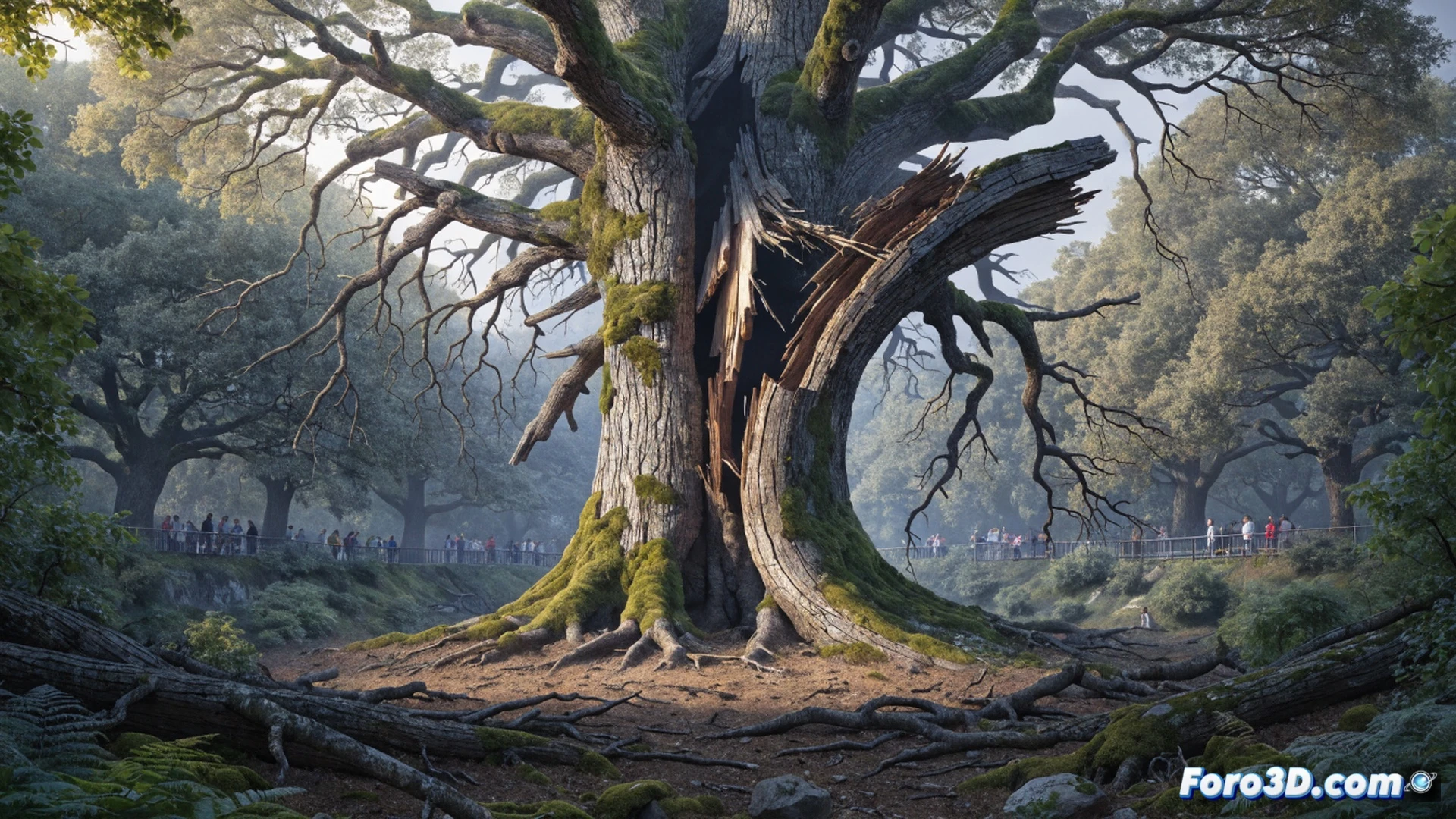
The legendary Robin Hood oak, with over a thousand years of history in Sherwood Forest, has died. The cause was not an axe, but soil erosion, an excess of visitors, and climate change. For the public, the loss of this historical and tourist symbol is a blow to tradition. However, the tree will remain a natural monument, and its saplings will live on in other places.
Technology applied to the conservation of historic trees 🌳
The collapse of the oak exposes failures in the management of natural heritage. Techniques such as controlled soil compaction, advanced drainage systems, and water stress sensors could have prolonged its life. Excessive tourism without physical barriers or limited load plans accelerated its deterioration. The lesson is clear: conservation requires real-time data and preventive actions, not just commemorative plaques.
The Sherwood oak dies of tourist success 📸
It turns out that neither Robin Hood nor his arrows could defeat the tree, but mass selfies and the footsteps of 500,000 visitors a year did. The oak, which survived wars and storms, has fallen victim to eco-tourism. Now, its saplings will grow in private gardens, far from the hordes of photographers. The moral: if you want to be a famous tree, better not have Instagram.