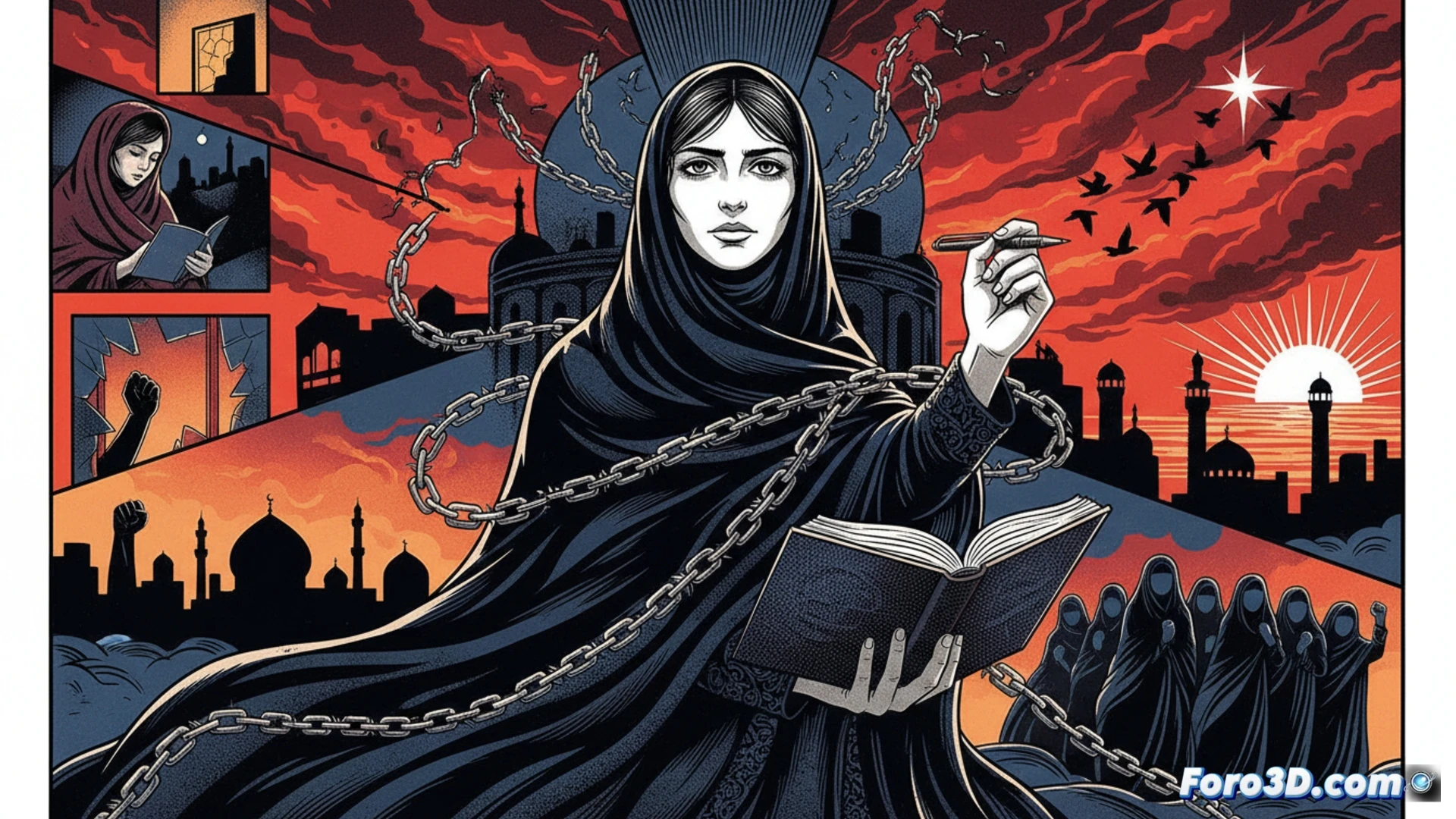
Marjane Satrapi, creator of the graphic novel Persepolis, passed away at age 56. Her work documented life under the Iranian regime and the struggle for freedom. In a 2020 interview, she revealed that since childhood she prepared to be a political prisoner, reflecting the human cost of living in an oppressive system. Her legacy endures as a testament of resistance.
The algorithm of censorship: how technology replicates state control 🛡️
Today's technology replicates control dynamics similar to those Satrapi portrayed. Facial recognition systems and content moderation algorithms filter information in real time, like a digital wall. In development platforms, APIs are used to block prohibited terms, creating an environment where expression is shaped by external rules. This mechanism, though less visible, recalls the censorship panels she faced.
Mental airplane mode: how to survive censorship without leaving home ✈️
If Satrapi lived today, she would probably use a VPN and a mechanical keyboard to bypass filters. But for the average user, the solution is simpler: activate mental airplane mode. This involves ignoring app notifications that request biometric data and remembering that, in the end, true control is exercised by those who choose not to share their location. An irony: freedom sometimes begins by turning off the GPS.