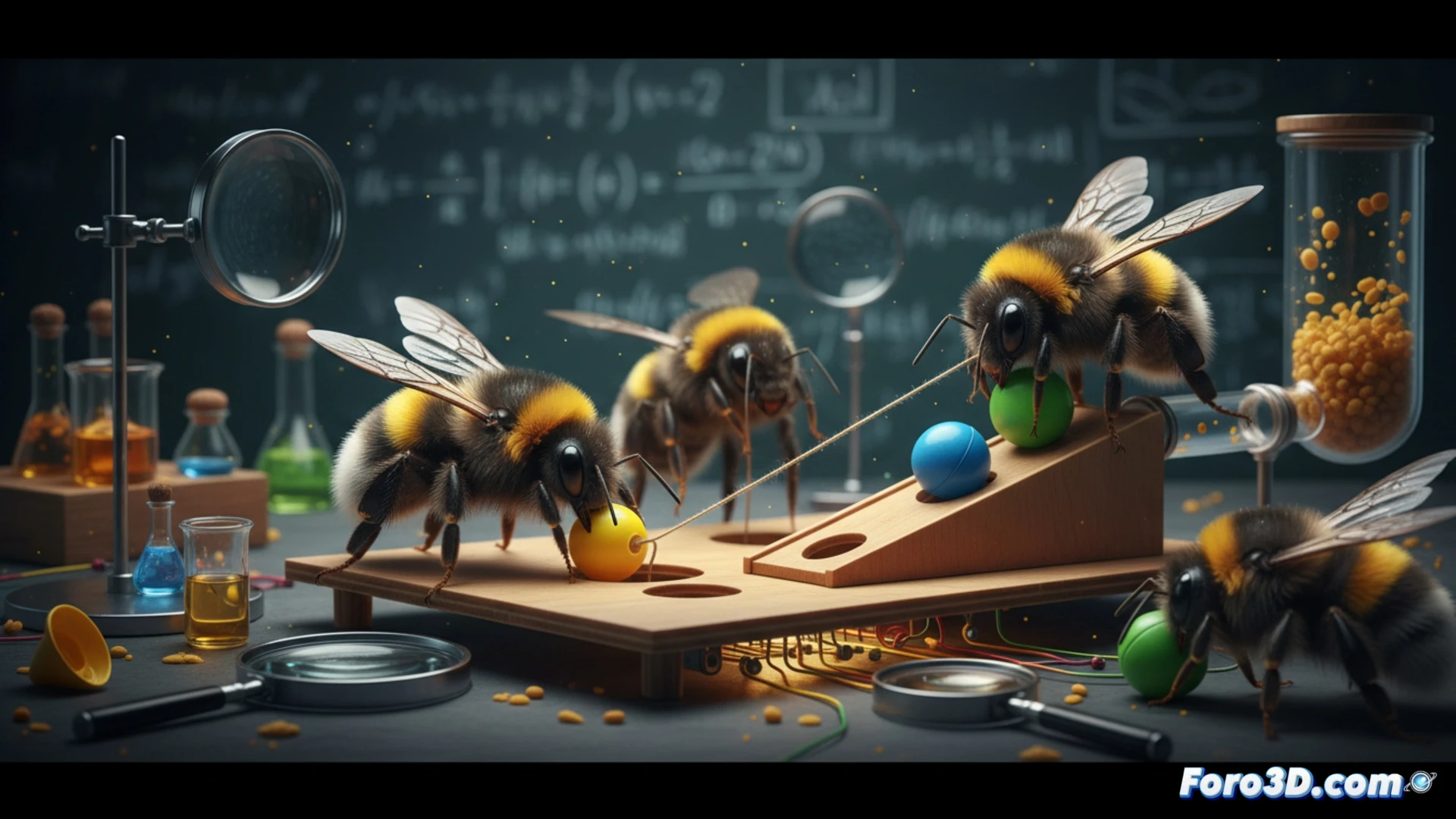
A recent study has turned upside down what we knew about insects. Bumblebees, those fuzzy fliers that seem so clumsy, proved capable of solving complex problems. In the experiment, they managed to move a ball into a hole to reach food. This finding suggests that their intelligence goes beyond simple instinct and raises questions about how we understand cognition in small animals.
Technological implications of cognition in insects 🤖
This discovery has direct applications in robotics and algorithm development. If a bumblebee can learn a novel task without prior instructions, engineers could be inspired to create more efficient autonomous systems. Instead of programming every movement, robots could be designed to learn by trial and error, mimicking the neural plasticity of these insects. The key lies in understanding how such a small brain processes spatial information and executes coordinated actions.
Bumblebees smarter than some project managers 😅
While bumblebees solve puzzles with balls, there are those who still can't find the coffee machine in the office. If these insects can learn to use tools, perhaps we should delegate some project management to them. Of course, we would have to negotiate the salary in nectar and pollen, which apparently is their favorite currency. At least they don't ask for feasibility reports every time they want a candy.