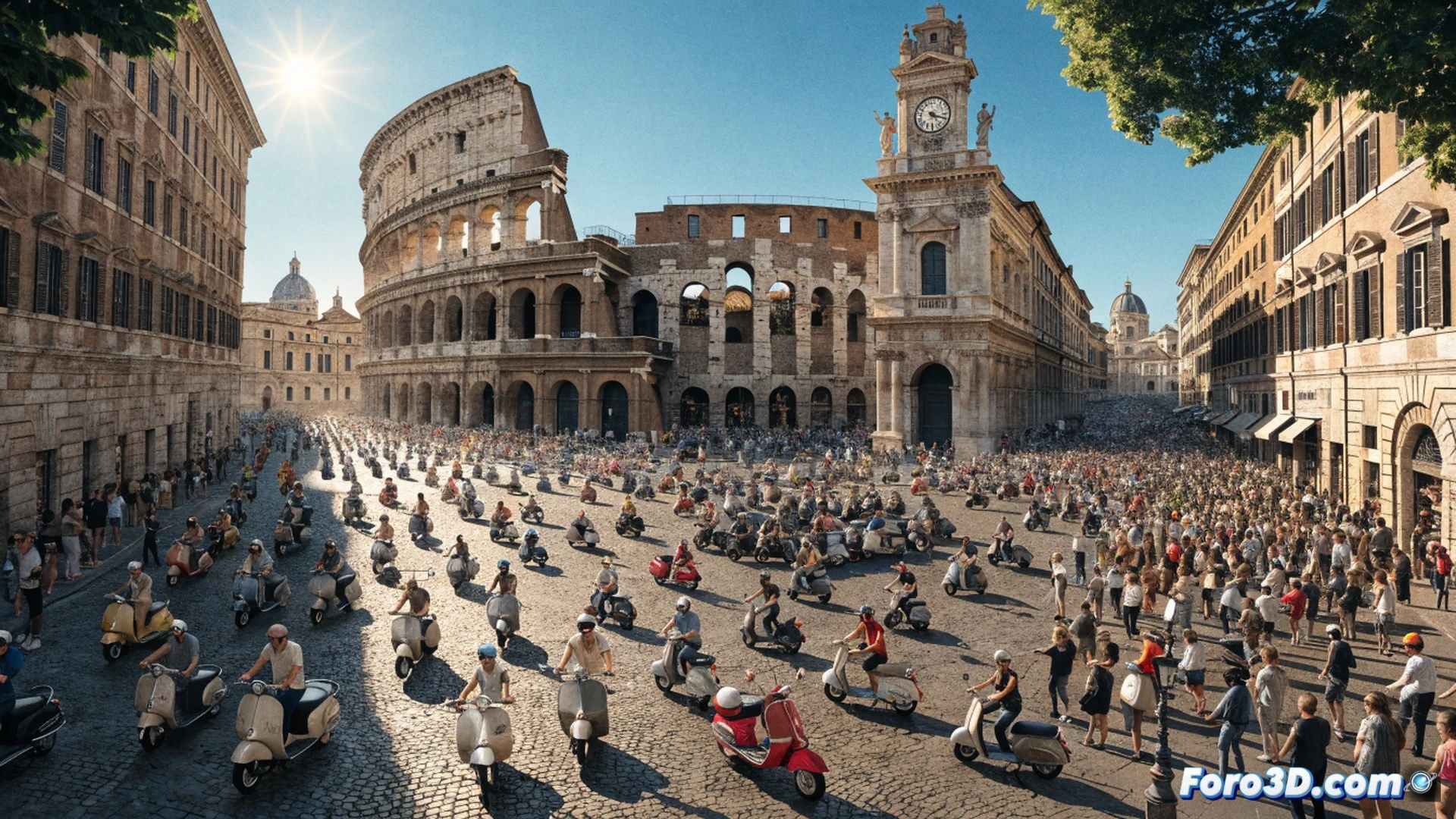
Rome has been the global epicenter of the Vespa during its 80th anniversary. 25,000 enthusiasts from 67 countries gathered with 160 historic models. The parade attracts tourism and boosts the local economy, although traffic closures in the center cause some inconvenience among residents. The Vespa remains an icon of affordable mobility and lifestyle. 🛵
The technical evolution of a classic of urban mobility 🔧
From its steel monocoque chassis to the two-stroke engine, the Vespa has maintained a philosophy of mechanical simplicity. Its rod-operated transmission and handlebar gear shift were ingenious solutions for the time. Over the years, it incorporated disc brakes, electronic injection, and hybrid engines, but its basic structure of small wheels and self-supporting bodywork has barely changed. It is a rare case of design that ages without seeming obsolete.
Historic traffic jams: the price of being an icon on wheels 🚦
While 25,000 Vespa riders roared happily, Romans stuck in traffic surely thought the Vespa isn't so charming when it keeps you from getting to work. But hey, no one said celebrating an icon would be free. At least the traffic jams had style: between a 1946 Piaggio and a tuned Primavera, the center looked like a rolling museum. The downside was that the museum moved at 5 km/h.