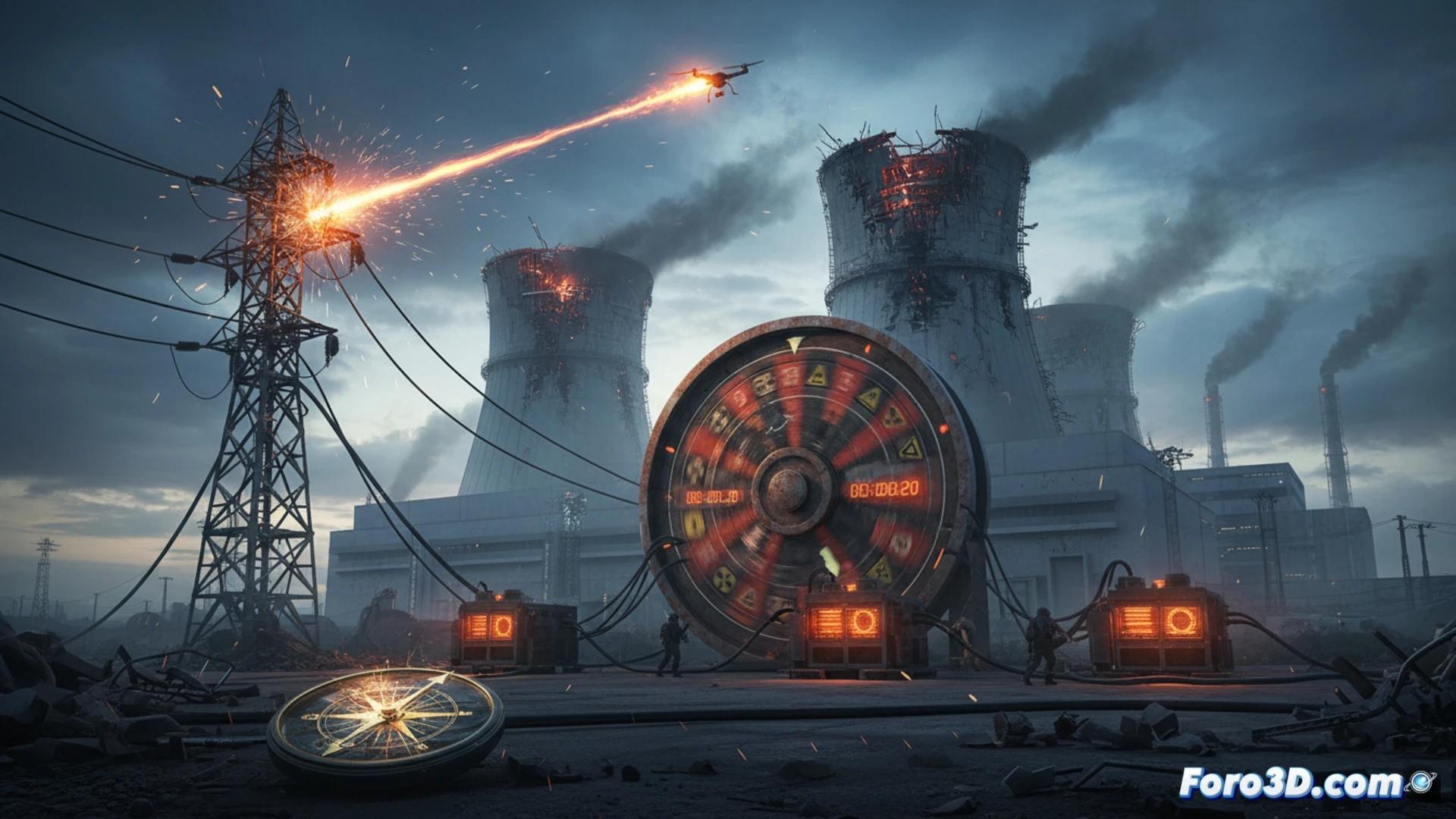
The IAEA confirmed that the Zaporizhzhia nuclear power plant lost its external power supply for twenty minutes after a drone struck a substation. Diesel generators prevented a total blackout, but this is the 17th incident since the start of the war. Seventeen times the world has been one step away from a radioactive disaster.
The Technical Fragility of a Reactor with No Margin for Error ⚛️
Each external power cut forces emergency systems to operate in island mode, relying on diesel engines not designed for continuous wartime cycles. Core cooling depends on electric pumps; without them, temperature rises and the risk of meltdown skyrockets. Safety redundancy is exhausted when attacks are repeated, and civilian infrastructure becomes a collateral target in a war that does not understand nuclear physics.
Negotiate or Send Tanks: The Always Easy Choice 🚨
Meanwhile, world leaders compete to see who can send the most missiles, like children in a schoolyard with expensive toys. Sanctions increase, diplomatic channels close, and the only fusion that seems to interest them is that of their own bottom lines. But if the reactor truly melts down, there will be no winners, only a radioactive cloud crossing borders without asking for a visa. And citizens, as always, holding their breath while governments prepare their condolences speech.