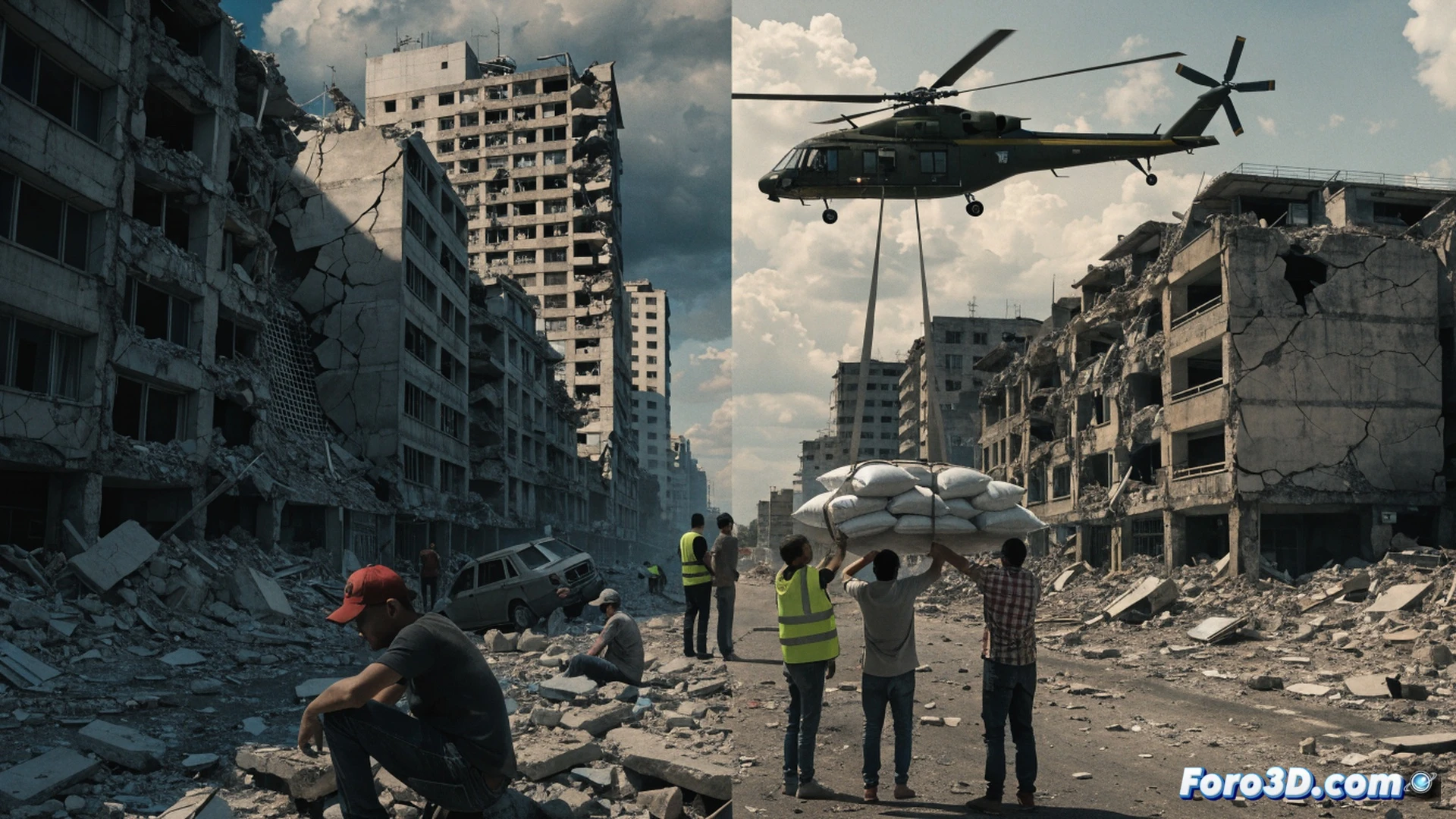
Five days after the earthquakes that devastated Caracas and La Guaira, the death toll exceeds 1,700. The arrival of US Marines and helicopters brings relief, but the government's slow response, also backed by the US, fuels frustration. Citizens clamor for basic services and housing, while desperation grows amid a humanitarian crisis deepened by official delays.
Drones and satellites: technology to map debris 🛰️
Rescue teams use drones with thermal cameras to locate bodies under the rubble. NASA satellites provide real-time maps of structural damage. However, the lack of coordination with local authorities delays the deployment of these resources. While Marines set up field hospitals, civil engineers request access to seismic data to assess aftershocks and prevent further collapses.
The government promises quick aid (as always, but not) 😤
Authorities call for calm while victims line up for a bag of drinking water. The promise of temporary shelters sounds as solid as the walls of the buildings that fell. At least the US helicopters make a nice noise, even if their main cargo is packages of cookies. Patience is a luxury that survivors no longer have in stock.