The Madrid City Council has received requests from the Government to cut down 70 trees in La Moncloa and 49 in Barajas. This decision reignites the political conflict over urban trees and directly affects citizens. In neighborhoods in the south and east, with few green areas, each lost tree reduces available shade and eliminates essential climate refuges for public health and quality of life.
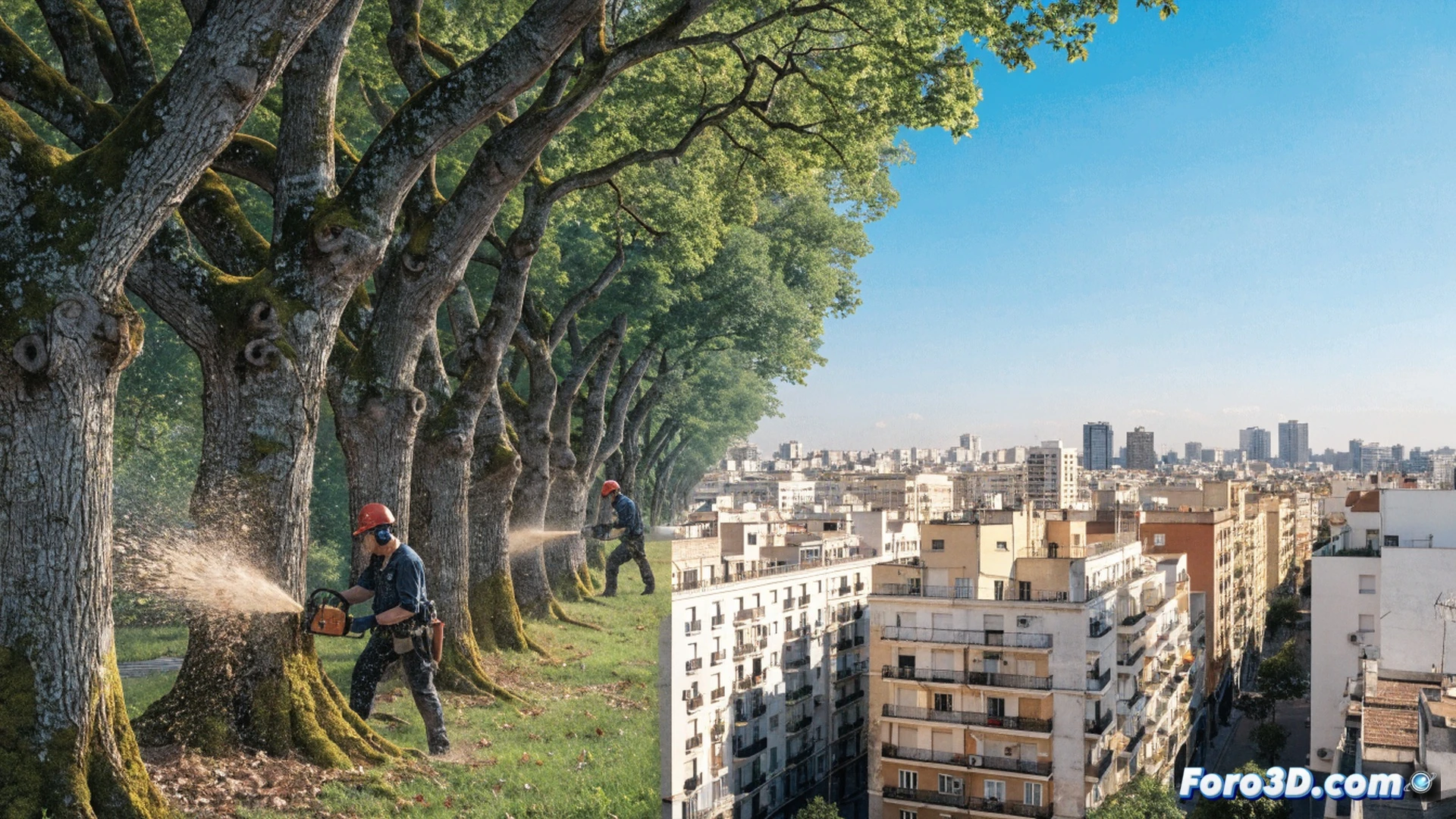
Smart cities: sensors to count every leaf 🌿
Urban tree management could benefit from technologies such as IoT sensors and GIS systems. These devices allow real-time monitoring of tree health, their watering needs, and their contribution to reducing ambient temperature. Instead of debating arbitrary tree removals, data-driven technical development would provide precise maps of shade and climate refuges, optimizing urban planning and avoiding conflicts between administrations.
Cutting down by decree: the new municipal extreme sport 😅
If politicians need something to do, they could count leaves instead of fighting over them. The request to cut down 119 trees seems like a contest to see who can make Madrid's map baldest. Meanwhile, residents in the south wonder if the next measure will be to cut down their awnings or, directly, the sun. At least, when there is no shade left, no one will argue over it.