The recent accident involving the dragline excavator bucket, caused by a broken drag chain link, highlighted the limits of abrasive fatigue combined with impact cracking. This mechanical failure, which occurred during a channel maintenance operation, has led engineers to reevaluate simulation processes. The incident analysis has focused on two key tools: PolyWorks for 3D digitization of the fractured part and ANSYS Fluent for modeling hydrodynamic loads and cyclic stresses.
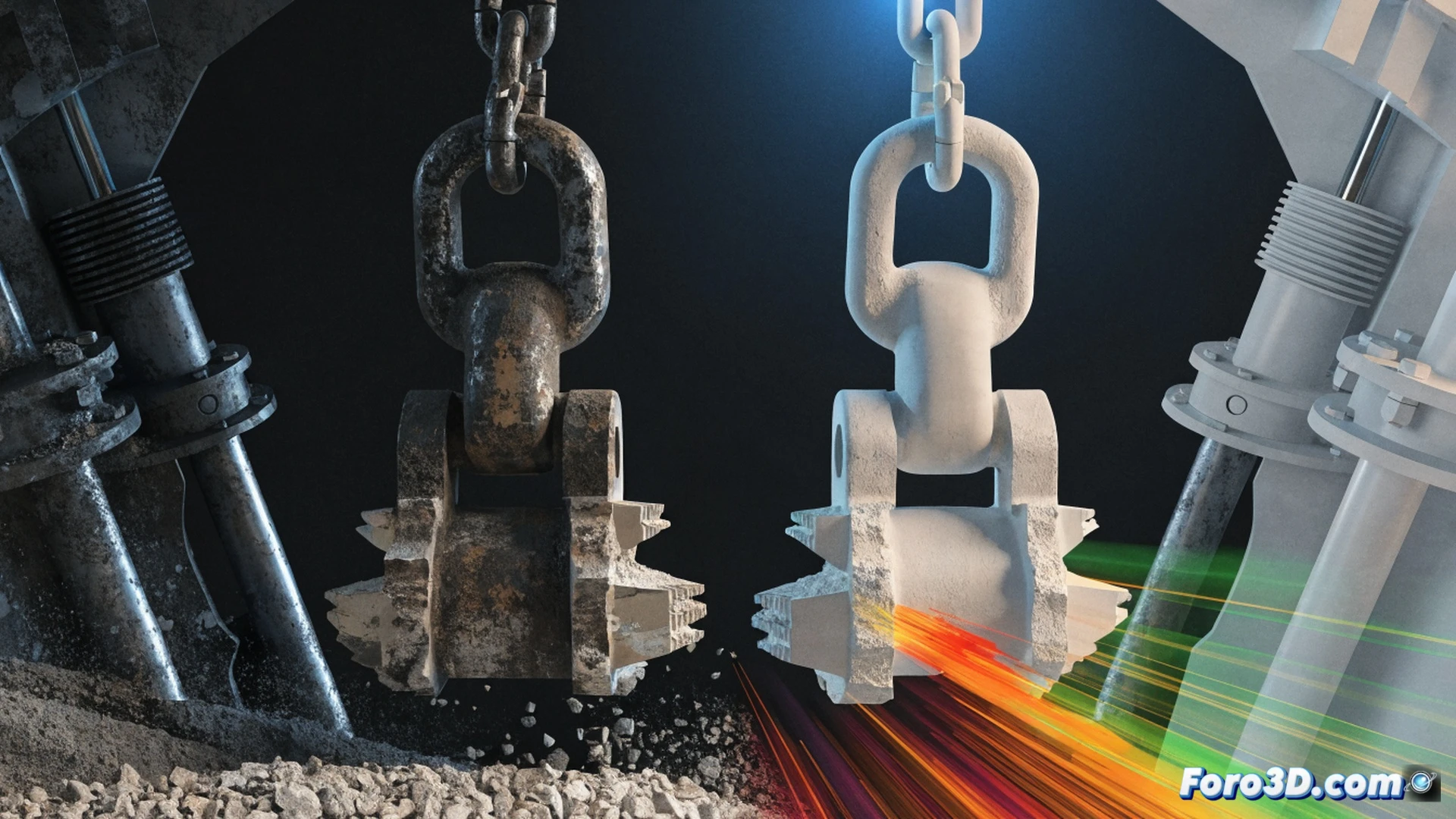
3D Pipeline: From PolyWorks to ANSYS Fluent in Failure Analysis 🛠️
The workflow began with scanning the fracture surface using PolyWorks, generating a high-precision point cloud that revealed microcracks from abrasive fatigue. This geometric model was imported into ANSYS Fluent to simulate operating conditions, where it was identified that the combination of abrasive particles in the sludge and repetitive impact loads generated localized stresses on the link. The results show that cracking progressed from microscopic inclusions to catastrophic failure, without the need for a single overload event.
The link that couldn't take the dredging joke 😅
It seems the drag chain link decided to go on an unannounced strike, fed up with years of chewing sand and stones without a break. While engineers fine-tune their models in PolyWorks and ANSYS Fluent, the bucket rests at the bottom, reminding us that abrasive fatigue is no joke, even if the maintenance budget is. At least now we know that a broken link is more eloquent than any technical report.